The Power Shift: Why India’s Utility Giants Are Back in Focus
Arvind DSIJ / 14 May 2026 / Categories: DSIJ_Magazine_Web, DSIJMagazine_App, Special Report, Special Report, Stories
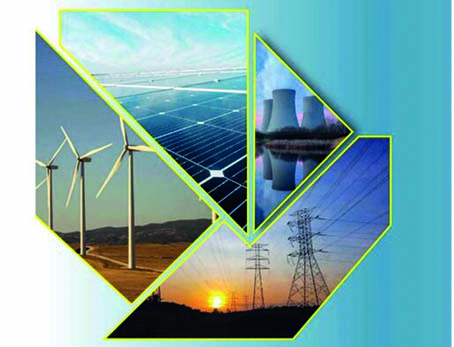
The broader equity markets have recently felt like a gauntlet of volatility, yet one sector has remained remarkably resilient: power. While traditional ‘growth’ sectors have struggled, utility stalwarts and power infrastructure firms have posted returns that suggest a fundamental structural shif.
India’s power sector is quietly emerging as one of the strongest themes in a volatile market. Backed by rising demand, healthier discoms, massive transmission capex, renewable integration and storage-led opportunities, the sector is moving beyond its old image of a defensive utility space. As India prepares to expand installed capacity sharply over the next decade, power companies are becoming central to the country’s infrastructure and energy transition story [EasyDNNnews:PaidContentStart]
The broader equity markets have recently felt like a gauntlet of volatility, yet one sector has remained remarkably resilient: power. While traditional ‘growth’ sectors have struggled, utility stalwarts and power infrastructure firms have posted returns that suggest a fundamental structural shif.
The BSE Power index has delivered a strong 23.3 per cent return year-to-date as of May 11, 2026, significantly outperforming the broader market. In contrast, the Nifty 50 has declined around 8.9 per cent over the same period. This remarkable relative strength saw the power sector steadily gain ground from mid-February onward, accelerating sharply through April to touch a high of 8,321, while the Nifty struggled with consistent weakness, particularly in March. The outperformance highlights robust investor interest in the power sector amid broader market consolidation.
Power Sector Outperformance YTD (2026)

Constituents such as Adani Power have surged over 40 per cent on a YTD basis, while specialised players like GE Vernova T&D and Hitachi Energy have delivered eye-watering returns of 38 per cent and 46 per cent respectively in the same period.
The secret isn’t a fluke of the market tape; it’s a confluence of three major forces: a massive demand recovery, a decisive policy push toward the energy transition, and a radical improvement in the financial health of the companies that keep the lights on. As India targets an expansion of its power capacity from approximately 525 GW today to over 800 GW, the sector is no longer just a defensive play, it has become a primary engine of the national growth story.
The 250 GW Awakening: A Demand Surge Reborn The most immediate tailwind is a sharp recovery in consumption. Peak power demand in India touched a massive 256 GW in April 2026, reflecting a deep-seated need for energy across a rapidly urbanising and industrialising nation. This demand isn’t just about keeping the air conditioners running; it is driven by a trifecta of industrial revival, residential expansion and aggressive agricultural needs.
For years, the power sector was weighed down by ‘right-of-way’ issues and land acquisition nightmares that stalled projects and drained investor confidence. Today, those bottlenecks are clearing as policy resolutions on the transmission side see significant progress. This clearing of the ‘path to power’ has allowed companies to finally meet the burgeoning demand that has recovered from lows of 210 GW in early 2025 to the current heights.
The Conventional Pivot: Legacy Giants as Green Engines In a counter-intuitive twist, the biggest winners in the green transition aren’t necessarily the pure-play renewable startups, but the legacy giants with deep pockets and diversified portfolios. Companies like NTPC Ltd, India’s largest producer with over 75 GW of capacity, are generating steady electricity from coal and gas while aggressively adding renewable projects.
The conventional players with strong operating cash flows are deploying their capital towards integration of Solar sales or models or battery storage, and these companies stand to benefit.
This ‘backward integration’ provides a safety net that pure renewable players often lack. By using the reliable income from conventional power to fund high-growth solar, wind and storage assets, these veterans are capturing the largest profit pools of the energy transition. A balanced mix of thermal and renewable assets reduces exposure to fuel price volatility and policy shifts, making firms like NTPC and Tata Power particularly attractive to long-term strategists.
Transmission: The Invisible ‘Toll-Booth’ Opportunity As India expands toward its goal of 500 GW of renewable capacity by 2030, the spotlight is shifting from making power to moving it. Renewable resources are often geographically distant from industrial load centres, creating an urgent need for massive transmission infrastructure. Power Grid Corporation of India Ltd, which transmits more than half of India’s electricity via a network of over 1.75 lakh km, has become the ‘toll-booth’ of the energy economy.
In a high-volatility market, the transmission sector offers a rare combination: regulated returns and aggressive capital expenditure. For instance, Power Grid incurred a capital expenditure of `26,761 crore in just the first nine months of FY 2025-26 and `35,540 crore by March 2026, surpassing its target. Investors are realising that you can build all the solar farms you want, but without the high-voltage ‘highways’ to carry that electricity, the transition stops.
The Solar Paradox: Policy Aspirations vs. Manufacturing Realities Perhaps the most surprising takeaway for investors is the growing complexity within the solar manufacturing segment. Despite a massive `24,000 crore Production Linked Incentive (PLI) scheme intended to boost local production, solar equipment makers had received no funds under the scheme by the end of February 2026.
This creates a fascinating investment tension. While the national goal for green energy remains absolute, the manufacturers of the ‘hardware’ are facing potential margin pressure. The paradox is that while the demand for solar power is high, the supply of manufactured components is caught in a regulatory and funding bottleneck. Savvy investors are now looking beyond just the ‘solar label’ and into companies that can navigate these complex policy environments.
The Clean Energy Frontier: From Hydrogen to Storage India is no longer just looking at solar panels; the frontier has moved to high-tech energy solutions. The sector is seeing an unprecedented boom in Foreign Direct Investment (FDI) as global corporations and startups look to set up green subsidiaries, particularly in green hydrogen and advanced legal services for energy transition.
Storage, however, remains the ‘holy grail’ of grid resilience. In November 2025, India inaugurated its largest and first MWh-scale Vanadium Redox Flow Battery (VRFB) system at NTPC NETRA. This 3 MWh system represents a major leap toward Long Duration Energy Storage (LDES), which is essential for integrating intermittent renewable energy into a stable national grid.
Discoms: The Financial Health of the Last Mile Historically, the weakest link in the Indian power chain was the financial health of distribution companies (discoms). If the discoms couldn’t pay the generators, the whole system ground to a halt. Today, we are seeing a marked improvement in discom financials, which has been a primary catalyst for the recent sector outperformance. Reduced payment cycles and better grid management mean that the ‘payment risk’ that once terrified investors is finally being mitigated.
Final Thought to Ponder The trajectory for the next decade is defined by the ‘Viksit Bharat’ vision of a developed India by 2047. To support this growth, the Central Electricity Authority (CEA) projects that India’s installed capacity must reach 1,029 GW by 2034-35, effectively doubling current capacity in less than ten years.
This next phase of growth moves beyond simple capacity addition to intelligent flexibility and storage. The roadmap includes the integration of: n Battery Energy Storage Systems (BESS): 99 GW / 396 GWh (providing 4 hours of storage). n Pumped Storage Plants (PSP): 62 GW (providing 6–7 hours of daily storage).
The ‘Robust Transformation’ of the Indian power sector, as detailed in the FY 2025-26 records, is no longer a government projection; it is a realised market reality. By fixing distribution finances, scaling the world’s largest grid, and flipping the script on fossil fuels, India has fundamentally de-risked its power sector, positioning it as a premier destination for global infrastructure capital for the long term.
In the 20th century, power was a commodity measured in units of electricity; in the 21st, it is an infrastructure asset measured in resilience and transition speed. The real winners aren’t just those who generate the most megawatts, but those who own the ‘highways’ of the grid and the cash flow to build the storage of the future. The quiet renaissance of the utility giant is only just beginning.
A Forward-Looking Summary The power sector has evolved from a stagnant utility play into a multi-decade capex and technology story. With the Central Electricity Authority’s National Electricity Plan (2022-32) setting ambitious targets for capacity and transmission, the sector is entering a ‘Goldilocks’ zone of sustained demand and improved policy clarity.
[EasyDNNnews:PaidContentEnd] [EasyDNNnews:UnPaidContentStart]
To read the entire article, you must be a DSIJ magazine subscriber.
[EasyDNNnews:UnPaidContentEnd]