The QR Code Has a Price Now
Ratin / 01 Oct 2026 / Categories: DSIJ_Magazine_Web, DSIJMagazine_App, Special Report, Special Report, Stories
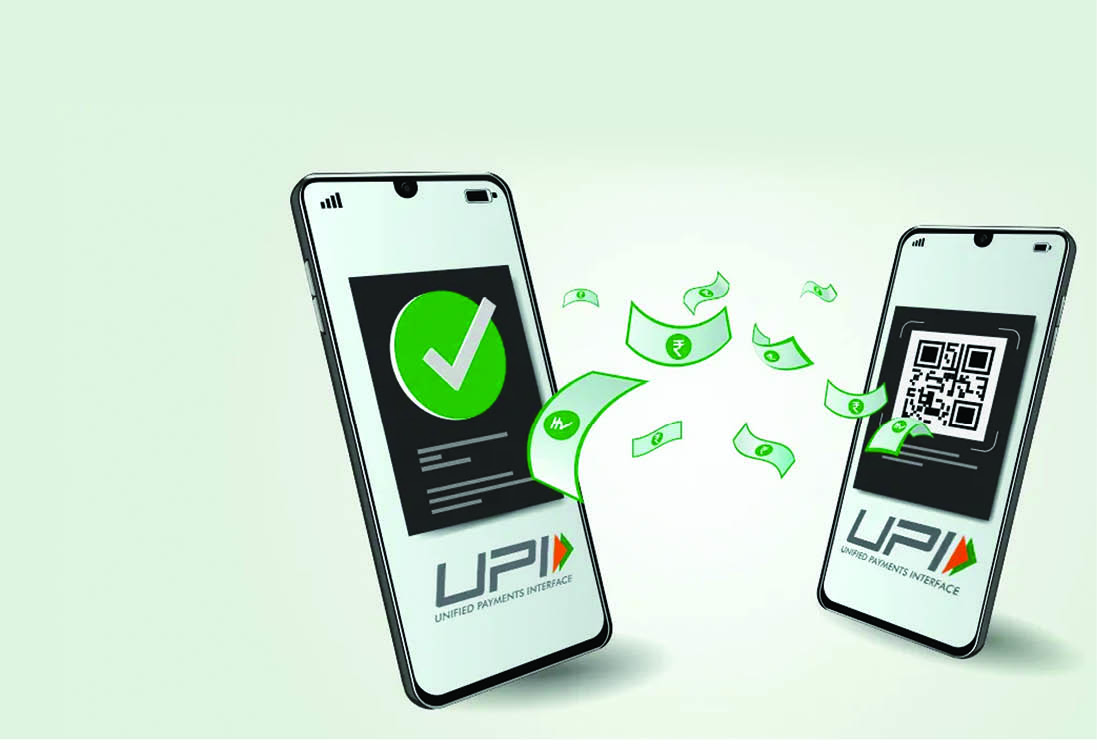
After food, clothing and shelter, could the QR code be the fourth essential in our daily lives? UPI has made digital payments so effortless that scanning and paying have become almost instinctive. But what happens when a system built on “free” starts charging a fee? As UPI enters a new phase from October 15, 2026, let us understand what is changing, whether it affects you, what opportunities and risks lie ahead, and what the shift could mean for investors
There was a time when paying a shopkeeper meant searching for cash, waiting for change or pulling out a debit card. Then came a small square QR code that quietly changed the way India paid. A cup of tea, a grocery bill, a cab ride, a restaurant dinner and even a large purchase could all be settled with the same familiar sequence: open the app, scan the code, enter the amount and tap pay. For crores of Indians, UPI became so simple that the technology costs behind it almo[EasyDNNnews:PaidContentStart]
When UPI was launched, its ambitions were much larger than simply replacing cash with a mobile payment. The pilot was launched in April 2016 with 21 member Banks, followed by the public rollout in August. The proposition was remarkably simple: connect bank accounts through a common interoperable interface and allow people to send or receive money instantly using a mobile device.
The numbers below tell the story more powerfully than words ever could.

The transformation did not stop at bank-to-bank transfers. UPI became a merchant acceptance network, a bill-payment mechanism, an IPO application route, a recurring-payment platform and an increasingly important bridge between consumers and financial services. The introduction of UPI AutoPay, for instance, expanded the platform into recurring payments including subscriptions, utility bills, insurance premiums, EMIs and SIPs.
The system is no longer a small payment experiment that needs to prioritise adoption at any cost. It has become a huge transaction network that processes crores of payments every month. The extraordinary growth created something even more valuable than transaction volume: ‘habit’. That habit is now the foundation on which a commercial payment ecosystem can potentially be built. And this is where UPI MDR enters the picture. '
UPI Merchant Discount Rate (MDR) is a fee charged on certain eligible UPI transactions made by customers to merchants. It is essentially a transaction fee linked to the processing of merchant payments through the UPI ecosystem. The fee is shared among different participants involved in processing the payment, such as banks and payment service providers.
What Changes from October 15?
Over the last decade, the spotlight has remained firmly on ease and convenience, while the economics underlying every transaction have largely stayed out of sight. Each UPI payment relies on an underlying ecosystem of banks, payment service providers, technology platforms, merchant acquirers and other participants working behind the screen to make the transaction possible.
For the last several years, that infrastructure operated largely without a direct merchant fee on ordinary UPI transactions. That is about to change. From October 15, 2026, eligible person-to-merchant (P2M) UPI transactions above ₹2,000 will attract a Merchant Discount Rate (MDR) of 0.4 per cent, with the charge capped at ₹300 for transactions of ₹75,000 and above.
Person-to-person payments will remain outside the MDR framework, while low-value merchant transactions will continue without the standard charge. Certain essential categories will have a separate treatment. The significance of the move goes well beyond the extra few rupees attached to a large QR payment. It represents a change in the economics of one of India's most important digital public infrastructures. UPI spent its first decade building scale. Its next phase could be about monetising that scale.
Does It Affect Consumers?
Consumers using UPI apps do not directly bear the MDR. The charge applies on the merchant side, meaning the customer can continue to make eligible UPI payments without a separate MDR being deducted from the amount paid. And hence, for the consumer, October 15 may not bring any significant change.
Send ₹500 to a friend and there is no MDR. Pay ₹1,500 at a store and there is no standard MDR. Pay ₹10,000 to a merchant and the merchant-side MDR at 0.4 per cent works out to ₹40. Pay ₹50,000 and it becomes ₹200. Once the transaction reaches ₹75,000, the standard charge reaches the ₹300 cap. The distinction is important.
UPI is not becoming a consumer-paid service. It is becoming a monetised merchant-payment network for selected transactions. That difference could determine how users react.
The vast number of routine low-value payments can continue to operate as before, while higher-value commercial transactions become the primary source of revenue for the ecosystem. This is also why the ₹2,000 threshold is strategically important. Transactions above that level may represent a relatively small share of total transaction volume, but they account for a much larger portion of transaction value. Industry estimates indicate that transactions above ₹2,000 could represent only around 4 per cent of P2M volumes while contributing nearly two-thirds of value.
In other words, the new model is not trying to monetise every tap. It is trying to monetise the valuable taps. For high-value transactions, some merchants may explore cash or alternative payment options to avoid the additional cost. However, it remains too early to determine whether the introduction of MDR will have any meaningful impact on the broader adoption of digital payments in India.
UPI’s Monetisation Play: Who Stands to Benefit?
A payment may appear free to the person making it, but the infrastructure supporting it is not free to operate. Banks need technology systems, fraud monitoring, cybersecurity infrastructure and transaction-processing capabilities. Payment service providers and third-party application providers operate platforms that need continuous investment. Merchant acquirers need systems to onboard businesses and process payments. The network itself needs to maintain reliability as transaction volumes rise.

The zero-MDR model was instrumental in driving UPI’s widespread adoption. The new framework, however, seeks to address the cost dynamics of an ecosystem that has provided merchant payment services largely without a direct transaction fee for years.
The estimated opportunity is significant, although there is no single consensus number. Brokerage estimates currently put the annual industry revenue pool somewhere between roughly ₹15,000 crore and ₹20,600 crore.
These are estimates, not guaranteed revenue. The final pool will depend on transaction eligibility, exemptions, merchant behaviour, the share of transactions above ₹2,000, the ₹300 cap and, critically, how the MDR is distributed across participants. And that brings us to the key investment question: who could benefit from the new UPI MDR framework?

Banks: At the Centre of the Opportunity
A comparison of the major brokerage estimates suggests that banks could account for around 60-70 per cent of the UPI MDR revenue pool. This places banks at an important position in the emerging monetisation opportunity, considering their presence across multiple points of the UPI ecosystem. The issuing bank processes the customer's account. The acquiring bank works on the merchant side. PSP banks provide infrastructure to payment applications.
A bank with exposure across several of these roles can potentially capture revenue from different parts of the same transaction. The key factors determining how much a bank could benefit are the value of eligible transactions, the number of such transactions, its role in the payment chain and the share of MDR revenue it receives. A bank processing a huge number of low-value transactions may not necessarily benefit as much as a bank with a smaller number of higher-value eligible transactions. This is where the average ticket size becomes important.
Citi's analysis points to Yes Bank as a significant potential beneficiary because of its exposure to UPI-linked volumes and its role as a PSP bank for digital payment platforms. The brokerage estimates that the incremental revenue could represent 5-10 per cent of pre-provision operating profit and 6-12 per cent of profit before Tax under its assumptions. It also estimates around 2 per cent PBT benefits for Bank of Baroda, Punjab National Bank and IndusInd Bank, and around 1-2 per cent for Axis Bank, SBI and Federal Bank.
For a large bank with substantial existing fee income and profit, incremental UPI revenue may be relatively modest as a percentage of earnings. For a bank with significant UPI infrastructure exposure and a smaller existing earnings base, the same revenue can have a much larger impact. That is the difference between revenue opportunity and earnings leverage.
Payment Apps: Monetising Scale
The other major part of the ecosystem is the application layer. Whenever an eligible merchant transaction is processed through a payment app, the MDR collected on that transaction can be shared among the participants involved in processing it. This gives payment apps a potential new revenue stream from the huge transaction base they have already built. The larger the value of eligible merchant payments processed through an app, and the greater its share of the MDR pool, the larger its potential revenue opportunity.
PhonePe and Google Pay accounted for 79.5 per cent of UPI transaction volume and 82.7 per cent of transaction value in May 2026, according to Grant Thornton Bharat. Their dominance means that even a relatively small share of the overall MDR pool can translate into a meaningful absolute opportunity. Now, imagine how a potential 20-30 per cent share of the MDR pool could strengthen the financial position of payment app companies.
But market share should not be confused with profit. Payment apps have historically competed aggressively for customers and merchants. Cashback, rewards, offers and customer acquisition have been important tools in the battle for digital-payment share. The arrival of MDR creates a new question: Will newly generated revenue flow to the bottom-line, or will part of it return to customers and merchants through incentives? Industry analysts have highlighted the possibility that a portion of incremental MDR revenue could be recycled into cashback and rewards as companies compete for users and merchants.
That means investors should watch not only revenue growth, but also how much of the additional revenue translates into EBITDA and cash flow. For payment apps, the real opportunity may not simply be earning MDR, but converting their existing scale into sustainable earnings without having to spend away the new revenue through higher incentives.
Payment Aggregators: The Hidden Opportunity
There is another layer that investors should not overlook. Payment aggregators sit between merchants and the broader payment infrastructure, helping businesses accept digital payments and providing technology, onboarding and settlement services. They also manage transaction routing, merchant integration and reconciliation, making them an important link between merchants and banks. Citi estimates that non-bank payment aggregators could receive around 15 per cent of the MDR opportunity.
That brings companies such as Pine Labs into the discussion, while private fintechs such as PayU and Razorpay could also see their economics and valuations influenced by the new revenue opportunity. For these companies, the opportunity could be particularly relevant because higher transaction values and greater merchant adoption can increase the revenue pool processed through their platforms.
The investment lesson here is that the UPI ecosystem is broader than the apps consumers see on their smartphones. The screen may belong to the app. The economics belong to the entire payment chain.
The UPI Monetisation Formula The most useful way to assess the UPI MDR opportunity may be to look beyond market share. Consider four variables:
Eligible Transaction Value ➔ MDR Rate ➔ Revenue Share ➔ Profit Conversion
The first tells you how large the opportunity is. The second tells you the gross pricing opportunity. The third tells you where the money goes. The fourth tells you what ultimately matters to shareholders.
The investment opportunity, therefore, is not simply "Who has the highest UPI market share?" It is "Who can monetise its position most efficiently?"

What Could Go Right?
The most obvious potential benefit is greater sustainability. A payment system handling crores of transactions every month requires continuous investment in technology, cybersecurity, merchant acquisition and infrastructure. A predictable revenue stream could give banks and payment companies greater financial incentive to invest in these areas and support further innovation. The second benefit is the potential to monetise India’s digital-payment infrastructure without directly charging consumers for ordinary low-value UPI transfers. This could help create a more commercially viable ecosystem while preserving the convenience that drove UPI adoption.
The third is an opportunity for smaller payment players to build more sustainable businesses instead of depending heavily on incentives, customer acquisition spending and cross-selling. Finally, MDR could improve visibility into the economic value of payment infrastructure. Investors have long been able to track UPI’s enormous scale, but direct transaction monetisation was less visible. The new framework could provide a clearer link between transaction volumes, revenue generation and business economics.
But The Model Has Risks Too
Every new revenue stream comes with behavioural risk. A merchant paying ₹40 on a ₹10,000 transaction may consider the cost manageable. But merchants operating on thin margins may view every additional payment cost differently. The crucial question is therefore what happens after the fee becomes operational.
■ Will merchants absorb the cost?
■ Will they encourage customers to use cash or cards?
■ Will some businesses increase prices?
■ Will payment companies offer discounts to retain merchants?
■ Will competition reduce the actual amount captured by individual participants?
These are not theoretical questions. Analysts have already highlighted risks around the final interchange-sharing formula, competitive discounting and the response of merchants to the ₹2,000 threshold. There is also the possibility that payment companies use a portion of the new revenue to defend market share rather than improve profitability. For investors, that means the headline revenue pool should not be mistaken for the eventual profit pool.
From UPI Opportunity to DSIJ’s Investment Insight
UPI MDR should not be viewed as a standalone reason to evaluate a bank or financial-services company. Instead, investors can use it as an additional earnings lever within their broader analysis of a business. For banks, the first question is materiality. An incremental MDR-linked revenue opportunity may sound large in absolute terms, but its significance depends on the bank's existing revenue and profit base.
Investors can therefore compare the potential incremental income with net interest income, fee income, operating profit and profit before tax to understand whether UPI monetisation could make a meaningful difference to earnings.
The second question is position in the payment chain. A bank that participates as an issuer, acquirer and PSP could have exposure to multiple revenue pools. Investors should therefore look beyond headline UPI transaction share and examine the bank's role across the ecosystem. The third question is quality of incremental earnings. Recurring transaction-linked revenue can be valuable, but investors should assess how much of it is absorbed by technology spending, incentives, customer acquisition and other costs.
For payment businesses, the analysis is slightly different. Scale, merchant relationships, transaction value and monetisation per transaction become critical variables. A large payment network can create significant operating leverage if incremental revenue grows faster than the cost of servicing that network.
Ultimately, UPI MDR is best treated as one additional variable in the investment equation, not as an investment thesis by itself. The companies that matter most will be those where UPI monetisation is material, scalable and capable of translating into sustainable earnings. The QR code may look the same. The economics behind it are about to become very different.
[EasyDNNnews:PaidContentEnd] [EasyDNNnews:UnPaidContentStart]
To read the entire article, you must be a DSIJ magazine subscriber.
[EasyDNNnews:UnPaidContentEnd]