Tuhin Kanta Pandey Chairs SEBI’s 211th Board Meeting: Key Highlights and Full Details
DSIJ Intelligence-1 / 15 Sep 2025 / Categories: Mindshare, Trending
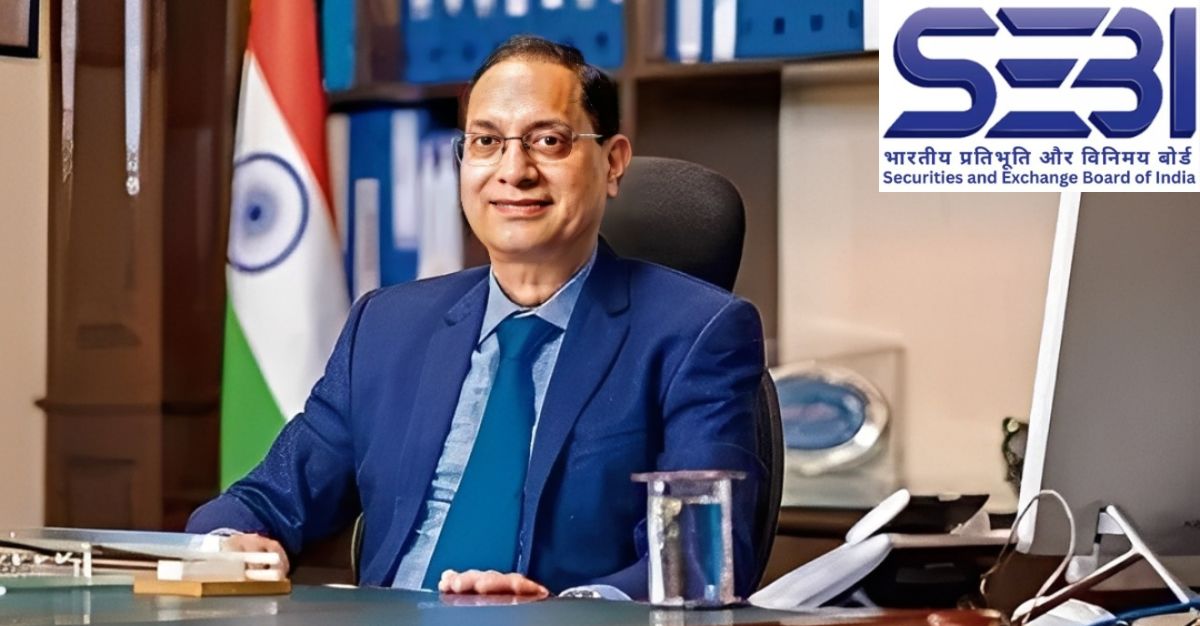
The Board approved several measures aimed at ease of doing business, broader participation, investor protection and stronger market governance.
The 211th meeting of the SEBI Board was held in Mumbai. The Board approved several measures aimed at ease of doing business, broader participation, investor protection and stronger market governance.
1) IPOs: Minimum Public Offer (MPO) & MPS Timelines (SCRR, 1957)
- Large issuers face challenges diluting substantial stakes at listing; regular post-listing dilution can create price overhang.
- Proposed changes (to be recommended to the Ministry of Finance): scale-based MPO and extended timelines to reach Minimum Public Shareholding (MPS), so large companies can reach 25 per cent gradually without liquidity concerns.
- Illustrative proposals:
- Up to Rs 1,600 crore market cap: no change (25 per cent MPO).
- Rs 1,600–Rs 4,000 Cr: no change (Rs 400 crore MPO).
- Above Rs 50,000 crore to Rs 1,00,000 Cr: no change (10 per cent MPO; MPS 25 per cent in 3 years).
- Rs 1,00,000–Rs 5,00,000 Cr: New: MPO = Rs 1,000 crore and at least 8 per cent; MPS 25 per cent within 5 years.
- >Rs 5,00,000 Cr: New: MPO = Rs 15,000 crore and at least 1 per cent (min dilution 2.5 per cent). If public shareholding is <15 per cent at listing, reach 15 per cent in 5 years and 25 per cent in 10 years; if ≥15 per cent: 25 per cent in 5 years.
- Listed entities still working toward MPS get the extended timelines for parity; any stock-exchange fines up to the notification date continue to be payable.
- Proposals were deliberated with the Primary Markets Advisory Committee and reflect feedback from the August 2025 consultation.
- Exchanges will continue surveillance to ensure orderly trading.
2) IPO Anchor Investors (ICDR, 2018)
- Merge anchor Category I and II into a single bucket for allocations up to Rs 250 crore with 5–15 anchor allottees (min Rs 5 crore per investor).
- For every additional Rs 250 crore (or part), permit +15 more anchors (min Rs 5 crore each).
- Reserve anchor portion for Domestic Mutual Funds, Life Insurance Companies (IRDAI-registered) and Pension Funds (PFRDA-registered).
- Anchor reservation increased to 40 per cent (one-third continues for domestic MFs; the rest for insurers/pension funds; any shortfall there can go to MFs).
- No change proposed in retail (35 per cent) or QIB (50 per cent) allocations in view of revised MPO.
- Expected outcome: more diversified, higher-quality anchor books; easier participation for FPIs with multiple funds.
- Reflects feedback from the August 2025 consultation.
3) Related Party Transactions (LODR, 2015)
- Introduce scale-based materiality thresholds tied to annual consolidated turnover.
- Audit Committee prior-approval thresholds clarified for subsidiary RPTs (turnover-based or capital + securities premium where audited statements aren’t available).
- Simpler disclosures for smaller RPTs (≤1 per cent of consolidated turnover or Rs 10 crore, whichever is lower).
- Omnibus approval validity provisions to be placed directly in LODR.
- Clarify retail purchases exemption for directors/KMPs/relatives when terms match employee offers; clarify “holding company” means listed holding company.
- Aim: ease of doing business without compromising investor protection; shaped by the August 04, 2025 consultation.
4) FPIs in IFSCs (FPI Regulations, 2019) & Overseas MF Investments
- Allow retail schemes in IFSCs with a resident Indian sponsor/manager to register as FPIs.
- Align sponsor contribution limit for resident Indian non-individuals to max 10 per cent of corpus (or AUM for retail schemes).
- To operationalise Indian MFs’ investments in overseas MFs/UTs with Indian exposure (per Nov 4, 2024 circular), amend FPI rules so that such funds can register as FPIs and include Indian MFs as constituents (subject to conditions).
5) AIFs: Accredited Investors (AIs) & Large Value Funds (LVFs)
- Introduce AI-only schemes with lighter compliance around investor protection.
- Extend additional flexibilities to LVFs (AI-only by definition); exemptions include Standard PPM and PPM audits.
- Permit existing AIF schemes to opt into AI-only or LVF status (with conditions).
- Reduce the LVF minimum investment from Rs 70 crore to Rs 25 crore to attract risk capital.
- Glide path: current minimum-commitment model continues alongside the new accreditation-based route; AI-only schemes get added flexibilities (e.g., exemption from pari-passu, tenure extension up to 5 years vs 2).
- Based on August 8, 2025, consultations and AIPAC inputs.
6) SWAGAT-FI: Single-Window Access for Trusted Foreign Investors
- Objective: easier access, unified registration across routes and reduced repeat compliance for verifiably low-risk foreign investors (FPIs/FVCIs).
- Eligible:
- Government & related investors (central banks, SWFs, multilaterals and 75 per cent+ owned entities).
- Regulated Public Retail Funds (mutual funds/unit trusts with diversified pools and independent managers), insurance companies (proprietary funds) and regulated pension funds.
- Process: new applicants can opt in; existing eligible FPIs may convert; SEBI to publish jurisdiction-wise eligible structures using a trust-but-verify approach aligned with the Aug 24, 2023, additional disclosure exemptions.
- Relaxations:
- Option to register as FVCI without extra documents.
- Exemption from the FVCI 66 per cent unlisted-asset rule.
- 10-year validity/KYC/fee cycle (vs 3-year; fee USD 2,500).
- Exempt from the 50 per cent aggregate NRI/OCI/RI contribution cap in FPIs.
- Single demat across FPI/FVCI/foreign investor units with proper tagging.
- Implementation: six months for systems/process changes.
7) India Market Access Website for FPIs
- Launch of www.indiamarketaccess.in as a single-window digital gateway for FPI entry and ongoing compliance.
- Provides CAF guidance, documentation advisory, applicable SEBI/RBI rules, taxation/repatriation guidelines and ecosystem role clarity.
- Joint initiative by MIIs (NSE, BSE, ICCL, NSE Clearing, CDSL, NSDL) with SEBI’s guidance.
8) Mutual Funds in REITs/InvITs
- Re-classify REITs as “equity” for MF/SIF investments; InvITs remain “hybrid.”
- MF exposure to REITs will count within equity limits and enable inclusion in equity indices; the earlier combined limit for REITs + InvITs will now be exclusively available to InvITs as a result of REITs’ equity classification.
- Based on April 2025 consultation with MFAC and stakeholders.
9) Mutual Fund Investor Protection & Inclusion
- Exit load cap reduced from 5 per cent to 3 per cent (aligns with common industry practice of 1–2 per cent).
- B-30 incentives: now only for new individual investors (new PAN) from B-30 cities; capped at 1 per cent of first application (lump sum) or first-year SIP total, up to Rs 2,000.
- Women inclusion: additional commission for onboarding new women investors (new PAN), computed/paid on the same lines as B-30 incentive.
- Proposals discussed with MF Advisory Committee (Jan 2023), public consultation (May 2023) and industry (July 2025).
10) Listed Non-Convertible Securities: Annual Reports (LODR)
- Issuers may send a letter with a web-link (and optional static QR code) to holders without registered emails, instead of physical annual reports.
- Timelines for sending annual reports to holders, exchanges and debenture trustees will align with the Companies Act, 2013 or relevant constituting statutes (e.g., 21 days before AGM under Section 136).
- Intended to cut costs and improve efficiency; supported by the Corporate Bonds and Securitisation Advisory Committee and public comments.
11) Strategic Investor Scope Expanded for InvITs/REITs
- Strategic Investor category now includes:
- All QIBs (e.g., public financial institutions; provident funds and PFRDA-registered pension funds with Rs 25 Cr+ corpus; AIFs; state industrial development corporations).
- Family trusts and SEBI-registered intermediaries with Rs 500 crore+ net worth.
- NBFCs in Middle/Upper/Top layers (RBI-registered).
- Aims to widen the capital base and instil confidence ahead of public offers, based on August 01, 2025, consultation and Hybrid Securities Advisory Committee inputs.
12) SEBI Local Offices: Stronger On-Ground Presence
- SEBI will establish Local Offices at State Capitals/major cities in phases.
- Phase 1 cities: Chandigarh, Jaipur, Lucknow, Guwahati, Bhubaneswar, Vijayawada, Hyderabad, Bengaluru.
- Purpose: deeper engagement with investors/intermediaries/issuers (including SMEs, Start-ups, REITs, Social Stock Exchange entities) and improved monitoring/market intelligence.
- Current footprint: Head Office (Mumbai), Regional Offices (Ahmedabad, New Delhi, Kolkata, Chennai) and Local Office (Indore).
13) Registrars to an Issue & Share Transfer Agents (RTAs): New 2025 Regulations
- Introduce activity-based regulation: SEBI will regulate only services RTAs provide to listed companies; services to unlisted can be via a separate business unit with a disclaimer.
- Remove categorisation of RTAs; adopt a common definition, revised net-worth and fee structure.
- Securities premium to count toward net worth (aligned with Companies Act, 2013).
- Mandate institutional mechanisms (senior oversight, surveillance, escalation/reporting, whistle-blower policy).
- Reflects stakeholder and public feedback (August 2025).
14) Investment Advisers (IAs) & Research Analysts (RAs): EoDB Measures
- Allow sharing past performance data in a standard template, certified (ICAI/ICMAI), in one-to-one communication for two years from the operationalisation of PaRRVA.
- Permit IAs to give a second opinion on pre-distribution assets and charge AUA-based fees (within 2.5 per cent p.a.), with dual-charge disclosure and annual consent.
- Easier corporatisation: extended timelines and ability to add clients/receive additional fees during transition beyond the Rs 3 crore threshold.
- Relaxed entry norms: graduates (any stream) eligible (with NISM certifications); no proof of address required (address disclosure + proof of identity still needed); no CIBIL, net-worth/AL statement, or infrastructure details at registration (relevant declarations continue).
- Aim: simplify compliance and grow the advisory/research profession; reflects August 2025 consultation.
15) Market Infrastructure Institutions (MIIs): Governance Strengthening
- Two Executive Directors (EDs) to head Vertical 1 (Critical Operations) and Vertical 2 (Regulatory, Compliance, Risk Management, Investor Grievances) as KMPs on the Governing Board; strengthens succession planning.
- Define roles/responsibilities of MD, EDs, CTO and CISO; set norms on directorships of MD/EDs in other companies.
- Emphasis: MIIs must prioritise public interest, technology/operations, risk/compliance over purely commercial considerations (Vertical 3).
- Based on June 24, 2025, consultation and Secondary Market Advisory Committee deliberations.