Understanding ELSS Funds: A Tax-Saving Investment Avenue!
DSIJ Intelligence-6 / 17 Sep 2025 / Categories: General, Knowledge, Trending
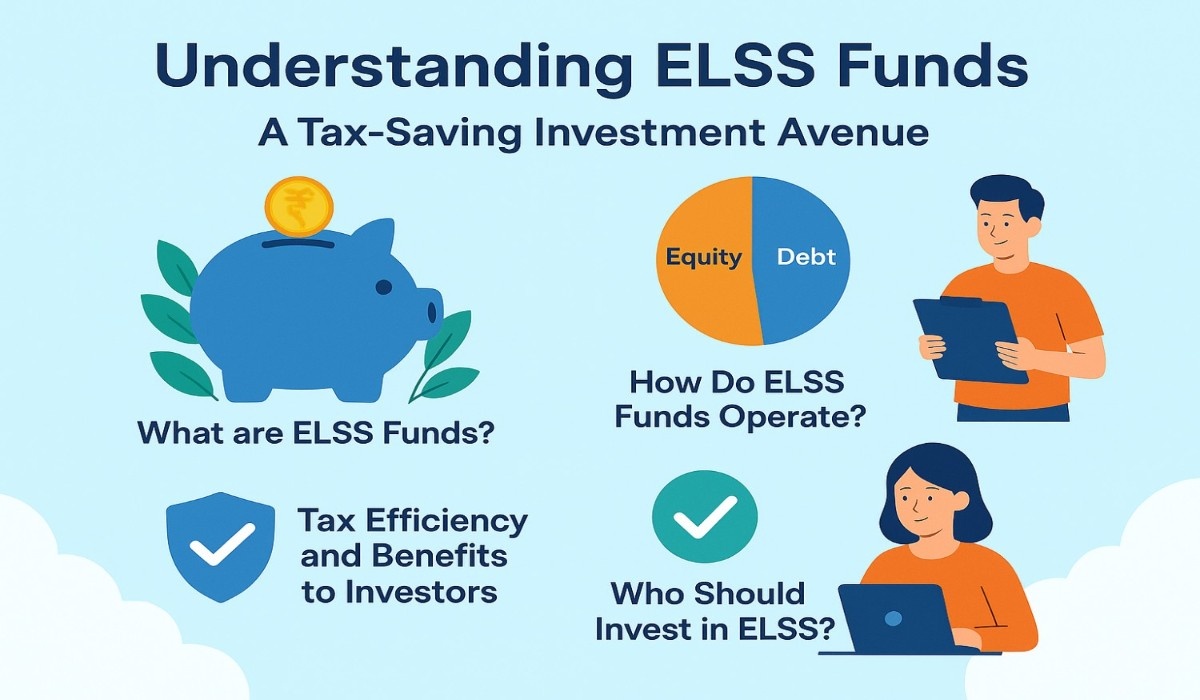
ELSS funds combine the growth potential of equities with the added benefit of tax savings, making them a compelling choice for wealth creation.
What are ELSS Funds?
Equity Linked Savings Schemes (ELSS) are diversified equity mutual funds that offer investors the dual advantage of wealth creation and tax saving. They are specifically designed to encourage long-term equity investment while providing tax deductions under Section 80C of the Income Tax Act, 1961. Investors can claim deductions of up to Rs 1.5 lakh in a financial year, making ELSS a popular choice for individuals looking to save on taxes while growing their wealth.
How Do ELSS Funds Operate?
ELSS funds primarily invest in equities and equity-related instruments, with at least 80 per cent of the portfolio allocated to stocks. They are managed by professional fund managers who select a mix of Large-Cap, Mid-Cap, and Small-Cap companies depending on the fund’s strategy.
A key feature of ELSS is the three-year lock-in period, which is the shortest among all Section 80C investment options. During this period, investors cannot redeem or switch their units. However, there is no maximum investment limit, and investors can invest either as a lump sum or through a Systematic Investment Plan (SIP), allowing them to average their purchase cost and benefit from market volatility.
Tax Efficiency and Benefits to Investors
One of the biggest advantages of ELSS funds is their tax efficiency. Investments up to Rs 1.5 lakh are eligible for deduction under Section 80C, reducing the investor’s taxable income. Additionally, gains from ELSS are treated as Long-Term Capital Gains (LTCG) because of the 3-year lock-in.
LTCG up to Rs 1 lakh in a financial year is tax-free; gains above that are taxed at 10 per cent without indexation. This makes ELSS more tax-friendly compared to many other investment options. Moreover, the lock-in period encourages disciplined investing and prevents premature withdrawals, allowing the investments to compound effectively over time.
Taxation Rules
Tax benefits on ELSS investments are available only under the old tax regime. Investors who have opted for the new tax regime cannot claim deductions for ELSS contributions. Additionally, taxpayers who have income from business or profession, including F&O trading, are generally not allowed to switch back and forth between tax regimes every year; once they opt out of the old regime, they cannot re-enter it easily. Hence, such investors should evaluate their eligibility for the old regime before investing in ELSS purely for tax savings.
Who Should Invest in ELSS?
ELSS funds are ideal for individuals who:
- Are looking to save tax under Section 80C.
- Have a long-term investment horizon (5 years or more).
- Can tolerate market fluctuations and equity risk.
- Are starting their investment journey and want equity exposure with tax benefits.
Young professionals, salaried individuals, and first-time investors often find ELSS an attractive entry point to equity markets.
Conclusion
ELSS funds combine the growth potential of equities with the added benefit of tax savings, making them a compelling choice for wealth creation. Their disciplined approach, short lock-in period, and tax advantages set them apart from other Section 80C instruments. For investors with long-term goals and a moderate risk appetite, ELSS can serve as an efficient and rewarding investment avenue.