Understanding Gross NPAs, Net NPAs, and Provisioning: The True Picture of Bank Asset Quality!
DSIJ Intelligence-6 / 16 Oct 2025 / Categories: General, Knowledge, Trending
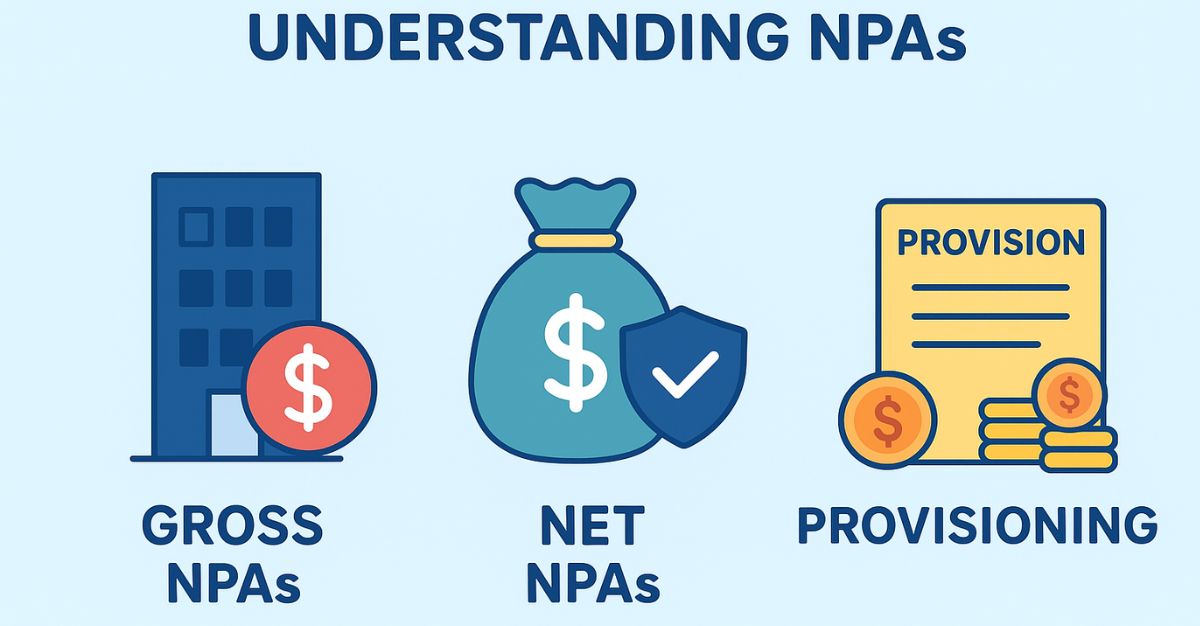
Understanding Gross NPAs, Net NPAs, and provisioning provides insight into a bank’s asset quality and risk management strength.
What Are NPAs and Why They Matter?
Non-Performing Assets (NPAs) represent loans or advances where the borrower has stopped making interest or principal payments for 90 days or more. NPAs are a crucial measure of a Bank’s asset quality and financial health. A high NPA ratio signals stress in the loan book, affecting profitability, capital adequacy, and investor confidence.
Gross NPAs vs. Net NPAs
Gross NPAs (GNPA) refer to the total value of all loans that have turned non-performing before accounting for any provisions. It reflects the overall problem loan portfolio of a bank.
Net NPAs (NNPA), on the other hand, are calculated after deducting provisions (reserves set aside for potential losses) from Gross NPAs. This figure indicates the actual loss risk after accounting for expected recoveries.
NNPA= (Gross NPA – Provisions)/(Gross Advances – Provisions)
A widening gap between Gross and Net NPAs usually means the bank has made adequate provisioning, thereby insulating itself better from future losses.
The Journey of a Loan: From Standard to NPA
The Reserve Bank of India (RBI) classifies loans into different Special Mention Accounts (SMA) categories before they turn into NPAs:
- SMA-0: Payments overdue up to 30 days.
- SMA-1: Overdue between 31 and 60 days.
- SMA-2: Overdue between 61 and 90 days.
If a borrower fails to make payments beyond 90 days, the account is tagged as an NPA. NPAs are further divided into:
- Substandard Assets: NPAs for less than 12 months.
- Doubtful Assets: NPAs for more than 12 months.
- Loss Assets: Loans identified as uncollectible.
This classification helps banks monitor early warning signals and initiate recovery or restructuring measures.
Provisioning: The Safety Net
Provisioning is the process of setting aside a portion of profits to cover potential loan losses. RBI mandates specific provisioning percentages based on the asset category—higher for doubtful or loss assets. This ensures that even if recovery fails, the bank’s capital and profitability remain protected. Effective provisioning cushions the balance sheet from shocks, improves investor confidence, and ensures regulatory compliance.
Conclusion
Understanding Gross NPAs, Net NPAs, and provisioning provides insight into a bank’s asset quality and risk management strength. While rising NPAs reflect credit stress, adequate provisioning and early intervention through SMA tracking can prevent financial deterioration. Ultimately, lower Net NPAs indicate prudent management and a resilient banking system capable of withstanding economic fluctuations.