Unimech Aerospace & Manufacturing Ltd.
Ratin / 20 Aug 2026 / Categories: Analysis, Analysis, DSIJ_Magazine_Web, DSIJMagazine_App, Regular Columns
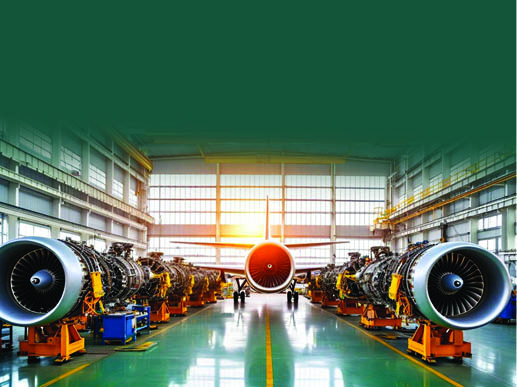
Over the past month, as of August 14, 2026, the Nifty India Defence Index gained around 5 per cent
With aero tooling driving current earnings and precision components emerging as the next growth engine, Unimech’s execution will determine the success of its transformation [EasyDNNnews:PaidContentStart]
Over the past month, as of August 14, 2026, the Nifty India Defence Index gained around 5 per cent, while Unimech Aerospace and Manufacturing Ltd. rose around 29 per cent. The outperformance has put the company in focus, but Unimech is not simply a defence theme play. It is a precision engineering manufacturer whose current earnings are dominated by aerospace tooling, while precision components, nuclear systems and engineered assemblies are being developed as future growth engines.
The distinction matters. Aero tooling contributed over 90 per cent of FY26 revenue and still accounted for around 76 per cent of Q1 FY27 consolidated revenue, despite the addition of Hobel Bellows, a manufacturer of metallic bellows and engineered assemblies acquired by Unimech in April 2026. The bigger question is whether Unimech can leverage this established franchise to build larger and more recurring precision manufacturing businesses.
Understanding the Business
Founded in 2016, Unimech makes complex tooling, precision components, assemblies and customised engineering products for aerospace, defence, energy and Semiconductor applications. It operates in a high-mix, low-volume model, producing specialised products in small quantities rather than standardised products at scale.
Two engagement models define its work. Under build-to-print, the customer supplies exact drawings and specifications, and Unimech manufactures according to those requirements. Under build-to-specification, the customer provides a functional requirement and Unimech engineers the solution.
The latter reflects higher value addition because Unimech is not simply selling machining capacity. It is converting customer requirements into specialised products that meet tight quality and dimensional requirements, with tolerances going down to ±5 microns in certain applications.
The Three Business Lines
Aero Tooling - Aero tooling is the core business, contributing more than 90 per cent of FY26 revenue. These are specialised jigs, fixtures and tools used to manufacture, assemble, inspect or overhaul aircraft and engines. Importantly, these products generally do not become part of the aircraft itself.
For example, an aircraft engine manufacturer may require a customised fixture to hold an engine section in the correct position during assembly. Maintenance operators may require specialised tools to remove, align or reinstall components during an overhaul. Similar jigs and fixtures are used while manufacturing wings, fuselage sections and other structural parts.
Within this business, aero engine tooling currently has a larger presence, while airframe tooling provides another growth opportunity
The business earns its value from engineering complexity rather than volume. This can support healthy margins, but tooling is largely purchase-order-driven. Revenue can therefore vary between quarters depending on aircraft production schedules, maintenance, repair and overhaul (MRO) activity and customer inventory levels. FY26 demonstrated this volatility when tariff uncertainty and inventory rationalisation affected volumes before demand started normalising.
The broader aerospace backdrop also remains favourable. Airbus expects demand for around 42,060 new commercial aircraft between 2026 and 2045, while the global aviation services market is expected to reach around USD 311 billion by 2044. A larger global fleet can support demand for components, maintenance and specialised tooling across the aircraft lifecycle.
Precision Components and Assemblies - Precision components and assemblies, or PCA, are strategically different from tooling. A tooling product helps manufacture or maintain an aircraft or engine. A precision component, on the other hand, may become part of the customer's final equipment.
This distinction also changes the revenue model. Tooling is generally ordered as required, whereas a precision component that gets qualified and enters serial production can potentially generate repeat orders over several years.
This makes PCA important for Unimech's future revenue visibility. Management has indicated that around 80 per cent of qualified PCA parts are moving into serial production. The five-year agreement with Austria-based aerospace Tier 1 supplier FACC, valued initially at USD 7.5 million, is an early example. The contract itself may not be transformational in size, but it demonstrates Unimech's shift from supplying mainly tools towards participating in recurring aerospace production programmes.
If more such programmes move from qualification to serial production, PCA could gradually reduce the company's dependence on order-driven tooling.
Nuclear and Energy - Nuclear and energy form a smaller but emerging part of the business. Unimech supplies precision components and electromechanical turnkey systems for these applications.
Cumulative nuclear orders stood at around ₹87 crore by the end of FY26, with part of the order pool expected to be executed during FY27. Nuclear projects generally have longer execution cycles of around 12 to 18 months, compared with the shorter cycle in aero tooling. Nuclear is strategically important because it provides a domestic growth opportunity, complementing an aerospace business that is likely to remain largely exportoriented given the location of major global aircraft and engine OEMs.
Entry Barriers
Machinery alone does not make an aerospace supplier. Customers typically require extensive inspection, testing and qualification before regular production begins. Unimech completed more than 200 first article inspections in FY26, while its qualified SKU base crossed 6,300 by Q1 FY27, compared with around 6,000 at the end of FY26.
This creates a degree of customer stickiness. Replacing a qualified supplier may require fresh technical evaluations, approvals and production trials. However, qualification should not automatically be treated as recurring revenue. A qualified tooling product will still be ordered only when required. The greater recurring opportunity lies in precision components that successfully move from qualification into serial production.
Hobel Bellows Acquisition
The ₹450 crore acquisition of Hobel Bellows in April 2026 broadened Unimech's capabilities beyond its traditional machining and tooling base. Hobel manufactures metallic bellows, expansion joints, flexible hoses and engineered assemblies used in power generation, locomotives, marine engines and other industrial applications. It reported FY26 turnover of around ₹123.74 crore. The deal was funded largely through internal accruals and IPO proceeds rather than fresh debt, reflecting balance sheet discipline. For Unimech, the acquisition adds complementary products rather than taking the company into a completely unrelated business. Synergies are expected to build in stages: near-term cross-selling into Unimech's existing customer base, followed by qualification of Hobel's bellows for nuclear cooling systems, and eventually integration into aerospace and semiconductor programmes once the Hobel facility secures relevant certifications.
Hobel is already large enough to materially influence consolidated numbers. Despite being consolidated for only two months in Q1 FY27, it contributed around 21 per cent of consolidated revenue. This makes it important to distinguish between organic growth in Unimech's original business and acquisition-led growth from Hobel in future quarters.
Growth Triggers
The next phase of Unimech's growth can come from several areas:
■ Recovery and expansion in aero tooling: The existing tooling franchise remains the company's earnings base. Growth can come from additional products for existing customers, new customer additions, greater aircraft production and increasing MRO activity.
■ PCA moving into serial production: This is arguably the most important medium-term trigger. As more qualified components enter serial production, the company can build a larger base of recurring revenue rather than depending predominantly on individual tooling orders.
■ New aerospace programmes: The FACC agreement provides an early validation of Unimech's precision component strategy. Winning additional Tier 1 or OEM-linked programmes could materially expand the PCA business over time.
■ Execution of the nuclear order pipeline: With around ₹87 crore of cumulative nuclear orders, execution in FY27 can increase the contribution of the domestic energy business and diversify the revenue mix.
■ Hobel Bellows growth and cross-selling: Hobel brings an existing revenue base as well as new product capabilities. The longer-term opportunity lies in using those capabilities across Unimech's nuclear, aerospace and other engineering relationships.
■ Saudi Arabia expansion: Unimech has formed a 51:49 joint venture with Yusuf Bin Ahmed Kanoo Group, with around USD 30 million of planned investment over three years. The venture will target machining and remanufacturing opportunities in the Middle East energy market. Since it is still at an early stage, it should be seen as future optionality rather than an immediate earnings driver.
What Does the Order Book Tell Us?
The confirmed consolidated order book stood at around ₹280.3 crore as of June 30, 2026, comprising ₹180.2 crore from Unimech and ₹100.1 crore from Hobel. This was down from around ₹314 crore in May, which management attributed mainly to strong execution during Q1 rather than weakening demand. The headline order book needs context because the company's businesses have different execution cycles. Aero tooling can generally be executed within four to six months, whereas nuclear orders can take 12 to 18 months. Precision component programmes may also require qualification before regular production begins.
While the order book provides near-term revenue visibility, the larger opportunity lies beyond the current backlog. Aero tooling orders will continue to support growth in the short term, but the key value driver will be the conversion of precision component programmes into serial production, as this can improve revenue visibility and reduce dependence on one-time tooling orders.
Financial Performance
Unimech has maintained strong growth, supported by its aerospace tooling business and precision-engineering capabilities. FY26 was a consolidation year as the company navigated softer order schedules, tariff-related challenges and capacity expansion costs.

Key Highlights
■ FY25 reflected strong operating performance, with revenue of ₹243 crore, operating margin of 38 per cent and PAT of ₹83 crore, supported by the high-value aerospace tooling business.
■ FY26 was a transition year, with revenue remaining stable at ₹240 crore and margins moderating to 32 per cent due to execution challenges, tariff impact and expansionrelated costs.
■ Q1 FY27 showed a strong recovery, with revenue reaching ₹107.6 crore, EBITDA margin improving to 36 per cent and PAT rising to ₹28 crore.
■ The focus now shifts to capital efficiency, as better utilisation of expanded capacity, Hobel integration and growth in precision components will determine future ROCE improvement.
Strategy
Management is positioning Unimech as a broader precision engineering platform rather than a pure aerospace tooling company. Capital is being deployed into PCA capabilities, product qualifications, Hobel and international expansion. The board has also approved an enabling resolution to raise up to ₹750 crore through a QIP. Management has indicated that this should not be interpreted as an imminent capital raise and is intended to provide flexibility around minimum public shareholding requirements and future capital needs.
Risks
■ The first is continued dependence on aero tooling, which still dominates the core revenue base and can experience quarter-to-quarter volatility.
■ The second is qualification risk. Getting a product approved does not guarantee meaningful commercial volumes.
■ Third is export exposure, which makes tariffs, currency movements and geopolitical developments relevant, something FY26 already demonstrated.
■ Execution is another important risk. Unimech is simultaneously scaling PCA, integrating Hobel, executing nuclear orders and developing the Saudi venture. Managing all these initiatives while maintaining margins and capital discipline will be critical.
What to Watch
Over the next few quarters, investors should closely monitor:
■ PCA conversion into serial production: Management has indicated that around 80 per cent of qualified precision component and assembly products are moving towards serial production. Faster conversion can increase recurring revenue and reduce dependence on orderdriven tooling.
■ Order inflows and nuclear execution: Fresh aero-tooling orders, alongside execution of the existing ₹87 crore nuclear order pipeline, will be important for sustaining growth.
■ Hobel Bellows integration: Its standalone growth, margin performance and eventual cross-selling into Unimech's existing customer base will determine whether the ₹450 crore acquisition creates meaningful incremental value.
■ Margins and capital efficiency: Sustaining EBITDA margins while improving capacity utilisation and moving ROCE from the current 15 to 16 per cent towards management's longer-term aspiration of above 20 per cent will be an important measure of execution.
Valuation and Outlook
Unimech's growth opportunity remains attractive, but valuations are demanding after the recent rally. The stock trades at a P/E of around 106 times and a PEG ratio of 3.02, indicating that a considerable part of the expected earnings growth is already reflected in the valuation. At the same time, the balance sheet remains relatively comfortable, with a debt-to-equity ratio of just 0.17, giving the company financial flexibility as it scales its newer businesses.
The operating outlook remains positive. Recovery in aero tooling provides support to the existing earnings base, while PCA serial production, the USD 7.5 million FACC programme, ₹87 crore nuclear pipeline, Hobel Bellows and the Saudi Arabia venture provide multiple growth options. However, these opportunities will need time to translate into earnings, while the current valuation leaves limited room for execution delays.
Given this combination of strong business optionality but expensive valuations, a HOLD stance appears appropriate for existing investors to participate in the potential upside from execution of these growth triggers. For fresh investors, the risk-reward would become more favourable after a reasonable correction in the stock price rather than chasing the recent rally.
[EasyDNNnews:PaidContentEnd] [EasyDNNnews:UnPaidContentStart]
To read the entire article, you must be a DSIJ magazine subscriber.
[EasyDNNnews:UnPaidContentEnd]