Will Donald 2.0 Trump The Indian Markets?
Sayali Shirke / 28 Nov 2024/ Categories: Cover Stories, Cover Story, DSIJ_Magazine_Web, DSIJMagazine_App, Stories
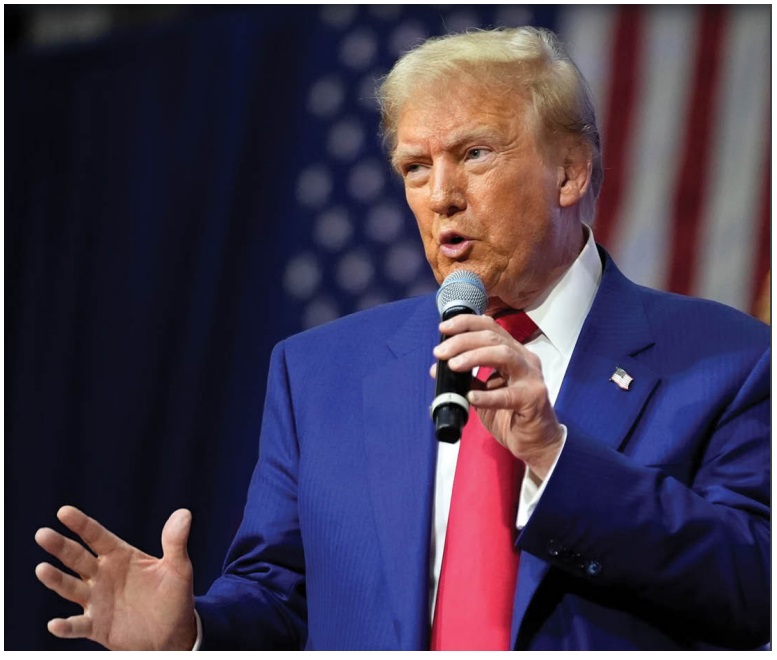
The return of Donald Trump to head the U.S. administration will definitely mean a change in the existing policies that are likely to impact not only the global trade scenario and the value of the U.S. dollar but also a restructuring of various sectors in India that are dependent on trade links with the U.S.
The return of Donald Trump to head the U.S. administration will definitely mean a change in the existing policies that are likely to impact not only the global trade scenario and the value of the U.S. dollar but also a restructuring of various sectors in India that are dependent on trade links with the U.S. While some of the sectors like IT will likely create a tectonic shift due to restrictive immigration policies, there are some sectors that may post gains. The article takes a deeper look at how the shift will take place in the various leading sectors [EasyDNNnews:PaidContentStart]
Despite all the odds, including legal battles and even an assassination attempt, Donald Trump has made a dramatic return as the 47th president of the United States. As the leader of the world’s largest economy and home to the most influential financial markets, Trump’s presidency could significantly alter global economic dynamics. His domestic policies and international strategies could reshape trade flows, investor sentiment and economic policies worldwide. The U.S. economy, contributing over one-fifth of the global GDP, acts as the bedrock of the international financial system.
Wall Street, with a market capitalisation surpassing USD 50 trillion, remains the epicentre of the global capital markets. Additionally, the U.S. dollar, which dominates over 80 per cent of the foreign exchange transactions, ensures that shifts in the American economic policy reverberate across the globe. As a hub of innovation and consumer power, any pivot in U.S.’ policy under Trump’s leadership could trigger ripple effects, from altering trade agreements to shifting global investment strategies. In short, it is quite possible that with Trump coming back to power, the global boat may begin to rock a bit.
Initial Market Reactions: Euphoria Meets Reality
The global financial markets initially celebrated Donald Trump’s win, with a relief rally fuelled by reduced political uncertainty and expectations of tax cuts and increased government spending. Wall Street saw the Dow Jones surging to new highs, reflecting strong risk-on sentiments. However, reactions in the Indian equity markets were mixed. While the Sensex and Nifty initially surged in anticipation of robust U.S. economic growth, the optimism was short-lived. The next day, Sensex plunged over 900 points and Nifty slipped below the 24,200 mark.
In the process, it reversed all the gains made a day earlier. This highlights the underlying concerns among Indian investors. The divergence between the U.S. and the Indian markets underscores the nuanced impact of Trump’s policies on emerging markets like India. Therefore, this cover story dives deeper into how Trump’s presidency could shape the future of Indian equities and examines investor sentiment, economic policies and sectoral impacts. The global stage is set for an era of transformation, and understanding these shifts will be critical for navigating the post-Trump victory economic landscape.
Reaction of Indian Markets
The negative reaction from the Indian equity markets stems from the potential implications of Trump’s ‘Make America Great Again’ agenda. This slogan signals a focus on strengthening U.S. growth, which could result in a preference for U.S. investments over the emerging markets. Foreign portfolio investors (FPIs), crucial to the Indian equity markets, may redirect funds back to the U.S. in pursuit of higher returns, thereby reducing inflows into Indian stocks. Moreover, Trump’s focus on protectionist trade policies and his emphasis on domestic manufacturing could adversely affect Indian exportdriven sectors.
This includes IT and pharmaceuticals. These sectors rely heavily on the U.S. market, and any restrictions on outsourcing or changes in drug pricing policies could hit the revenues. The interconnected nature of the global economy means that Trump’s policies will have widespread implications, influencing everything from trade flows to currency dynamics. For India, while certain sectors may thrive under the new U.S. administration, others face significant challenges. It will depend on the emerging policy shifts to make a final assessment about which of the Indian sectors will be affected the most.
Major Policy Shifts
Economy, Trade, Taxes, Immigration and Inflation - Donald Trump has currently put out a more protectionist agenda with tighter trade restrictions to fulfil his election manifesto of ‘Make America Great Again’. This may likely be aimed at preventing Chinese firms from re-routing goods to the U.S. via other countries. But a broader set of tariffs of 10-20 per cent for all imports will put a question mark on India’s price competitiveness in the U.S.. Notably, Trump has earlier called India ‘a tariff king’. All this may have inflationary pressure in the U.S..
These tariffs would likely raise the cost of imported goods, leading to higher prices for consumers and businesses. Economists warn that such measures could add approximately one percentage point to the inflation rate, pushing it above the Federal Reserve’s 2 per cent target. This will make lowering of interest rate further difficult for the U.S. Federal Reserve. Therefore, despite Trump promising to deliver lower interest rates and favour easy money policies, there is little hope about this issue. Trump is also considering challenging the Federal Reserve’s political independence.
Besides, he also plans to reduce corporate and individual taxes intended to stimulate economic growth. However, in an economy already near full employment, this additional stimulus could overheat the economy, leading to increased demand and, consequently, higher prices. Analysts suggest that these tax cuts could exacerbate inflationary trends. Also, Trump’s proposed stricter immigration policies, including deportations and reduced immigration levels, may have a serious impact, leading to labour shortages in sectors such agriculture and construction.
These shortages may drive up wages and production costs, which would then be passed on to consumers in the form of higher prices. In summary, the combination of increased tariffs, expansive fiscal policies, restrictive immigration measures and potential interference with monetary policy under Trump’s administration could contribute to higher inflation in the U.S.. All this is clearly reflected in the higher U.S. 10-year benchmark bond yield, which has already gained 5 per cent in the last one month despite U.S. Federal Reserve cutting the rate by 25 basis points in its last meeting in November.
Movement of U.S. 10-Year Bond Yield in Last One Month - The likelihood of the above policy shift is already strengthening the U.S. dollar against the other currencies.

Higher U.S. yields and restrictive trade policies strengthen the USD through several mechanisms. Elevated yields on U.S. Treasury bonds attract international investors seeking better returns, leading them to convert their local currencies into U.S. dollars, thereby increasing the demand and boosting the dollar’s value. Additionally, when the U.S. interest rates are higher relative to the other countries, the dollar becomes more attractive for investors, leading to capital inflows that strengthen the currency, which we might be experiencing now Implementing tariffs on imports can reduce the trade deficit by decreasing imports and potentially increasing domestic production, resulting in fewer dollars flowing out to pay for foreign goods, which can support the dollar’s value. Furthermore, restrictive trade policies may signal the government’s commitment to protecting domestic industries, influencing investor confidence and perceptions of economic stability, indirectly affecting the currency’s strength. The graph indicates this movement. In the last one month, USD index has strengthened by 3.3 per cent and is currently trading above 107 against 104.05 a month ago.

Impact on India
Higher yields for all the reasons discussed above will definitely lead to slowing down the rate cut cycle. This might lead to a stock market decline as stock prices and yields generally move in opposite directions. The following graph shows the relative movement of Nifty 50 and U.S. 10 Year Treasuries yield. This clearly shows an inverse relation.

Moreover, the rupee has hit the lowest in comparison to the USD. The Indian rupee hit a record low of 84.4 against the USD, and this could complicate the inflation trajectory in India. Since India is a net importer, any weakening of the currency will adversely impact inflation control. Besides, all this will also affect the foreign institutional investors (FIIs) outflow.
A stronger dollar may accelerate FIIs outflows from the Indian equity market. This is currently being witnessed with the FIIs having withdrawn in record numbers from the domestic equity market. In addition to the general impact that we will see on the Indian economy and markets, there are different sectors that too will get impacted by this change in leadership in the U.S.. In the following paragraphs, we will present a detailed analysis of the sectors that are going to benefit and the ones that will be adversely impacted, looking at the reasons why this may happen.
IT Services and Technology - Donald Trump’s return to the U.S. presidency presents a complex scenario for India’s IT sector, offering both potential benefits and challenges. On the positive side, Trump’s administration is expected to implement pro-business and pro-growth strategies, including corporate tax cuts and deregulation, which could stimulate increased spending by the American companies on technology services, thereby benefiting the Indian IT firms. Analysts anticipate that such tax reductions could lead to a rebound in enterprise technology spending. However, there are concerns about stricter U.S. immigration policies, particularly regarding H-1B visas, which are crucial for Indian IT professionals working in the U.S..
Tighter visa regulations could limit the mobility of skilled Indian workers, affecting the sector’s operations. Additionally, Trump’s protectionist trade stance, including higher tariffs and the ‘Buy American, Hire American’ initiative, may pose challenges for Indian IT companies that rely heavily on the U.S. market, potentially leading to increased operational costs and reduced competitiveness. Nonetheless, the Indian IT companies have tried to de-risk the immigration challenge by hiring more locals in onsite markets, relying on subcontractors, and opening more near-shore delivery centres so as to rely less on U.S.’ visas.

Pharmaceuticals - The U.S. market is a crucial destination for the Indian pharmaceutical sector, accounting for 33 per cent of India’s pharmaceutical exports, with an export value exceeding USD 8.46 billion in FY24. The U.S. is the world’s largest pharmaceutical market and provides significant opportunities for Indian manufacturers, particularly in the generics segment, where the Indian companies have a strong foothold.

With the new administration coming into power early next year, we may see the Indian pharmaceutical sector impacted in the following ways:
1. Policy on Drug Prices: Both Republicans and Democrats focus on reducing healthcare costs, which may exert pricing pressure on Indian generic drugs. Trump’s prior administration had introduced measures like capping insulin costs and allowing the states to import drugs from Canada, fostering price competition that challenged the Indian pharmaceutical companies’ profitability.
2. Regulatory Compliance: Trump’s administration had previously increased compliance scrutiny for the Indian pharmaceutical companies, raising operational challenges. A similar approach could be expected, affecting Indian firms’ market penetration and profitability.
3. Protectionism and Trade Policy: Trump’s protectionist stance might include broader tariffs or stricter trade measures, which could impact Indian the pharmaceutical exports. However, his aggressive stance against China could indirectly benefit the Indian companies, positioning them as alternative suppliers. 4. Market Access and Volumes: While pricing pressures might tighten, the U.S.’ consistent demand for affordable generics ensures that export volumes are unlikely to decline significantly. This makes the overall impact neutral to slightly negative for the Indian pharmaceutical sector.
Oil and Gas - Donald Trump’s return as U.S.’ president could significantly impact the oil and gas sector globally, including India’s energy landscape. He is expected to adopt policies favouring fossil fuel production, rolling back green energy initiatives to boost American crude oil and natural gas output. This increase in production may lead to lower global crude prices, benefiting the Indian refiners and consumers by reducing energy costs. Additionally, higher U.S. natural gas output could pave the way for long-term gas contracts for Indian utilities, aligning with India’s strategy to expand its natural gas share in the energy mix. Though advantageous for India in terms of cost savings, they may also shift the focus away from renewable energy, contrasting with the global climate commitments.

Defence - The impact of Donald Trump returning to power on the Indian defence sector would likely hinge on his approach to international alliances and geopolitical strategies. Trump’s emphasis on countering China aligns with India’s strategic interests in the Indo-Pacific region, potentially accelerating the Indo-U.S. defence partnerships. This could result in increased arms sales and technology transfers to India, bolstering its defence capabilities. However, his transactional approach might focus more on immediate strategic gains rather than long-term collaboration, possibly linking defence deals to economic concessions or trade-offs.
India’s role as a counterbalance to China may receive a push, but the dynamics could be influenced by Trump’s stance on India’s ties with Russia, which might be overlooked compared to a stricter stance under a Democratic administration. The overall trajectory suggests potential growth in defence trade and cooperation, though contingent on India’s ability to navigate Trump’s ‘America First’ agenda. In fact, it is this policy stance will likely impact the Indian makers of defence equipment, tilting the hitherto stable balance.
Automotive - The Donald Trump-led administration could have a mixed impact on the Indian automotive sector. His government’s focus on boosting local manufacturing and infrastructure spending might revive the demand for Class 8 trucks, positively impacting Indian suppliers like Bharat Forge and R K Forgings. However, his tough stance on electric vehicles (EVs), including easing EV demand incentives and subsidies, could slow EV sales in the U.S., negatively affecting the Indian automotive component manufacturers with significant exposure to EVs, such as Sona BLW. On the flip side, this might lead to increased demand for hybrid vehicles.
Such an increase may provide new opportunities for Indian automotive suppliers as they cater to both ICE and hybrid powertrains. Additionally, higher tariffs on Chinese and Mexican automotive imports under Trump’s protectionist policies could indirectly benefit Indian manufacturers, positioning them as alternative suppliers to the U.S. market. This will likely create a scenario where the Indian automotive sector faces short-term challenges but medium-term growth prospects through hybrid adoption and export opportunities.
Metals - Donald Trump’s policies such as infrastructure spending including the border wall, protecting domestic industries and reducing the focus on electric vehicles (EVs) could increase the demand for metals. After Trump’s election in 2017, commodity prices spiked, indicating that a similar trend could happen again.

Energy - Donald Trump’s campaign has received support from the oil and gas industry. His promise to reduce the emphasis on EVs could lead to higher oil and gas production and investment, which would benefit metals and pipe companies.
Navigating the Trump Policy Era: An Investor’s Approach
Investors need a carefully calibrated strategy to navigate the complexities of Donald Trump’s policies, which could reshape the global economic dynamics. The potential for higher inflation, restrictive trade measures and elevated U.S. bond yields may pose challenges for equity markets worldwide, including India. A strong U.S. dollar and rising yields could accelerate foreign institutional outflows, putting pressure on the emerging market currencies and stocks.
For Indian investors, this underscores the importance of evaluating sector-specific opportunities while accounting for potential trade and policy headwinds, all the while maintaining a long-term investment perspective.
[EasyDNNnews:PaidContentEnd] [EasyDNNnews:UnPaidContentStart]
To read the entire article, you must be a DSIJ magazine subscriber.
Current print subscribers click here to login
Subscribe now to get DSIJ All Access
[EasyDNNnews:UnPaidContentEnd]