Will Electric Vehicles Turn The Auto Market Around?
Ninad Ramdasi / 28 Dec 2023 / Categories: DSIJ_Magazine_Web, DSIJMagazine_App, Special Report, Special Report, Stories
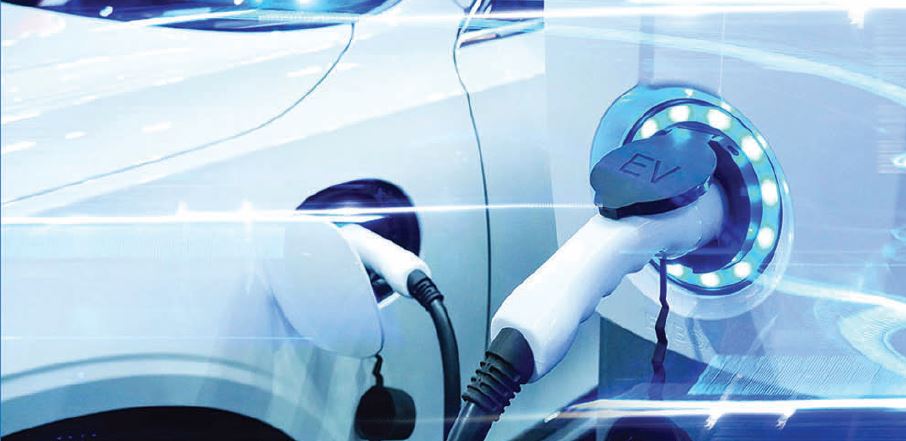
While electric vehicles are gradually gaining acceptance among users, the industry has yet to show any profitability.
While electric vehicles are gradually gaining acceptance among users, the industry has yet to show any profitability. This is because adjustments are inevitable in the marketplace, and each EV maker’s ability to adapt to various changes is paramount. The article takes stock of how the EV sector fares as of now and what the future will unfold
The cost of lithium-ion battery packs reached a historic low of USD 139 per kWh this year, marking a notable 14 per cent decrease from the levels seen in 2022. This substantial drop is attributed, in part, to heightened production capacity along various segments of the battery value chain. In contrast to the "unprecedented price increases" observed in the previous year, the decline in 2023 is also influenced by the reduction in prices for raw materials and components. [EasyDNNnews:PaidContentStart]
Furthermore, the growth in demand during this period did not fully meet certain industry expectations.
Despite adverse government measures, including the unforeseen reduction in FAME II (Faster Adoption and Manufacturing of Electric Vehicles II) subsidies, depletion of state subsidies, penalties for FAME non-compliance in the e2W sector, and the absence of a payment security mechanism for e-buses, the electric vehicle (EV) industry is witnessing a gradual increase in penetration by approximately 100 basis points (bps) across two-wheelers (2W), three-wheelers (3W), and passenger vehicles (PV).

However, the pace of this growth is slower than initially anticipated at the beginning of the year. With the ongoing decline in battery prices, electric vehicles (EVs) are poised to become more budget-friendly and accessible to Indian consumers. Supported by sustained government backing, increasing market demand, and the expansion of infrastructure, India has the potential to realise its ambitious goal of achieving 30 per cent EV penetration by the year 2030.
New Kid on the Block
So, what's causing the sudden buzz, and why are battery prices experiencing a decline? Well, there are specific factors at play, possibly linked to battery giants investing in new sodium-based technology. This is indicative of a potential shakeup in the industry, a development crucial for the ongoing energy transition.
Sodium, abundantly present in rock salts and brines worldwide, holds promise for making strides in energy storage and electric vehicles due to its cost-effectiveness and greater availability compared to lithium, the current dominant material in batteries. Despite its chemical and structural similarities to lithium, sodium has not been extensively used on a large scale, primarily due to the superior range and performance of lithium cells of similar size.
Chinese electric vehicle manufacturer BYD Co. recently entered into a USD 1.4 billion deal to construct a sodium-ion battery plant, signalling a significant move in this direction. China's CATL also announced in April that its sodium-based batteries would be incorporated into certain vehicles starting this year. The success of sodium-based products could potentially limit the consumption of lithium, underscoring the challenges of forecasting metal usage in an ever-evolving industry where companies continually seek more cost-effective and efficient cell technologies.
While sodium-ion batteries may not be suitable for larger electric vehicles due to their lower energy density, they could find increasing use as alternatives to lithium in smaller, shorter-range vehicles or in power-grid energy storage applications, where size is less of a constraint. Despite the recent decline in lithium prices, sodium remains a more economical option. If the market for sodium-based batteries expands, it might parallel the ascent of lithium-ion phosphate (LFP) cells, which gained preference over higher-performing alternatives due to their lower cost.
The most apparent potential advantage of sodium lies in its application for storing surplus electricity in grids, a critical aspect as the global transition away from fossil fuels gains momentum. In this context, the emphasis is more on low cost than on battery performance.
The success of sodium in this arena will hinge on enhancing the cycle life of cells—how many charge and discharge cycles they can undergo before necessitating replacement. Presently, sodium cells average around 5,000 cycles, whereas the most cost-effective lithium products manage about 7,500 cycles.

At present, the emerging sector of sodium-based cells appears poised for dominance by Chinese producers, who already command a significant share of lithium battery production due to the economies of scale achieved through their large operations, contributing to cost efficiency. This positioning is likely to afford them a competitive edge over their European and American counterparts.

The most apparent potential advantage of sodium lies in its application for storing surplus electricity in grids, a critical aspect as the global transition away from fossil fuels gains momentum. In this context, the emphasis is more on low cost than on battery performance. The success of sodium in this arena will hinge on enhancing the cycle life of cells—how many charge and discharge cycles they can undergo before necessitating replacement. Presently, sodium cells average around 5,000 cycles, whereas the most cost-effective lithium products manage about 7,500 cycles.
At present, the emerging sector of sodium-based cells appears poised for dominance by Chinese producers, who already command a significant share of lithium battery production due to the economies of scale achieved through their large operations, contributing to cost efficiency. This positioning is likely to afford them a competitive edge over their European and American counterparts.
The decline in prices this year can be attributed to an upswing in production capacity coupled with unexpectedly subdued demand. Nonetheless, the industry is actively transitioning to a more cost-effective cathode chemistry known as lithium iron phosphate. Anticipated technological advancements and enhancements in manufacturing processes are poised to contribute to continued reductions in battery pack prices, projected to reach USD 113 per kWh in 2025 and USD 80 per kWh in 2030.
While electric vehicle (EV) sales have experienced substantial year-over-year growth, the pace of expansion has been somewhat slower than anticipated by many in the industry. Managing the delicate balance between forecasting demand growth and aligning production increases in an optimal manner is inherently challenging, especially in rapidly evolving sectors. However, this dynamic interplay, along with resulting price fluctuations, often catalyses accelerated changes. Notably, the demand for batteries in both electric vehicles and stationary energy storage is still set to surge at an impressive rate of 53 per cent year-on-year, reaching 950 gigawatt-hours in 2023.
Despite this robust growth, major battery manufacturers reported lower utilisation rates for their facilities, as demand fell short of initial expectations for many companies. Consequently, several EV and battery manufacturers re-evaluated their production targets, influencing battery prices. Although lithium prices reached a peak at the end of 2022, concerns about sustained high prices have largely diminished, leading to a renewed decline in prices.
However, despite these cost reductions, electric vehicles (EVs) haven't seen a substantial increase in affordability for the average consumer. Why is that? Firstly, the reduction in battery costs doesn't immediately result in more affordable electric vehicles (EVs). The process of manufacturing an EV is capitalintensive, encompassing numerous expenses beyond just the battery. Even with the decreasing cost of batteries, automakers grapple with high production costs.
Secondly, the EV market has not expanded as swiftly as originally anticipated. This slower growth implies that the substantial investment in EV production hasn't yielded the expected returns, leading to higher prices for consumers. For instance, in 2022, battery prices experienced a brief increase due to a misalignment between supply and demand. Moreover, automakers exercise caution in passing on cost reductions to consumers. Companies like General Motors and Ford have encountered delays in their EV rollout, attributed to market conditions and the necessity for technological enhancements. This underscores a broader challenge: the EV industry is still navigating its path in a competitive and ever-evolving market.

Conclusion
Discussing the significant decline in lithium cell and raw material prices, Subir Chakraborty, Managing Director and CEO of Exide Industries, in post result analysts' conference call has highlighted the inherent volatility of commodity prices on a global scale. Commodity prices are subject to fluctuations influenced by various factors, including geopolitical considerations and demand-supply dynamics. Given this uncertainty, the key question arises: how does one assess our project amid such market fluctuations?
Chakraborty emphasises that operating in an environment characterised by fluctuating commodity prices is a reality, citing the example of lead acid, another commodity that experiences ongoing volatility. Therefore, the ebb and flow in commodity prices should not be the sole determinant for initiating or withdrawing from a project. Instead, the focus should shift towards navigating these fluctuations effectively.
The technology agreement with their supply partner incorporates supply chain management, providing us access to their supply sources. Consequently, they can align themselves with global trends, mitigating the impact of commodity price variations. It is acknowledged that changes in commodity prices influence the pricing of the end product, a commonplace phenomenon in such scenarios.
Chakraborty expresses confidence that these market corrections will not adversely affect the profitability of the venture. It is recognised that adjustments are inevitable in the marketplace, and the company's ability to adapt to these changes, informed by their technology agreement and supply chain management practices, positions them well to withstand and navigate the impact of commodity price fluctuations on their project's financial performance.
Hence, the current fall in the prices of lithium-ion battery is not going to impact much to any part of the entire EV value chain whether its prices of EV or company providing batteries.
[EasyDNNnews:PaidContentEnd] [EasyDNNnews:UnPaidContentStart]
To read the entire article, you must be a DSIJ magazine subscriber.
Current print subscribers click here to login
Subscribe NOW to get DSIJ All Access!
[EasyDNNnews:UnPaidContentEnd]