Will India Become The Manufacturing Hub?
Arvind DSIJ / 23 Jul 2026 / Categories: DSIJ_Magazine_Web, DSIJMagazine_App, Special Report, Special Report, Stories
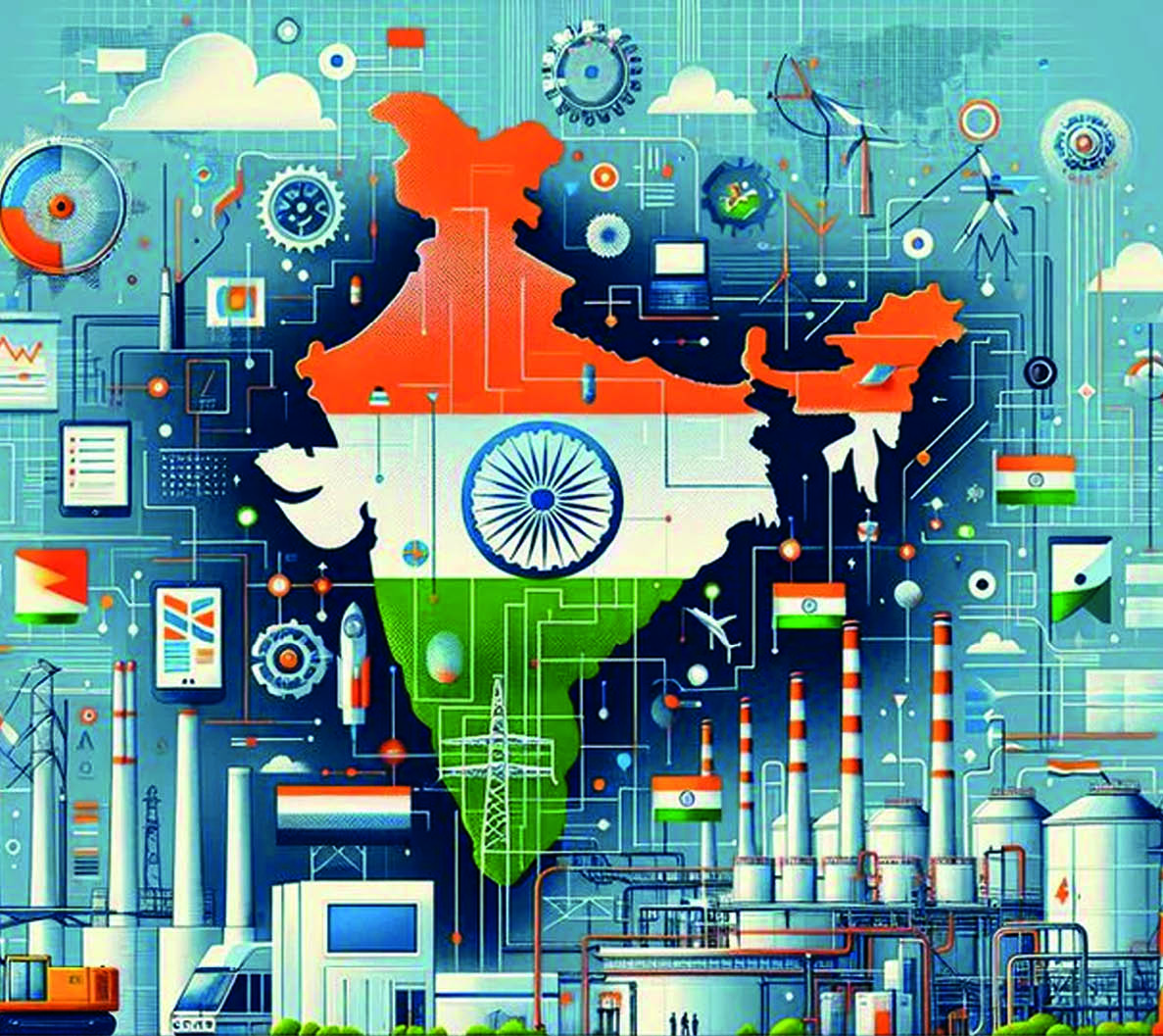
For decades, China has been the undisputed benchmark for global manufacturing,
For decades, China has been the undisputed benchmark for global manufacturing, but shifting supply chains are creating new opportunities for emerging economies. India is increasingly positioning itself as a credible alternative through policy reforms, infrastructure development and expanding industrial capacity. The bigger question, however, is whether this momentum can translate into a globally competitive manufacturing ecosystem and sustainable long-term investment opportunities [EasyDNNnews:PaidContentStart]
For most of its post-liberalisation years, India's economic identity was written in software code and service contracts. The country that gave the world Infosys and Wipro, powered back offices across Wall Street, and wired Silicon Valley's support systems grew comfortable with the idea that manufacturing was someone else's strength. Factories, freight corridors, forges and foundries; those belonged to China.
That assumption is now being systematically dismantled.
India is expanding its manufacturing capabilities across electronics, automobiles, pharmaceuticals, steel, renewable energy, chemicals, Defence equipment and Semiconductors. Global manufacturers are increasing production in the country, domestic companies are investing in new capacity, and states are competing to attract factories, supplier networks and industrial clusters. But the central question for investors is not simply whether India is growing its industrial base. It is whether that growth is translating into sustainable, long-term economic value or whether much of it remains anchored in policy announcements and short-term optimism.
Why Manufacturing Matters for India
To understand India's manufacturing moment, one must first understand why manufacturing matters for an economy of India's size and structure.
Manufacturing is a powerful jobs multiplier. A single large factory creates employment not just on its production floor but also across raw materials, components, transport, packaging, warehousing, maintenance, engineering services and technology. These effects ripple outward across an industrial region, supporting the growth of smaller cities and towns that services-led growth rarely reaches.
This matters because services alone cannot generate enough productive employment for the hundreds of millions of Indians expected to enter the workforce over the coming decades. Unlike services, manufacturing can absorb workers across a wide range of skill levels, from machine operators and technicians to engineers, product designers and research professionals. It is one of the few sectors capable of simultaneously creating livelihoods at scale while building technical capabilities.
A stronger industrial base also improves economic resilience. India continues to depend on imports for several critical components, industrial materials, electronic products, chemicals and machinery. Expanding domestic production reduces exposure to global supply chain disruptions, improves the country's trade balance and strengthens its position in international commerce.
According to World Bank data, manufacturing contributed approximately 13 per cent of India's GDP in 2025. Under MoSPI's Gross Value Added (GVA) methodology at constant prices, manufacturing accounted for around 17 per cent of total GVA in FY25, a share that has been rising steadily but remains well below the government's target of 25 per cent. Through the National Manufacturing Mission, the government aims to achieve this target by 2035, while also creating 143 million jobs and increasing merchandise exports to USD 1.2 trillion.
These are ambitious goals. Achieving them will require much more than policy announcements. It will depend on sustained improvements in infrastructure, supplier development, labour productivity, technology adoption and domestic value addition.
From Make in India to a Targeted Industrial Strategy
India's push towards manufacturing-led growth gained momentum with the launch of the Make in India initiative in September 2014. The programme marked a significant policy shift, with the government moving from acting primarily as a regulator to positioning itself as a facilitator for businesses and investors, while placing manufacturing at the centre of economic policymaking.
Over the decade since, the strategy has become considerably more focused. Broad investment promotion has evolved into sector-specific incentives, infrastructure development, domestic component manufacturing programmes and supply chain localisation initiatives.
The Production Linked Incentive (PLI) scheme has emerged as the most significant pillar of this strategy. Covering 14 industries, including electronics, automobiles, pharmaceuticals, Solar modules, telecom equipment and advanced batteries, the programme carries a total outlay of approximately ₹1.91 lakh crore. Unlike traditional subsidies, it links incentive payments to production or incremental sales, effectively rewarding output rather than simply capacity creation.
The results are becoming increasingly tangible. As of December 31, 2025, approved PLI projects had attracted cumulative investments exceeding ₹2.16 lakh crore and generated cumulative sales of more than ₹20.41 lakh crore. Exports under the scheme crossed ₹8.3 lakh crore, while direct and indirect employment exceeded 14.39 lakh people. Manufacturing FDI rose 18 per cent year-on-year in FY25 to USD 19.04 billion, reflecting growing global confidence in India's industrial trajectory.
These figures suggest that the PLI scheme has moved beyond approvals and into actual production, exports and employment. The more important long-term question, however, is whether supported industries can sustain growth once incentives begin to taper. The strongest outcomes will emerge where the scheme has helped build domestic supplier ecosystems, foster proprietary technologies and create globally competitive companies, rather than production that remains structurally dependent on government support.
The Union Budget 2026-27 further reinforced India's industrial strategy through measures spanning semiconductors, electronics components, chemicals, critical minerals and biopharmaceuticals. The Budget announced the India Semiconductor Mission 2.0 with an initial allocation of ₹1,000 crore. On July 15, 2026, the Union Cabinet approved the full Semicon 2.0 programme with a total budget outlay of ₹1,27,500 crore, representing a substantial expansion that signals India's intent to build indigenous semiconductor capabilities over the long term.
The Budget also increased the outlay for the Electronics Components Manufacturing Scheme from ₹22,919 crore to ₹40,000 crore, proposed support for three dedicated chemical parks, and announced Rare Earth Corridors across Odisha, Kerala, Andhra Pradesh and Tamil Nadu. The Biopharma SHAKTI scheme commits ₹10,000 crore over five years to position India as a global hub for biologics and biosimilars.
Underpinning all these initiatives is a sustained increase in infrastructure investment. Government capital expenditure has risen from ₹2 lakh crore in FY2014-15 to a Budget Estimate of ₹12.2 lakh crore in FY2026-27. This matters because factories cannot operate competitively without dependable roads, Railways, ports, power supply, industrial parks and freight networks. Incentives may attract investment, but infrastructure determines whether manufacturing can remain efficient and competitive over the long term.
China as a Benchmark, Not a Blueprint
To calibrate India's progress fairly, a comparison with China is unavoidable, not because India must replicate China's model, but because China's trajectory illustrates both the scale of the opportunity and the depth of the challenge.
China's manufacturing transformation began with Deng Xiaoping's economic reforms in 1978 and the establishment of Special Economic Zones in Shenzhen, Zhuhai, Shantou and Xiamen. Its accession to the World Trade Organisation in 2001 accelerated its integration into global supply chains, while sustained investment in ports, highways, railways and industrial clusters created an ecosystem of unmatched scale and efficiency. Today, manufacturing contributes around 25 per cent of China's GDP, and the country accounts for nearly 30 per cent of global manufacturing value added. In 2025, China's manufacturing output reached approximately USD 4.82 trillion, making it the world's largest for the sixteenth consecutive year.
That dominance, however, also created a concentration risk that global companies were slow to recognise. The U.S.-China trade tensions that began in 2018 exposed the vulnerabilities of highly concentrated supply chains. The COVID-19 pandemic reinforced those concerns. Factory shutdowns in Guangdong disrupted automobile production in Michigan, semiconductor manufacturing in Taiwan and pharmaceutical supply chains across Europe. In response, global manufacturers increasingly adopted the China+1 strategy, retaining their existing operations in China while simultaneously expanding production capacity in alternative locations to improve supply chain resilience.
India, with its large and relatively young workforce, competitive labour costs, growing domestic market and a government focused on strengthening the manufacturing ecosystem, has emerged as one of the most credible beneficiaries of this strategic shift.
The aggregate comparison, however, remains sobering and should not be glossed over.

India's manufacturing value added stands at approximately USD 494 billion, compared with China's USD 4.82 trillion. India accounts for roughly 3 per cent of global manufacturing output, while China contributes around 30 per cent. India's merchandise exports stood at USD 441.8 billion in FY25, whereas China's exports exceeded USD 3.5 trillion.
These gaps are not a cause for despair, but they are a reminder to remain realistic about the pace of India's industrial transformation. China's manufacturing leadership was built over more than four decades through consistent investment, policy stability and the steady development of supplier ecosystems. India is attempting to compress parts of that journey, but there are limits to how quickly such structural capabilities can be built.
Where the Opportunity Is Most Credible
India's manufacturing transformation is becoming increasingly broad-based, and the opportunities it creates extend well beyond the headline sectors. Understanding which industries are best positioned to generate sustainable investment value requires distinguishing between genuine structural progress and capacity expansion driven primarily by policy incentives.

Electronics manufacturing stands out as one of India's most credible near-term opportunities. The rapid growth in mobile phone production and exports has demonstrated the country's ability to attract global manufacturing investments, with Apple's supply chain expansion through Foxconn and Tata Electronics marking a significant shift in how global original equipment manufacturers perceive India's industrial readiness. The larger opportunity, however, lies not in assembling finished devices but in developing the domestic supply chain for components, including printed circuit boards, batteries, display modules and other high-value inputs that currently have limited local production.
India is the world's third-largest automobile producer and has developed an extensive ecosystem spanning passenger vehicles, commercial vehicles, two-wheelers, tractors and auto components. The transition to electric vehicles is creating new opportunities in batteries, electric motors, power electronics, charging infrastructure and vehicle software. As vehicles become increasingly dependent on electronics and advanced materials, the risk is that a significant share of value remains concentrated in imported components. The industry must continue moving towards higher localisation and greater product development if the EV transition is to benefit Indian manufacturers rather than simply shift import dependency from petrol engines to battery packs.
India is the world's largest supplier of generic medicines and occupies an important position in the global pharmaceutical industry. However, the country remains dependent on imports for several active pharmaceutical ingredients and chemical intermediates, particularly from China. The Biopharma SHAKTI scheme targets higher-value biologics and biosimilars, which involve greater research intensity, technological capability and intellectual property. Expanding into these segments can help India build research capabilities that create durable competitive advantages rather than relying primarily on cost-based manufacturing.
As the world's second-largest steel producer, India has a strong foundation for the capital goods and industrial engineering sectors that support a manufacturing economy. Steel underpins infrastructure, automobiles, railways, Construction and engineering, but its growth must be accompanied by stronger capabilities in machinery, machine tools and industrial automation. A modern manufacturing economy cannot remain dependent on imported machinery to operate its own factories.
Renewable energy is another structural opportunity. India is expanding its solar and battery manufacturing capacity, creating demand across the supply chain for solar modules, cells, batteries, inverters, power electronics, wind equipment and transmission systems. Critical minerals processing, highlighted by the proposed Rare Earth Corridors, will determine whether India can build indigenous supply chains for these strategic inputs or remain dependent on imports for components that underpin multiple industries of the future.
Defence manufacturing also deserves attention beyond its strategic significance. The sector demands exceptionally high standards of quality, reliability and technological capability, meaning companies that build defence and Aerospace supply chains often develop expertise that can be transferred to civilian industries. Aerospace components, drones, precision engineering, communication systems and advanced materials all generate spillover benefits across the broader manufacturing ecosystem.
Finally, India's manufacturing strategy must continue supporting labour-intensive industries. Textiles, apparel, footwear, food processing, furniture and light engineering can create employment on a scale that capital-intensive sectors cannot match. These industries can absorb workers across a wide range of skill levels, strengthen exports and spread industrialisation into smaller cities and rural regions, helping address the employment challenge alongside the push for technological advancement.
India's Distinctive Strengths
India's manufacturing journey will be shaped by its own economic strengths and structural advantages rather than by following another country's template.
The size of India's domestic market is one of its most underappreciated advantages. Manufacturers can achieve scale by serving Indian consumers before expanding into export markets, particularly in automobiles, mobile phones, appliances, pharmaceuticals, renewable energy equipment and construction materials. This allows companies to test products, improve efficiency and build distribution networks at home before competing globally. However, the domestic market should not become a substitute for export competitiveness. India must encourage businesses to serve local demand while meeting global standards of quality, cost and technology. Otherwise, the protection offered by a large domestic market could become a ceiling rather than a launchpad.
India's strengths in software, engineering services, digital infrastructure and data analytics represent another distinctive advantage. Modern factories increasingly depend on automation, artificial intelligence, connected machinery, predictive maintenance and digital supply chains. Combining these capabilities with manufacturing can help India develop smarter production systems, industrial platforms and technology-enabled products, a path that China did not have available when it was building its industrial base.
States will play a central role in determining whether these advantages are fully realised. They control land availability, local infrastructure, electricity supply, water access, labour administration and many business approvals. Competition among states can improve the investment environment, but attracting a large manufacturing project is only the first step. Successful industrial clusters also require strong supplier networks, efficient transport infrastructure, skilled workforce development, housing, reliable water and power supply, and seamless access to ports and markets. Ultimately, the quality of cluster development will matter just as much as the number of investment announcements.
The Structural Gaps That Must Close
The true measure of India's manufacturing story lies not only in its opportunities but also in its challenges.
Large-scale manufacturers depend on thousands of component and material suppliers that can consistently meet global standards of quality, cost, delivery and reliability. While India has expanded its assembly capabilities across several sectors, many high-value components continue to be imported. Building a deeper supplier ecosystem will require more than capital investment. It will also depend on access to finance, technology transfer, quality certification and long-term partnerships between large manufacturers and smaller suppliers.
Micro, small and medium enterprises (MSMEs) form the foundation of any robust industrial ecosystem, producing components, castings, forgings, chemicals, tools, packaging materials and engineering services. However, many Indian MSMEs continue to face delayed payments from large customers, high borrowing costs, outdated equipment and limited access to modern technology. Without meaningful progress on these issues, the supplier ecosystem needed to support large-scale manufacturing will remain underdeveloped.
Logistics reliability is equally critical. India has invested heavily in highways, railways, ports and dedicated freight corridors, but raw materials must reach factories on time, and finished products must move efficiently to domestic and export markets. Last-mile connectivity, customs clearance, port turnaround times and better coordination across road, rail and maritime transport all require continued improvement to reduce the overall cost of manufacturing in India.
Research and development will ultimately determine whether India moves beyond low-cost assembly into higher-value manufacturing. Companies that design products, hold patents, develop production processes and create intellectual property generate more durable economic value than those that simply assemble imported components behind tariff barriers. Government policy and corporate investment will both need to place greater emphasis on domestic innovation and technology creation.
What Investors Should Focus On
India's manufacturing transformation should be viewed as a long-term structural theme rather than a short-term market opportunity. Sustainable opportunities are emerging across electronics, semiconductors, automobiles, auto components, capital goods, defence, renewable energy equipment, pharmaceuticals, chemicals, logistics and industrial infrastructure. Not every company announcing a capacity expansion will create shareholder value. Manufacturing projects require significant capital, working capital, technology and strong execution capabilities. Expansion can weaken a business if capacity utilisation falls short of expectations, margins come under pressure or debt increases without a corresponding improvement in returns. The decisive question is not how large a factory a company is building, but whether it can convert that investment into sustainable revenue growth, profitability and returns on capital.
Investors should focus on businesses with strong balance sheets, proven technological capabilities, reliable long-term customer relationships and a consistent track record of execution. Companies that can generate free cash flow and earn healthy returns on capital throughout an investment cycle are likely to create greater long-term value than those whose growth depends primarily on continued policy support.
The opportunity also extends well beyond final product manufacturers. Component suppliers, industrial automation companies, testing and quality assurance firms, warehousing operators, logistics providers and precision engineering businesses all stand to benefit as India's manufacturing ecosystem deepens. Ultimately, the key distinction is between capacity creation and value creation, and the strongest businesses will be those capable of delivering both.
Conclusion
India's manufacturing ambitions have moved well beyond slogans and initial investment announcements. The expansion of electronics production and exports, the progress of the Production Linked Incentive (PLI) scheme, the scale of Semicon 2.0, rising manufacturing FDI and sustained increases in government capital expenditure all point to the gradual strengthening of the country's industrial base.
Yet the journey remains at an early stage, and an objective assessment requires acknowledging that the gap with China is still substantial. Closing that gap will take decades, not years, and will depend on consistent execution in supplier development, logistics, skills, research, innovation and policy stability, areas that are often less visible than headline investment announcements but are far more important to long-term competitiveness. India's manufacturing model will be shaped by its own strengths, combining a large domestic market, engineering and software expertise, a young workforce and steadily improving infrastructure. The real test will be whether rising manufacturing capacity translates into higher productivity, stronger exports, deeper localisation and globally competitive Indian companies that can sustain growth even after policy incentives are phased down.
For investors, the manufacturing story should be viewed through a long-term lens. The businesses most likely to create lasting value are not those riding a policy wave but those steadily building genuine industrial capabilities through better products, stronger supplier networks, sound balance sheets and technological leadership. India's manufacturing story is still being written, and while meaningful progress has been made, its most significant chapters are likely to unfold over the decades ahead.
[EasyDNNnews:PaidContentEnd] [EasyDNNnews:UnPaidContentStart]
To read the entire article, you must be a DSIJ magazine subscriber.
[EasyDNNnews:UnPaidContentEnd]