Your Biggest Asset is You
R@hul Potu / 19 Sep 2024/ Categories: Cover Stories, DSIJ_Magazine_Web, DSIJMagazine_App, MF - Cover Story, Mutual Fund
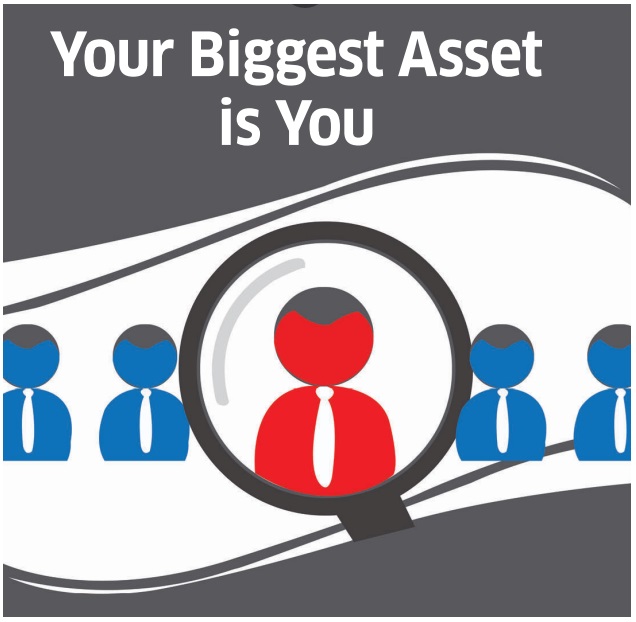
The article provides insights on how to factor human capital into your asset allocation strategy so that you accumulate wealth over the years and also set aside a corpus for your future needs such as higher education, buying a property, marriage-related expenditure, retirement funds, and so on
The article provides insights on how to factor human capital into your asset allocation strategy so that you accumulate wealth over the years and also set aside a corpus for your future needs such as higher education, buying a property, marriage-related expenditure, retirement funds, and so on[EasyDNNnews:PaidContentStart]
When we talk about wealth, our minds often go straight to our savings, investments, pensions, property, or any other form of financial or physical capital. However, there’s another significant, yet often overlooked, part of your overall wealth—your human capital. While financial capital represents the money and assets you have accumulated less your liabilities, human capital is essentially your future earnings power. It’s the present value of all the income you can expect to earn from your work in the future. For many people, especially younger ones, this is their single largest asset.
Estimating Human Capital
Although there are different indirect ways of calculating the value of this human capital asset, we can borrow one of the concepts from finance to make it simple and understandable. We will use the dividend Discount Model (DDM), which is a method used to estimate the value of an asset based on the present value of its expected future dividends. In its simplest form, the DDM assumes that the value of an asset is the sum of all future dividend payments, discounted back to their present value.
It is represented in the following formula:
Asset Value = Dividend | (Discount Rate – Growth in Dividend), where discount rate will depend upon risk-free rate and uncertainty associated with dividend.
In the context of human capital, the ‘dividend’ represents a person’s annual earnings from employment or any business that he does. Since individuals can expect their wages or business to grow over time through experience, promotions, business growth, etc., the DDM can be applied to estimate the value of their future earnings.
Human Capital = w | (r – g)
Where: ‘w’ is the current wage
‘r’ is the discount rate
‘g’ is the expected wage growth rate.
By treating human capital as a financial asset, it becomes easier to understand its importance in long-term financial planning and how changes in employment, skills or health can impact one’s overall wealth accumulation. Let’s consider a 25-year-old person who earns ₹8,00,000 per year after tax. As long as this person remains capable of working, his ‘human capital’ functions as an asset that generates a ‘dividend’ in the form of annual earnings from employment.
Now, the discount rate for human capital will be different from a company and may be ascertained by taking into consideration the following factors:
1. Risk-Free Rate: You can start by using a risk-free rate, like the yield on government bonds (example, Indian government bonds). This reflects the time value of money, assuming no risk.
2. Inflation Rate: Since wages generally grow to offset inflation, you may incorporate expected inflation into the discount rate. This will help balance out real wage growth and ensure that future earnings are valued in today’s terms.
3. Employment Risk Premium: Add a risk premium to account for job-related uncertainties, such as the potential for unemployment, changes in industry demand, or skill obsolescence. This premium reflects the inherent risk that future income may not be guaranteed or may fluctuate.
4. Personal Factors: Factors like health, career stability, and the likelihood of career advancement can affect the discount rate. A higher rate may be used for individuals in volatile or risky professions such as sales, while a lower rate may apply to those in more secure fields or government jobs.
In this case, we can assume a discount rate of 10 per cent (comprising a 7 per cent government bond yield and a 3 per cent premium for income uncertainty). Using this rate and assuming an 8 per cent annual wage increase, we estimate the human capital to be approximately ₹4 crore. While some may argue that the wage growth rate is too low, it’s actually quite reasonable when considered over the individual’s entire working life.
By the time he retires, he would likely be earning around ₹1.2 crore per year with 8 per cent of annual growth rate, which seems realistic in the context of long-term career progression. If this 25-year-old client can save a portion of income, eventually he or she will begin to accumulate some financial capital. In the meantime, he may also buy a house i.e. make a real estate investment, and along the way will begin to contribute towards a pension scheme such PPF or any other schemes like the National Pension Scheme (NPS), etc.
Over time, the value of human capital will decline and the value of financial and pension wealth will rise till he is employed after which it starts to fall (as it is accumulated for retirement and then spent down in retirement), and the value of real estate will simply continue to compound (assuming its value is not spent in retirement). In fact, over the cumulative lifetime with some relatively straightforward assumptions, his relative weight of these different groupings – real estate, financial capital, pension wealth and human capital – will vary quite significantly, as shown below, indicated by the Morningstar research paper.

Human Capital Investment: A Unique Asset Class
Human capital, the skills and knowledge acquired through education and training, is a distinctive asset class with unique implications for asset allocation. Unlike other investments, educational investment is indivisible, meaning one cannot acquire a partial degree. Moreover, it carries significant opportunity costs, as it’s challenging to balance work and study simultaneously.
A crucial life cycle consideration is the diminishing value of investing in human capital over time. Given the finite nature of human life, the potential returns on education decrease as individuals age. This contrasts with other investments that can generate returns indefinitely
Liquidity is another key differentiator. Unlike financial assets, future labour income is non-tradable due to moral hazards and adverse selection. This makes it difficult to borrow for educational investments, although financial aid programmes can help mitigate this constraint. This restriction is even more pronounced for other forms of human capital investment, such as healthcare.
Human Capital and Asset Allocation: A New Perspective
If asset allocation is fundamental to a solid investment strategy,human capital should also be considered to find an appropriate asset allocation of an individual. So, how does this influence your investment choices? Like stocks, bonds, or real estate, human capital comes with its own risk-return profile. For instance, someone with a stable government job has low-risk human capital, similar to a bond. Conversely, a start-up founder or investment banker possesses riskier human capital, more comparable to a high-beta stock.
Aligning Your Financial Capital with Your Human Capital
Let’s look at how this plays out: if you have a low-risk job, like working in government job, your human capital is relatively secure, almost like a risk-free asset. This gives you the flexibility to take on more risk with your financial capital by investing in stocks or other high-return assets. On the flip side, if your job is highly correlated with the stock market—like finance or technology—you might want to tilt your portfolio towards more stable investments like bonds or real estate or gold to hedge against the volatility of your human capital.
This nuanced view of asset allocation helps you align your investment strategy with your overall risk profile, including the riskiness of your job. For instance, during economic downturns, jobs in volatile industries are at higher risk, and your financial investments in assets carrying relatively lower risk should compensate by being more conservative. Incorporating human capital into your financial planning doesn’t just stop at investment strategy—it also reshapes how you approach risk management.
Traditional portfolio analysis focuses on diversifying financial assets, but human capital theory encourages a broader perspective by considering these key risks while considering human capital:
■ Earnings Risk: Your job stability and the likelihood of income fluctuations over time. For instance, a teacher or a dentist has lower earnings risk compared to someone working in a cyclical industry like oil and gas.
■ Mortality Risk: Human capital carries the inherent risk of losing human capital due to death. This can be and should be mitigated with life insurance to protect your dependents from financial liabilities.
■ Longevity Risk: This is the risk of outliving your financial resources. For those with longer expected life spans, it’s crucial to ensure that financial capital lasts as long as needed, potentially through investments in annuities or other lifetime income products.
As you approach retirement, the decline in human capital and growth in financial capital should significantly influence your asset allocation. The key factors to consider are the size of your financial capital relative to your human capital, the riskiness of your human capital, and your risk tolerance. Early in your career, when financial capital is low and human capital is high,your capacity for risk is greater, allowing for a higher allocation to stocks. However, as human capital diminishes and financial capital grows, your risk capacity declines. To manage risk effectively, you should gradually shift from stocks to bonds, a strategy known as a ‘glide path’, to maintain balanced risk in your total wealth.
Improving your Human Capital
1. Pursue Higher Education: Earning an advanced degree or additional qualifications could increase your earning potential at your current job or similar positions. However, be cautious. Education can be expensive, and it doesn’t always guarantee higher income. Assess your personal situation and the return on investment before committing your time and fund.
2. Enhance Job-Related Skills: Like education, improving your skills relevant to your job can make you more valuable to your employer. This can strengthen your case when asking for a raise or promotion.
3. Ask for a Raise: You can’t receive what you don’t request. If you believe you deserve a raise, ask for it and provide clear justification for why your contributions merit increased compensation.
4. Seek a Higher-Paying Job: If you feel underpaid or dissatisfied in your current role, explore opportunities elsewhere. Look for jobs that offer better pay or growth prospects but be sure to secure a new position before leaving your current one.
5. Generate Side Income: A ‘side hustle’ can help you earn extra income that can boost your savings or financial stability. If the side business grows and starts to generate significant income, it might be worth dedicating more time to it, especially if it shows the potential to outpace your regular job.
6. Start a Full-Time Business: While starting a business can be financially and emotionally challenging in the early stages, it can also offer greater control over your income and long-term potential. If entrepreneurship appeals to you, ensure you have a solid plan before quitting your job. You may want to start it as a side project to test the waters before fully committing to the venture.
Investing in oneself enhances skills, knowledge, and well-being, increasing future earning potential and adaptability. Like financial capital, personal growth compounds over time, yielding higher returns. Aligning human capital with financial capital ensures a balanced, resilient foundation for long-term success in both personal and professional pursuits
Putting it all Together
Focus on what you can control! While you can’t control the markets, you can control your earning potential—your human capital. By treating human capital as part of your overall wealth, you can develop a more personalised and effective asset allocation strategy. For instance, a young professional with a stable job and high human capital may focus on growthoriented investments, like equities.
On the other hand, someone nearing retirement might prioritise preserving both human and financial capital by investing in more stable, less volatile assets. If your job is closely tied to the stock market, the human capital theory suggests allocating a greater portion of your financial assets to fixed income or less correlated investments. This approach may sound new, but it’s often rooted in common sense. Consider the builders who were burned by the property crash.
They relied on the construction boom for income but invested their earnings in correlated assets, like real estate and bank shares. Similarly, employees awarded company shares often have their wealth and future earnings tied to the same risks. A striking example is Lehman Brothers’ analysts and executives who invested much of their wealth in company stock, only to face devastating losses on both fronts during the 2008 financial crisis.
Conclusion
Wealth consists of both financial and human capital. During your working years—also known as the accumulation phase— you convert human capital into financial capital. Saving is the key to replacing lost human capital with financial capital, which can be invested to cover future retirement needs. A higher savings rate and an early start, benefiting from compounding, can ensure that sufficient human capital is converted for retirement. Life insurance protects against the loss of human capital in the event of death, while lifetime annuities safeguard against longevity risk.
It’s crucial to consider the balance between human capital and financial capital when making asset allocation decisions. While predicting future market performance is notoriously difficult, the one asset you can influence is your human capital. It’s never too late to enhance it through education, skill development, or personal growth. Investing in yourself remains one of the most valuable financial moves you can make. In conclusion, looking at a portfolio in isolation, without factoring in human capital and other forms of household wealth (like pensions or PPF), can lead to misallocation of assets.
This often results in either excessive or insufficient risk exposure. Though the details of how to ‘optimally’ integrate human capital into financial planning may still be researched for years, even basic adjustments are far better than ignoring this important factor. Ultimately, your ability to earn is one of your most powerful financial tools. By incorporating human capital into your overall wealth strategy, you can make betterinformed decisions, balance risk more effectively, and build a stronger financial future. After all, your greatest asset might just be you.
[EasyDNNnews:PaidContentEnd] [EasyDNNnews:UnPaidContentStart]
To read the entire article, you must be a DSIJ magazine subscriber.
Current print subscribers click here to login
Subscribe NOW to get DSIJ All Access!
[EasyDNNnews:UnPaidContentEnd]