Bloodbath on Dalal Street: Nifty 50 Falls 2.06%, Sensex Drops 1,470 Points; Rs 9.70 Lakh Crore Wealth Wiped Out
 Join Us
 Follow Us
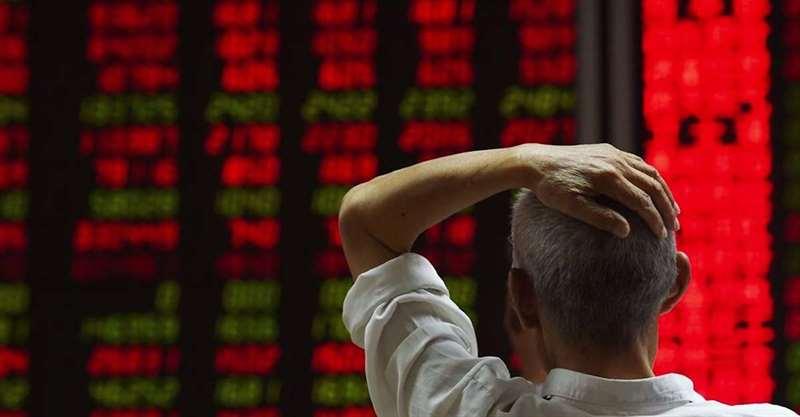
At the closing bell, the Nifty 50 fell by 488.05 points, or 2.06 per cent, to settle at 23,151.10. The Sensex declined by 1,470.50 points, or 1.93 per cent, ending at 74,563.92.
✨ Key Takeaways
Market Update at 04:05 PM: India’s key equity benchmarks, the Nifty 50 and the Sensex, witnessed a bloodbath on Dalal Street on Friday, March 13, as both indices declined about 2 per cent. The benchmarks also registered their worst weekly performance in 15 months amid rising crude oil prices and fears of energy supply disruptions triggered by the ongoing Middle East war.
The Nifty 50 opened with a gap down of 176 points and extended its losses throughout the trading session. The index eventually closed below the 23,200 mark, hitting a fresh 10-month low. At the closing bell, the Nifty 50 fell by 488.05 points, or 2.06 per cent, to settle at 23,151.10.
The Sensex declined by 1,470.50 points, or 1.93 per cent, ending at 74,563.92. Meanwhile, the Bank Nifty index also ended sharply lower, dropping 1,343 points to close at 53,757. The Indian fear gauge, India VIX, surged by 5 per cent during the session, reflecting heightened volatility in the markets.
For the week, the Nifty 50 recorded its biggest weekly loss, declining 5.31 per cent.
The sharp market sell-off significantly impacted investor wealth. The total market capitalisation of companies listed on the BSE declined to Rs 4,30,02,020 crore on March 13 from Rs 4,39,72,120 crore on March 12. This translated into a loss of about Rs 9,70,099 crore in a single trading session.
India is expected to delay negotiations on an interim trade agreement with the U.S. after the Trump administration launched a Section 301 investigation into excess manufacturing capacity among several trading partners, including India. The move has created fresh friction in ongoing discussions, prompting New Delhi to adopt a “wait and watch” approach as U.S. tariff policies evolve before moving ahead with the deal.
The Indian rupee weakened 0.2 per cent against the USD to touch a record low of 92.3750. The currency came under pressure as energy supply disruptions pushed global oil prices higher, raising economic concerns for energy-importing economies such as India.
On the sectoral front, all 11 major sectoral indices ended in negative territory. The broader markets also saw heavy selling pressure, with the Nifty Midcap and Nifty Smallcap 100 indices declining 2.65 per cent and 2.61 per cent, respectively.
Among sectoral indices, the Nifty Metal index emerged as the biggest loser, falling 4.82 per cent and recording the sharpest drop of the month. The Nifty PSU Bank, Nifty Auto, and Nifty Media indices also mirrored the benchmark weakness, each declining more than 3 per cent during the session.
Among individual stocks, ACME Solar Holdings gained attention after its share price jumped 6.47 per cent following the commissioning of a 143 MW / 481 MWh Battery Energy Storage System in Rajasthan.
Despite the broader weakness, a few stocks provided limited support to the index.
Top Pullers
- Hindustan Unilever: +4.48 points
- Tata Consumer Products: +3.69 points
- Bharti Airtel: +1.32 points
Top Draggers
- Larsen & Toubro: -72.13 points
- HDFC Bank: -52.80 points
- State Bank of India: -34.72 points
Market breadth remained heavily skewed towards declines. Out of 3,318 stocks traded on the NSE, 580 advanced, 2,645 declined, while 93 remained unchanged.
During the session, 18 stocks touched their 52-week highs, whereas 509 stocks hit their 52-week lows. Additionally, 43 stocks were locked in their Upper Circuits, while 114 stocks were locked in Lower Circuits.
Market Update at 2:34 PM: Indian benchmark indices were trading at the day’s low on Friday as concerns over an oil and gas supply crunch dented investor risk appetite amid escalating tensions in the Middle East.
As of 2:00 PM, the Nifty 50 was trading 2.1 per cent or 514.80 points lower at 23,143.20, while the Sensex declined 1.93 per cent or 1,464.19 points to 74,570.23.
The ongoing conflict involving the U.S., Israel, and Iran triggered fears of disruptions in global oil and gas supplies, leading to a sharp selloff in equities. During the session, investors’ wealth eroded by Rs 9.44 trillion as the total market capitalisation of BSE-listed companies dropped to Rs 430.28 trillion from Rs 439.72 trillion at Thursday’s close.
Adding to the concerns, Iran’s Supreme Leader, Mojtaba Khamenei, said that the Strait of Hormuz must remain shut to exert additional pressure on enemy forces in his first public statement on the issue.
Most markets across the Asia-Pacific region were trading lower as the possibility of prolonged tensions in the Middle East raised concerns about the global economic outlook.
Among individual stocks in the Nifty 50 index, Hindalco Industries, Tata Steel, Larsen & Toubro, and Tata Motors Passenger Vehicles emerged as the Top Losers.
Broader markets underperformed the benchmark indices. The Nifty MidCap and the Nifty SmallCap indices were trading 2.64 per cent and 2.73 per cent lower, respectively.
Sectorally, the Nifty Metal index declined nearly 5 per cent, making it the worst-performing sectoral index of the day. The Nifty Auto and the Nifty PSU Bank indices also underperformed the broader market. In contrast, the Nifty FMCG index was the best-performing sectoral index, declining the least compared to its peers.
In the commodities market, Brent crude extended its gains during the European session and moved above the USD 102 per barrel mark. The May futures contract was trading at USD 102.3 per barrel, up 1.69 per cent as of 1:49 PM.
Market Update at 12:22 PM: The Indian benchmark indices pared some losses from the day’s low as consumer stocks offered some support to the market.
As of 12:00 PM, the Nifty 50 was trading 1.09 per cent or 258.75 points lower at 23,380.40, while the Sensex was down 1.05 per cent or 800.76 points at 75,233.66.
Iran's Supreme Leader, Mojtaba Khamenei, said that the Strait of Hormuz must remain shut to put extra pressure on enemy forces in his first public statement, raising concerns about geopolitical tensions.
Most markets in the Asia-Pacific region were trading with losses as the possibility of prolonged tensions in the Middle East sparked fears of a weaker global economic outlook.
Among the Nifty 50 stocks, Hindalco Industries, Tata Steel, Larsen & Toubro, and Tata Motors Passenger Vehicles emerged as the top losers in the index.
Broader markets underperformed the benchmark indices. The Nifty MidCap index was trading 1.89 per cent lower, while the Nifty SmallCap index was down 2.16 per cent.
On the sectoral front, the Nifty Metal index declined over 4 per cent to emerge as the worst-performing sectoral index. The Nifty Auto and the Nifty PSU Bank indices also underperformed, while the Nifty FMCG index was the best-performing sectoral index.
In the commodities market, Brent crude was trading above USD 100 per barrel despite trimming gains after the U.S. authorised the temporary purchase of Russian oil stranded at sea. The May futures contract was trading flat at USD 100.31 on the Intercontinental Exchange after earlier rising 0.51 per cent to USD 101.78 per barrel.
Market Update at 09:39 AM: India’s equity benchmarks opened lower on Friday, setting the stage for their biggest weekly decline in more than a year as the escalating conflict in West Asia pushed investors away from risk assets.
The Nifty 50 fell 0.75 per cent to 23,462.5, while the Sensex declined 0.78 per cent to 75,444.22 as of 9:15 a.m. IST. For the week, the Nifty 50 and Sensex have fallen about 4 per cent and 4.4 per cent respectively, putting them on track for their steepest weekly drop since December 2024.
The broad-based selling was visible across sectors, with 14 of the 16 major sectoral indices trading lower in early deals. The broader market also remained under pressure, with Small-Cap and Mid-Cap stocks slipping. The small-cap index declined 0.4 per cent, while the mid-cap index dropped 0.5 per cent.
Global concerns intensified after Brent crude oil futures surged to USD 100 per barrel on Thursday. The sharp rise in oil prices comes amid the ongoing West Asia conflict and potential disruption to supplies through the strategically important Strait of Hormuz.
Auto stocks were among the worst hit. The auto index fell 1.3 per cent, extending its losses for the third straight session. Rising crude prices and concerns over possible disruptions in liquefied natural gas supplies weighed on the sector.
Higher crude prices typically raise input costs and fuel inflation concerns in India, a major importer of oil, prompting investors to turn cautious in the equity markets.
Pre-Market Update at 7:53 AM: The war in West Asia has entered its 14th day with no signs of easing tensions, keeping global markets on edge. The developments are unfolding on Friday, further heightening nervousness among investors.
India’s benchmark indices, the Sensex and the Nifty 50, are likely to open lower on Friday, tracking weakness in global markets as the ongoing U.S.–Iran war continues to push investors away from riskier assets.
Asian markets declined sharply while U.S. equities ended significantly lower overnight as crude oil prices surged close to USD 100 per barrel.
As of 7:25 am, GIFT Nifty was trading around the 23,555 level, a discount of nearly 158 points from the Nifty futures’ previous close, indicating a negative start for the Indian stock market indices.
- The Indian rupee continues to remain under pressure against the U.S. dollar, weakening to around Rs 92.28 per dollar and drawing significant market attention.
- Foreign Institutional Investors have continued their heavy selling streak, with total outflows in FY26 swelling to about Rs 2,48,444 crore.
- Inflation is likely to have picked up, which could complicate the policy outlook for both the Reserve Bank of India and the Federal Reserve.
- The ongoing conflict involving Iran shows no signs of easing. Reports suggest the Strait of Hormuz, a crucial global oil shipping route, could take weeks or even months to fully reopen.
- From a technical perspective, the Nifty 50 is trading well below its 200-, 100-, 50- and 21-day moving averages, indicating a weak near-term market trend.
Asian markets declined on Friday as rising oil prices intensified concerns about inflation. Japan’s Nikkei 225 dropped 2 per cent, while the Topix slipped 1.4 per cent. In South Korea, the Kospi fell 3 per cent and the Kosdaq declined 2 per cent. Meanwhile, Hong Kong’s Hang Seng index signaled a weaker opening.
Japanese government bond yields moved higher as surging crude oil prices and a weaker yen heightened inflation worries amid the escalating U.S.–Iran conflict. The benchmark 10-year JGB yield increased by 2.5 basis points to 2.205 per cent, while the five-year yield rose 2 basis points to 1.645 per cent.
Leaders of Iran, Israel and the United States have continued to express strong defiance as the Middle East conflict nears the end of its second week. Iran’s new Supreme Leader, Mojtaba Khamenei, delivered his first firm remarks on the war, pledging that Iran will continue fighting and maintain the closure of the Strait of Hormuz. He also warned neighbouring countries to shut down U.S. military bases on their soil or risk becoming targets of Iranian strikes.
India’s retail inflation increased to 3.21 per cent in February, driven by rising prices of food and beverages, clothing, housing and utility services. The Consumer Price Index data cannot be compared with the same period last year due to the introduction of a new index series with 2024 as the base year. In January, retail inflation stood at 2.75 per cent, marking the first reading under the revised series.
The United States has granted a 30-day license allowing countries to purchase Russian oil and petroleum products currently stranded at sea. According to U.S. Treasury Secretary Scott Bessent, the move aims to stabilise global energy markets disrupted by the ongoing Iran conflict.
The U.S. dollar maintained its gains on Friday and is on track for its second weekly rise since the Iran war began. The dollar index, which tracks the greenback against a basket of major currencies, climbed to its highest level since November. It was last down slightly by 0.04 per cent at 99.63 but remained on course for a weekly gain of about 0.8 per cent.
From a derivatives perspective, the Put-Call Ratio stands at approximately 0.70, indicating cautious market sentiment. Options data suggests that the 24,000 level is likely to act as immediate resistance as this strike has an open interest of around 79,766 contracts. On the downside, the 23,500 strike has seen put writers increasing their positions with nearly 66,750 contracts in open interest, establishing it as a key support level.
The level of 23,200 is likely to act as key support for the Nifty 50, while on the upside the level of 23,800 is likely to act as resistance.
For today, Sammaan Capital and SAIL remain on the F&O ban list.
On March 12, Foreign Institutional Investors were net sellers, having sold equities worth Rs 7,049.87 crore. Domestic Institutional Investors bought shares worth Rs 7,449.77 crore during the same session. FIIs have emerged as net sellers for the last 10 consecutive trading sessions.
On Thursday, the Indian stock market crashed again, weighed down by concerns over surging crude oil prices amid the U.S.–Iran war. The Sensex tanked 829.29 points, or 1.08 per cent, to close at 76,034.42, while the Nifty 50 settled 227.70 points, or 0.95 per cent lower at 23,639.15.
U.S. stock markets closed sharply lower on Thursday as rising geopolitical tensions pushed oil prices close to USD 100 per barrel, increasing concerns about persistent inflation. The Dow Jones Industrial Average fell 739.42 points, or 1.56 per cent, to 46,677.85. The S&P 500 dropped 103.22 points, or 1.52 per cent, to 6,672.58, while the Nasdaq Composite declined 404.15 points, or 1.78 per cent to settle at 22,311.98.
Among major technology stocks, Nvidia slipped 1.53 per cent, Advanced Micro Devices fell 3.46 per cent, Apple dropped 1.94 per cent, Intel tumbled 5.69 per cent, Amazon declined 1.47 per cent and Tesla lost 3.14 per cent.
Meanwhile, Bumble surged 34.2 per cent, Dollar General fell 6.1 per cent and LyondellBasell jumped 10.3 per cent. Shares of Adobe ended the session 1.43 per cent lower and dropped another 7.80 per cent in extended trading.
Gold prices rose to around USD 5,110 per ounce on Friday following a two-day drop as markets weighed the geopolitical risk premium against the inflationary impact of surging oil prices. As of 7:08 am, spot prices surged 0.71 per cent to USD 5,113 an ounce, while silver prices jumped 0.47 per cent to USD 84.24 an ounce.
Oil prices dropped on Friday morning after the U.S. issued a 30-day license allowing countries to buy Russian oil and petroleum products currently stranded at sea, easing supply concerns. Brent futures dropped to USD 97.70 per barrel at 7:11 am, while U.S. West Texas Intermediate crude was trading lower at USD 93.70.
Disclaimer: The article is for informational purposes only and not investment advice.