GSFC approves phosphoric and sulphuric acid plants at Sikka to deepen raw-material integration
 Join Us
 Follow Us

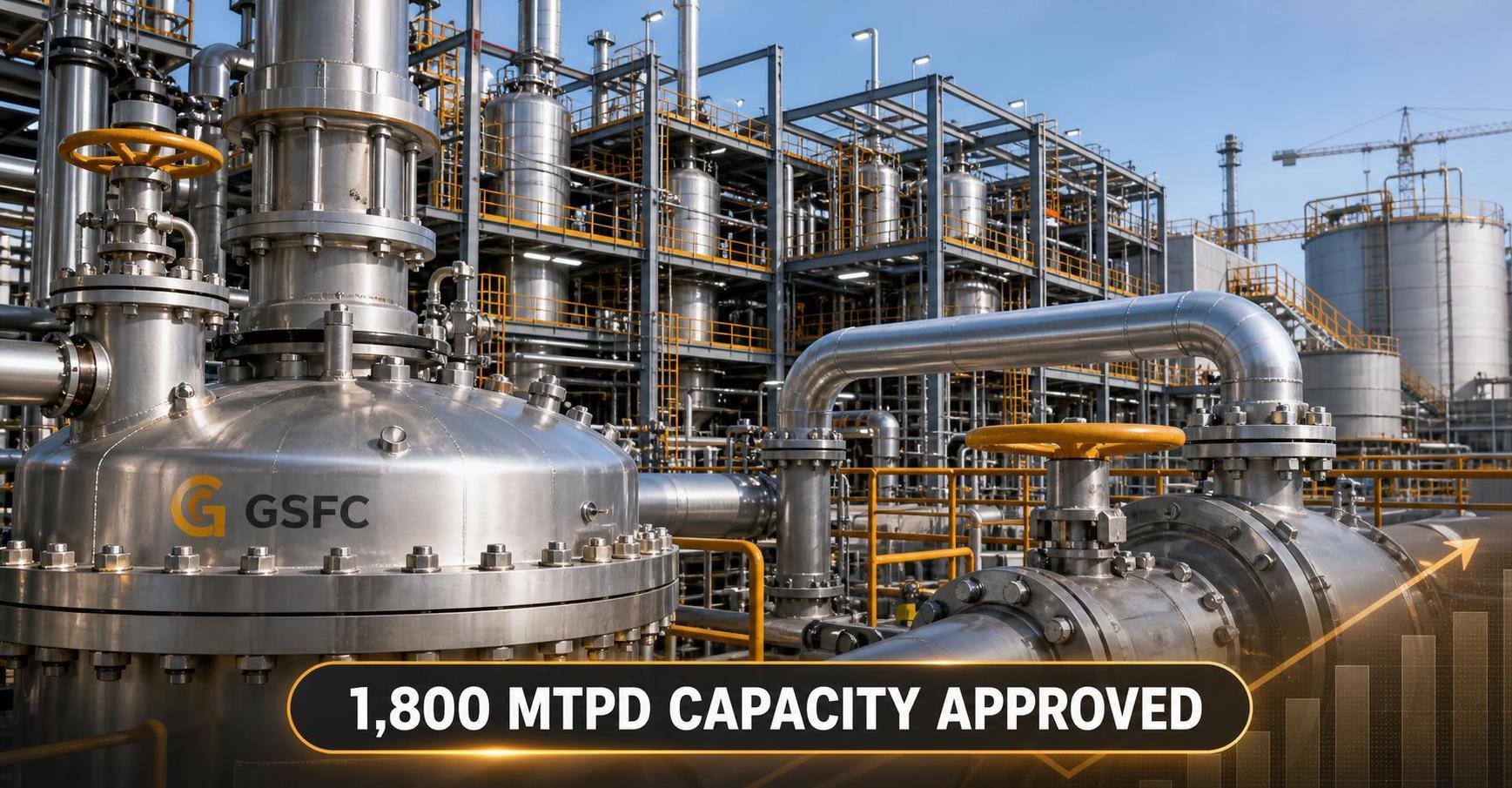
GSFC’s board has approved new phosphoric acid and sulphuric acid capacities at Sikka, supporting its backward-integration strategy amid volatile phosphatic fertiliser input costs.
✨ Key Takeaways
Gujarat State Fertilizers & Chemicals Ltd. has approved the setting up of a phosphoric acid and sulphuric acid plant at its Sikka unit in Jamnagar, Gujarat, marking a further push towards backward integration in its fertiliser operations.
The board approved the project at its meeting on October 13, 2026. The proposed facility will have a capacity of 600 MTPD of phosphoric acid and 1,800 MTPD of sulphuric acid, along with associated utilities and offsite facilities.
The investment is strategically relevant for GSFC because phosphoric acid and sulphuric acid are key links in the production chain for phosphatic and complex fertilisers. The company said the project is intended to ensure a reliable internal supply of raw materials as part of its growth and backward-integration roadmap.
GSFC already operates fertiliser manufacturing facilities at Sikka, including operations connected with DAP, NPK and ammonium phosphate sulphate products. The new acid capacities could provide greater control over a part of the supply chain for these products, although the company has not disclosed the project cost, commissioning schedule or financing structure in the announcement.
The decision follows a period of heightened volatility in sulphur, phosphoric-chain inputs, ammonia and natural-gas costs. In its latest quarterly commentary, GSFC had highlighted the sharp escalation in sulphur procurement costs and the difficulty of fully passing on raw-material inflation in NPK and ammonium phosphate sulphate products, where subsidy support and farmer affordability limit pricing flexibility.
Management had also said that Sikka’s production mix was being adjusted according to the economics of individual products and raw-material availability. A dedicated phosphoric acid and sulphuric acid project therefore aligns with the company’s stated objective of improving supply security and operating flexibility rather than relying solely on external sourcing.
GSFC’s fertiliser business remains its largest segment. In FY2025-26, fertiliser products accounted for about 78 per cent of consolidated revenue, with segment revenue of Rs 8,541.29 crore. The company reported consolidated revenue from operations of Rs 10,945.50 crore and profit after Tax of Rs 673 crore for the year.
More recent quarterly numbers show strong revenue growth but continuing margin pressure. Net sales rose 64.03 per cent year-on-year to Rs 3,583.15 crore in the June 2026 quarter, while profit after tax increased 16.36 per cent to Rs 155.43 crore. However, PBIDT margin excluding other income declined to 6.49 per cent from 8.83 per cent a year earlier, underlining the impact of higher input costs despite higher sales volumes.
The acid project also builds on GSFC’s broader effort to strengthen its Sikka operations. During FY2025-26, the company capitalised a 600 MTPD Sulphuric Acid-V project, along with a urea revamp project and a Solar-power project. The newly approved facilities indicate that the company continues to view the Sikka complex as an important base for phosphatic fertiliser expansion and integration.
GSFC said it would provide the details required under the SEBI Master Circular dated January 30, 2026, at the time of commissioning of the plant. Investors will therefore await clarity on capital expenditure, execution timelines, technology arrangements and the likely impact on raw-material sourcing.
As of 3:11 PM on October 19, 2026, GSFC shares were trading at Rs 148.05, down 0.3 per cent from the previous close. The stock was about 24.6 per cent below its 52-week high of Rs 196.45 and around 6.4 per cent above its 52-week low of Rs 139.20. Over one year, the shares have declined 24.45 per cent, compared with a 5.78 per cent fall in the BSE 500.
Disclaimer: The article is for informational purposes only and not investment advice.