Indian Market Falls Over 1%: Nifty Ends Below 25,500; Nifty IT Hits 30-Month Low
 Join Us
 Follow Us
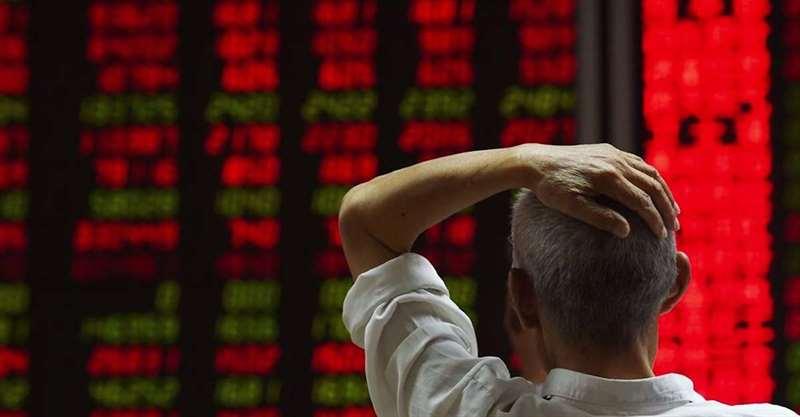
At the closing bell, the Nifty 50 declined 288.35 points, or 1.12 per cent, to settle at 25,424.65.
✨ Key Takeaways
Market Update at 04:03 PM: On Tuesday, February 24, 2026, India’s key equity benchmarks, the Nifty 50 and the Sensex, fell over 1 per cent, dragged lower by heavy selling in information technology stocks amid artificial intelligence disruption fears and renewed uncertainty around U.S. tariff policy.
At the closing bell, the Nifty 50 declined 288.35 points, or 1.12 per cent, to settle at 25,424.65. The index slipped sharply from the day’s high on an Intraday basis and ended below its 100-day exponential moving average. The Sensex fell 1,068.73 points, or 1.28 per cent, to close at 82,225.92. With this negative close, both benchmark indices snapped their two-day winning streak. The Bank Nifty ended at 61,047, down 0.35 per cent, reflecting weak sentiment in frontline stocks.
Indian markets witnessed sharp selling pressure, led by a steep decline in the Nifty IT Index after Anthropic launched its Claude Cowork Agent and a viral report by Citrini Research cautioned that artificial intelligence could disrupt India’s labour-arbitrage model. The report triggered concerns over potential contract cancellations, rupee weakness, and broader economic stress. Additionally, rising tensions between the U.S. and Iran pushed crude oil prices higher, denting risk appetite. Volatility was further amplified due to monthly F&O expiry, while investors remained cautious ahead of India’s February 27 GDP data, dragging the broader market lower.
On the sectoral front, five out of 11 key sectoral indices ended in positive territory, while broader markets remained under pressure, with the Nifty Midcap and Nifty Smallcap 100 indices closing in negative terrain. The Nifty Metal index emerged as the top gainer, rising 1.36 per cent and marking a fresh all-time high, taking its gains to 14.30 per cent so far in CY2026. In contrast, the Nifty IT index plunged 4.74 per cent, hitting a 30-month low and extending its decline to over 20 per cent in the last one month.
All major IT stocks declined sharply, including Tata Consultancy Services, Infosys, Wipro, HCL Technologies, Tech Mahindra, LTIMindtree, Persistent Systems, Coforge, and Mphasis, witnessing broad-based selling pressure amid artificial intelligence disruption concerns and global tech weakness. Textile stocks such as Gokaldas Exports and Arvind also saw selling pressure after the government reduced duty benefits for exporters under the Remission of Duties and Taxes on Exported Products scheme by 50 per cent.
Among individual contributors, NTPC added 7.56 points to the Nifty 50, followed by JSW Steel with 2.87 points and Hindustan Unilever with 2.56 points. On the downside, HDFC Bank dragged the index by 43.93 points, Larsen & Toubro by 40.88 points, and Infosys by 40.01 points.
Market breadth remained negative on February 24, 2026. Out of 3,273 stocks traded on the NSE, 1,070 advanced, 2,104 declined, and 99 remained unchanged. A total of 55 stocks touched their 52-week highs, while 303 hit their 52-week lows. Additionally, 45 stocks were locked in Upper Circuits, whereas 103 stocks were locked in Lower Circuits, indicating broad-based weakness across segments.
Market Update at 2:19 PM: Benchmark equity indices traded with notable losses on Tuesday, weighed down by weakness in index heavyweight Bharti Airtel and IT shares. Investor sentiment turned cautious after U.S. President Donald Trump threatened renewed tariffs, adding pressure to global markets.
Over the weekend, Trump announced 15 per cent new, temporary global tariffs and warned countries against backing away from recently negotiated trade deals, even as the U.S. Supreme Court ruled his earlier tariffs unlawful.
As of 2:14 PM on 24 February 2026, the BSE Sensex was trading at 82,278.79, down 1,015.87 points or 1.22 per cent. The Nifty 50 stood at 25,442.25, lower by 270.75 points or 1.05 per cent.
Among the Sensex 30 stocks, Tech Mahindra emerged as the top loser, plunging nearly 7 per cent. Other major laggards included HCL Tech, Eternal, Infosys, TCS and Bharti Airtel. On the other hand, Hindustan Unilever (HUL), Sun Pharma, NTPC and Power Grid were the only gainers.
On the sectoral front, barring Nifty Pharma, which was marginally up 0.07 per cent, all other sectors traded in the red. Nifty IT was the worst performer, sliding 5.29 per cent.
In the broader market, the BSE MidCap 100 and BSE SmallCap indices also declined over 1 per cent each, reflecting broad-based selling pressure.
Market Update at 12:19 PM: Benchmark equity indices traded with notable losses in Tuesday’s session amid weakness in index heavyweights such as Bharti Airtel and IT shares. Market sentiment remained subdued after U.S. President Donald Trump threatened renewed tariffs, weighing on global risk appetite.
As of 12:00 PM, the Nifty 50 was trading 0.94 per cent, or 239.95 points, lower at 25,471.65. The Sensex was down 1.03 per cent, or 857.39 points, at 82,429.07.
Over the weekend, Trump announced 15 per cent new, temporary global tariffs and warned countries against backing away from recently negotiated trade deals, even as the U.S. Supreme Court ruled his earlier tariffs unlawful.
Among the Sensex 30 stocks, Tech Mahindra was the top loser, falling over 5.5 per cent, followed by HCL Tech, Eternal, Infosys, TCS and Bharti Airtel. On the other hand, Power Grid, NTPC, Axis Bank and HUL were the only gainers.
In the broader market, the BSE MidCap 150 index declined 0.8 per cent, while the SmallCap 250 index fell 1 per cent.
Market Update at 10:15 AM: Benchmark equity indices traded with notable losses in Tuesday’s session, dragged lower by weakness in index heavyweight Bharti Airtel and IT shares. Investor sentiment remained under pressure after U.S. President Donald Trump threatened renewed tariffs, triggering caution across global markets.
Over the weekend, Trump announced 15 per cent new, temporary global tariffs and warned countries against backing away from recently negotiated trade deals. This came even as the U.S. Supreme Court ruled that Trump’s earlier tariffs were unlawful. The fresh tariff move dampened global risk appetite and weighed on domestic equities.
At 10:00 AM, the BSE Sensex was down 725 points, or 0.9 per cent, at 82,565. The NSE Nifty 50 index declined 200 points, or 0.8 per cent, to 25,511.
Among the 30 Sensex constituents, Infosys and Bharti Airtel together contributed over 250 points to the index’s fall. In percentage terms, Eternal emerged as the top loser, falling nearly 4 per cent. HCL Technologies, TCS, Tech Mahindra, Bharti Airtel and Infosys declined around 3 per cent each.
Other notable losers included Bajaj Finance, Bharat Electronics, Trent and ITC, each down over 1 per cent. On the positive side, SBI, Power Grid Corporation and Tata Steel managed to hold marginal gains.
Broader markets also mirrored the weak trend. The BSE MidCap 150 index slipped 0.8 per cent, while the SmallCap 250 index declined 1 per cent.
Pre-Market Update at 8:05 AM: Indian benchmark indices Sensex and Nifty 50 are likely to witness a gap-down opening on Tuesday, tracking weak global cues and rising geopolitical uncertainty. Gift Nifty was trading around the 25,590 level, a discount of nearly 132 points from the Nifty futures’ previous close, indicating a negative start for domestic equities.
Investor sentiment has turned cautious after U.S. President Donald Trump announced a decision to raise global tariffs to 15 per cent, reviving trade uncertainty and clouding the outlook for growth-sensitive assets. Adding to concerns, ongoing tensions between the U.S. and Iran are heightening geopolitical risks, keeping markets volatile and risk-averse. Persistent worries around artificial intelligence-led disruption are further dampening confidence.
On Monday, the Indian market had ended with strong gains after the Supreme Court of the United States struck down sweeping tariffs imposed earlier. The BSE Sensex rallied 479.95 points, or 0.58 per cent, to close at 83,294.66, while the Nifty 50 rose 141.75 points, or 0.55 per cent, to settle at 25,713.00.
Stock-specific action is expected to continue on February 24, 2026. Bharti Airtel plans to capitalise its Airtel Money NBFC with Rs 20,000 crore, with 70 per cent contribution from Airtel and 30 per cent from Bharti Enterprises. Chalet Hotels has approved an investment of Rs 632.8 crore for a 330-room luxury hotel project in Hyderabad. Patel Engineering emerged as the lowest bidder for an irrigation project worth Rs 133.25 crore in Maharashtra. Samvardhana Motherson International inaugurated an automotive lighting plant in Sanand, Gujarat, in a joint venture with Marelli. RBL Bank received RBI approval for the reappointment of Chandan Sinha as Non-Executive Chairman for the period May 2026 to May 2029. Edelweiss Financial Services saw promoters exchange a 1 per cent stake worth Rs 118 crore via a bulk deal. For the day, SAIL remains in the F&O ban list, while Samaan Capital has exited the F&O ban.
On February 23, Foreign Institutional Investors (FIIs) were net buyers, purchasing equities worth Rs 3,483.70 crore, while Domestic Institutional Investors (DIIs) sold shares worth Rs 1,292.24 crore. FIIs have snapped a two-session selling streak.
Finance Minister Nirmala Sitharaman unveiled National Monetisation Pipeline (NMP) 2.0, targeting Rs 10 lakh crore over the next five years. The revised pipeline outlines a total monetisation potential of Rs 16.72 lakh crore for FY2026–FY2030, including an estimated Rs 5.8 lakh crore in private sector investment through asset monetisation by central ministries and public sector enterprises.
U.S. equities ended sharply lower on Monday amid tariff uncertainty and AI-related concerns. The Dow Jones Industrial Average fell 821.91 points, or 1.66 per cent, to 48,804.06. The S&P 500 declined 71.76 points, or 1.04 per cent, to 6,837.75, while the Nasdaq Composite dropped 258.80 points, or 1.13 per cent, to 22,627.27.
Among major stocks, Nvidia gained 0.91 per cent, while Microsoft fell 3.21 per cent. AMD slipped 1.77 per cent and Amazon declined 2.30 per cent. Apple edged up 0.60 per cent, whereas Tesla tumbled 2.91 per cent. Domino’s Pizza surged 4.1 per cent and PayPal advanced 5.8 per cent.
U.S. factory orders fell 0.7 per cent in December after a 2.7 per cent rise in November, dragged down by a sharp decline in commercial aircraft bookings. On a year-on-year basis, orders were still up 3.7 per cent.
China kept its benchmark lending rates unchanged for the ninth straight month. The one-year Loan Prime Rate (LPR) remains at 3.0 per cent, while the five-year LPR stands at 3.5 per cent.
In commodities, gold slipped below USD 5,190 per ounce after four sessions of gains as traders reassessed tariff risks and geopolitical tensions. Spot silver declined 3.1 per cent to USD 85.50 per ounce. WTI crude oil futures edged lower to USD 66.48 per barrel ahead of possible U.S.-Iran talks.
Overall, a combination of renewed tariff concerns, geopolitical tensions and global market weakness signals a cautious and risk-off opening for Indian equities.
Disclaimer: The article is for informational purposes only and not investment advice.