Volatility is not the enemy of wealth creation. Impatience is.
 Join Us
 Follow Us
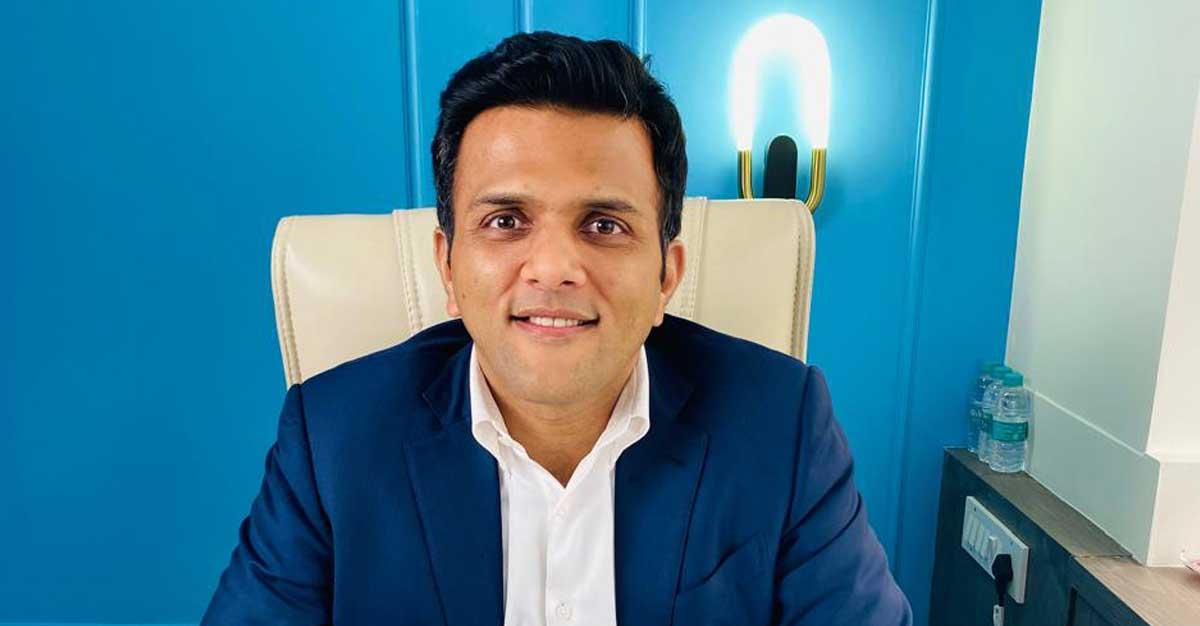
The article was written by Gaurav Bhandari, CEO, Monarch Networth Capital.
✨ Key Takeaways
In my two decades in the capital markets, I have seen multiple cycles, the 2008 financial crisis, the taper tantrum of 2013, the COVID crash of 2020, and the FII-driven correction of 2025. Each time, the narrative was the same: ‘This time is different.’ And each time, the investors who stayed disciplined, stayed invested, and stayed rational were the ones who created real, lasting wealth.
FY26 has been a year that tested conviction. Markets swung between optimism and anxiety. Geopolitical tensions, persistent FII selling, global rate uncertainty, and domestic earnings deceleration all contributed to a challenging environment. The Nifty saw sharp drawdowns and equally sharp recoveries, separating the disciplined from the reactive. In this context, the question every investor should be asking is not ‘how do I avoid volatility?’ but rather ‘how do I use volatility to my advantage?’
Here are the principles that I believe define lasting wealth creation in uncertain markets:
Process Over Prediction
The single biggest mistake investors make in volatile markets is trying to time the bottom or the top. It is a fool's errand. No one, not the best fund manager, not the most sophisticated algorithm, can consistently predict short-term market movements. What works, consistently and unfailingly, is process. A disciplined investment framework, one built on rigorous fundamental research, clearly defined entry and exit criteria, and an unwavering focus on business quality, will outperform prediction-based investing over every meaningful time horizon. The investor's job is to trust it.
Quality Is the Only Hedge
In a bull market, everything goes up. In a volatile market, only quality survives. This is where wealth is truly created, not in the rally, but in the correction. Quality means businesses with strong and predictable cash flows, low or zero debt, high return on capital employed, competent management with skin in the game, and a sustainable competitive advantage. These businesses may not give you the highest returns in a euphoric market, but they will protect your capital when the market turns, and they will compound quietly over years.
The temptation to chase momentum stocks, thematic flavours, or leveraged bets is strongest during volatility. Resist it. History has shown repeatedly that the investor who owns ten high-quality businesses through a volatile cycle will outperform the one who trades fifty mediocre ones.
Asset Allocation Is Non-Negotiable
No single asset class delivers in every market condition. Equities outperform in growth cycles, fixed income provides stability during uncertainty, and gold acts as a hedge against systemic risk. The investors who maintained a balanced allocation through FY25 and FY26, rather than going all-in on equities at the peak, are the ones sleeping well today.
A sensible framework for most investors: 55-65 per cent in equities (with a bias towards Large-Cap quality and flexi-cap strategies), 25-30 per cent in fixed income (accrual-based, not duration bets), and 5-10 per cent in gold as a portfolio diversifier. Rebalance annually. Do not let market sentiment dictate your allocation.
SIPs Are the Great Equaliser
Systematic Investment Plans remain the most powerful wealth creation tool for retail investors, not because they guarantee returns, but because they enforce discipline. SIPs take the emotion out of investing. They buy more units when markets fall and fewer when markets rise. Over a 10-15 year horizon, this rupee cost averaging creates wealth that lump sum investors, paralysed by volatility, simply cannot match.
Monthly SIP flows in India have now crossed Rs 25,000 crore, a testament to the growing maturity of the Indian investor. This structural shift is perhaps the most important development in India's capital markets story.
Think in Decades, Not Quarters
The final and most important principle: extend your time horizon. Wealth is not created in quarters. It is created in decades. The investor who bought quality Indian businesses in 2009, 2013, or 2020, during peak volatility and fear, has generated returns that no fixed deposit, no real estate, and no gold could match. India's structural story, 6.5-7 per cent GDP growth, a young demographic, rising formalisation, massive infrastructure spend, and a deepening capital market, is not a one-year thesis. It is a generational opportunity. Volatility is simply the price you pay for participating in it.
The markets will always give you reasons to worry. The investors who create wealth are the ones who look past the noise and focus on what endures, quality businesses, disciplined processes, and the patience to let compounding do its work. Volatility is not a risk. It is an opportunity, but only for those who are prepared.
Disclaimer: The opinions expressed above are of the author and may not reflect the views of DSIJ.