Sensex, Nifty Extend Decline for Fifth Session; Worst Weekly Fall Since September 2025
DSIJ Intelligence-2Categories: Mkt Commentary, Trending


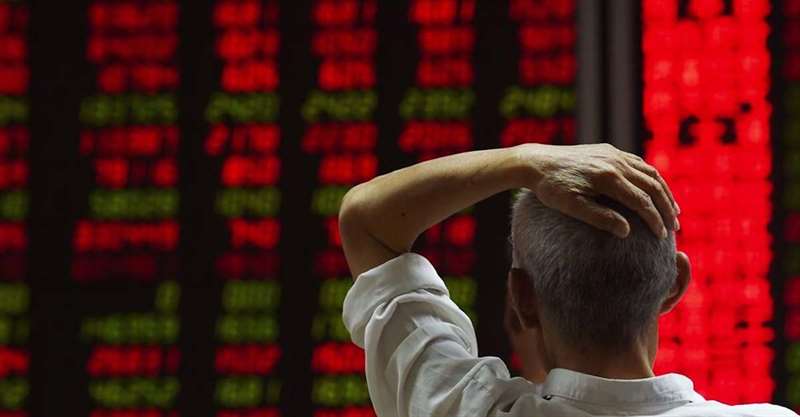
At the closing bell, the BSE Sensex settled at Rs 83,576.24, down 604.72 points or 0.72 per cent, while the NSE Nifty50 closed at Rs 25,683.30, slipping 193.55 points or 0.75 per cent.
Market Update at 03:53 PM: Indian benchmark indices continued their downward trajectory on Friday, marking the fifth straight session of losses and culminating in the steepest weekly decline since September 2025. The pressure during the final trading session of the week was largely driven by selling in realty, consumer durables and auto stocks, which dragged the broader market sentiment lower.
At the closing bell, the BSE Sensex settled at Rs 83,576.24, down 604.72 points or 0.72 per cent, while the NSE Nifty50 closed at Rs 25,683.30, slipping 193.55 points or 0.75 per cent. On a weekly basis, the Sensex and Nifty retreated 2.4 per cent and 2.45 per cent, respectively — their sharpest drop since the week ended September 26, 2025. The turbulence also reflected in the volatility index, India VIX, which surged 15.6 per cent during the week, the highest jump since May 2025.
Among the Sensex constituents, Asian Paints, HCL Tech, BEL, Eternal, RIL and SBI emerged as Top Gainers, while NTPC, Adani Ports and Special Economic Zone, ICICI Bank, Bharti Airtel and Sun Pharma featured among the top laggards, exerting significant pressure on headline indices.
Broader markets mirrored the weak mood, with the Nifty Midcap 100 and Nifty Smallcap 100 indices falling 0.79 per cent and 1.81 per cent, respectively. In the broader universe, Hitachi Energy India, GE Vernova and T&D, Elecon Engineering Company, Indian Energy Exchange and Godrej Properties shares ranked among the worst performers.
Sectorally, the Nifty Realty index declined 2.2 per cent and the Nifty Chemicals index fell 1.16 per cent, collectively weighing on market sentiment. On the contrary, the Nifty Oil & Gas and Nifty IT indices bucked the broader trend and recorded gains.
Market Update at 9:36 AM: India’s equity benchmarks opened nearly unchanged on Friday following four consecutive sessions of declines driven by renewed concerns over potential U.S. tariff actions. Investors also tracked a key U.S. Supreme Court hearing later in the day on the legality of tariff measures imposed by Washington.
At 9:16 a.m. IST, the Nifty 50 was up 0.07 per cent at 25,898, while the Sensex firmed 0.17 per cent to 84,319.999. Market breadth remained slightly positive as 14 of the 16 major sectoral indices advanced, although gains were marginal. In the broader markets, Small-Caps eased 0.1 per cent and Mid-Caps edged higher by 0.4 per cent.
The Nifty and Sensex have declined 1.7 per cent and 1.8 per cent, respectively, over the previous four sessions, after U.S. President Donald Trump signalled the possibility of further tariff increases on Indian goods due to New Delhi’s continued purchases of Russian crude.
Sentiment remained cautious ahead of a U.S. Supreme Court ruling on whether Trump’s tariff regime was lawful. A verdict declaring the duties “illegal” could require the U.S. government to refund nearly USD 150 billion to importers, potentially influencing future trade policy and market positioning.
Pre-Market Update at 7:57 AM: Following a sharp sell-off in the previous session, the Indian stock market is likely to open cautious on Friday, January 9, as mixed Asian signals and global macro uncertainties continue to weigh on sentiment.
Early indications from Gift Nifty hinted at a mildly positive start, with Gift Nifty trading at 26,002.5, up 35 points or 0.13 per cent from Thursday’s Nifty futures close, suggesting a marginally positive domestic start.
On Thursday, benchmark indices witnessed steep, broad-based selling amid weak global cues. The Sensex declined 780 points or 0.92 per cent to close at 84,180.96 its sharpest single-day percentage fall since August 26, 2025. The Nifty 50 slipped below the 25,900 level as foreign selling and a weak rupee added to pressure.
Asian markets opened mixed on Friday as investors awaited China’s inflation data. Japan’s Nikkei 225 advanced 0.54 per cent, Topix gained 0.46 per cent, while South Korea’s Kospi declined 0.41 per cent and Kosdaq slipped 0.21 per cent. Australia’s S&P/ASX 200 hovered slightly below flat, while Hong Kong’s Hang Seng futures indicated a higher open at 26,312 versus the previous close of 26,149.31.
Meanwhile, Wall Street ended mixed overnight as investors rotated out of technology stocks. The Dow Jones gained 270.03 points or 0.55 per cent to 49,266.11, the Nasdaq Composite fell 0.44 per cent to 23,480.02, while the S&P 500 inched up 0.01 per cent to 6,921.46. Information technology was the weakest S&P sector, declining over 1 per cent.
Geopolitical tensions in South America added to the cautious global sentiment as the U.S. Senate prepared to vote on restricting President Donald Trump from initiating further military action in Venezuela without congressional approval. This follows recent U.S. operations, including the capture of President Nicolás Maduro, which have elevated uncertainty around regional stability.
Crude oil prices surged more than 3 per cent on Thursday as supply disruption concerns intensified in light of developments in Venezuela and worries involving Russia, Iraq and Iran. Brent crude settled 3.4 per cent higher at USD 61.99 per barrel, while WTI rose 3.2 per cent to USD 57.76 per barrel, marking Brent’s highest close since December 24.
Gold prices were largely steady as traders awaited U.S. nonfarm payrolls data for clarity on the Federal Reserve’s interest rate trajectory. Spot gold stood at USD 4,452.64 per ounce while U.S. gold futures for February delivery settled at USD 4,460.70. Silver, however, dropped 3.2 per cent to USD 75.64 per ounce.
The U.S. dollar index continued strengthening, advancing 0.2 per cent to 98.883—its third straight session of gains, on expectations related to U.S. employment data and an upcoming Supreme Court ruling on emergency tariff authority.
With geopolitical tensions elevated, macro data incoming and trade-related uncertainties in focus, market volatility may remain high in the near term as investors position cautiously ahead of the earnings season.
For today, SAIL & Samaan Capitalwill remain on the F&O ban list.
Disclaimer: The article is for informational purposes only and not investment advice.