HEG Advanced Materials Shares Jump 5% as Subsidiary TACC Secures Rs 609.50 Crore Incentive Approval for Dewas Battery Anode Project
 हमसे जुड़ें
 हमें फ़ॉलो करें

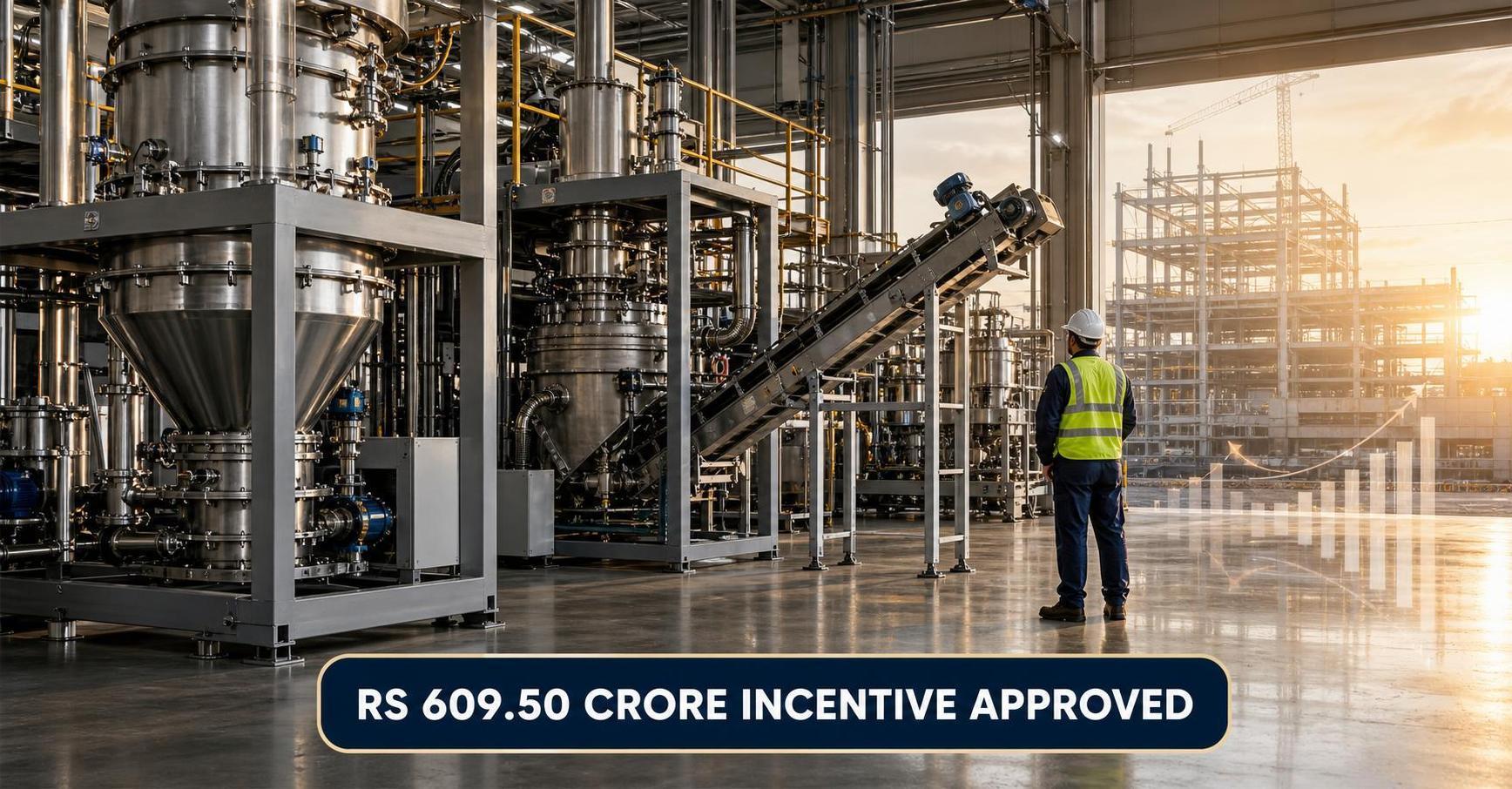
TACC Limited has received approval for a Rs 609.50 crore incentive under the Electronics Component Manufacturing Scheme for its synthetic graphite anode-material project in Dewas, Madhya Pradesh.
✨ मुख्य निष्कर्ष
HEG Advanced Materials is seeking to diversify beyond its export-oriented graphite-electrode business into battery materials, using its carbon-processing capabilities. Its wholly owned subsidiary, TACC Limited, has now received approval for a Rs 609.50 crore incentive under the Ministry of Electronics and Information Technology’s Electronics Component Manufacturing Scheme for a synthetic graphite anode-material project in Dewas, Madhya Pradesh.
The approval is subject to the scheme’s guidelines and prescribed conditions. TACC’s proposed facility at Sirsoda Industrial Area will manufacture synthetic graphite anode material, a key input used in lithium-ion battery cells for electric vehicles and energy-storage systems.
The Dewas project will be developed across more than 100 acres. Its first phase, with an annual capacity of 20,000 metric tonnes, is targeted for commissioning by June 2027. TACC has committed to scale the facility to more than 30,000 metric tonnes annually by FY2028-29, which would position the plant as a sizeable domestic supply platform for battery-cell manufacturers.
The incentive approval provides policy support for HEG Advanced Materials’ attempt to build a second growth engine alongside graphite electrodes, which remain linked to the global electric arc furnace steel cycle. The company reported consolidated revenue from operations of Rs 2,568.50 crore in FY2025-26, while TACC was still in the project-development stage, recording no turnover during the year.
HEG has already deployed capital towards the venture, including Rs 400 crore invested in optionally convertible debentures issued by TACC during FY2025-26. The group had capital commitments of Rs 922.15 crore outstanding as of March 31, 2026, reflecting its broader expansion programme across graphite electrodes and advanced materials.
Management said the Dewas facility is intended to meet the quality requirements of global cell manufacturers and support a localised battery-materials value chain. The next phase for TACC will be execution, customer qualification and ramp-up of production once the first line is commissioned.
HEG Advanced Materials share price has jumepd over 5 per cent as of 9:23 AM on November 11, 2026.
What This Means for Investors
The incentive approval strengthens the financial and strategic framework for HEG Advanced Materials’ entry into battery anode materials. The proposed 20,000-tonne first phase gives TACC a defined route into a higher-growth adjacent market, while the planned expansion beyond 30,000 tonnes by FY2028-29 could create a meaningful new revenue stream over time. It also broadens the group’s exposure beyond the cyclical graphite-electrode market, where utilisation is already above 90 per cent and volume expansion is constrained until new capacity comes on stream.
The development is supportive for the longer-term growth case, but it does not immediately alter earnings because commissioning is targeted only by June 2027. The central monitorable remains execution. TACC must complete Construction, comply with incentive conditions, achieve consistent product quality and secure customer demand during ramp-up. HEG’s existing Rs 400 crore funding through TACC debentures and wider capital commitments underline that the project will require disciplined capital allocation before it contributes materially to profitability or cash generation.
Disclaimer: The article is for informational purposes only and not investment advice.