Govt Steps In to Stabilise LPG Supply — What It Signals for Industry and Markets
 आमच्यासोबत जोडा
 आम्हाला फॉलो करा
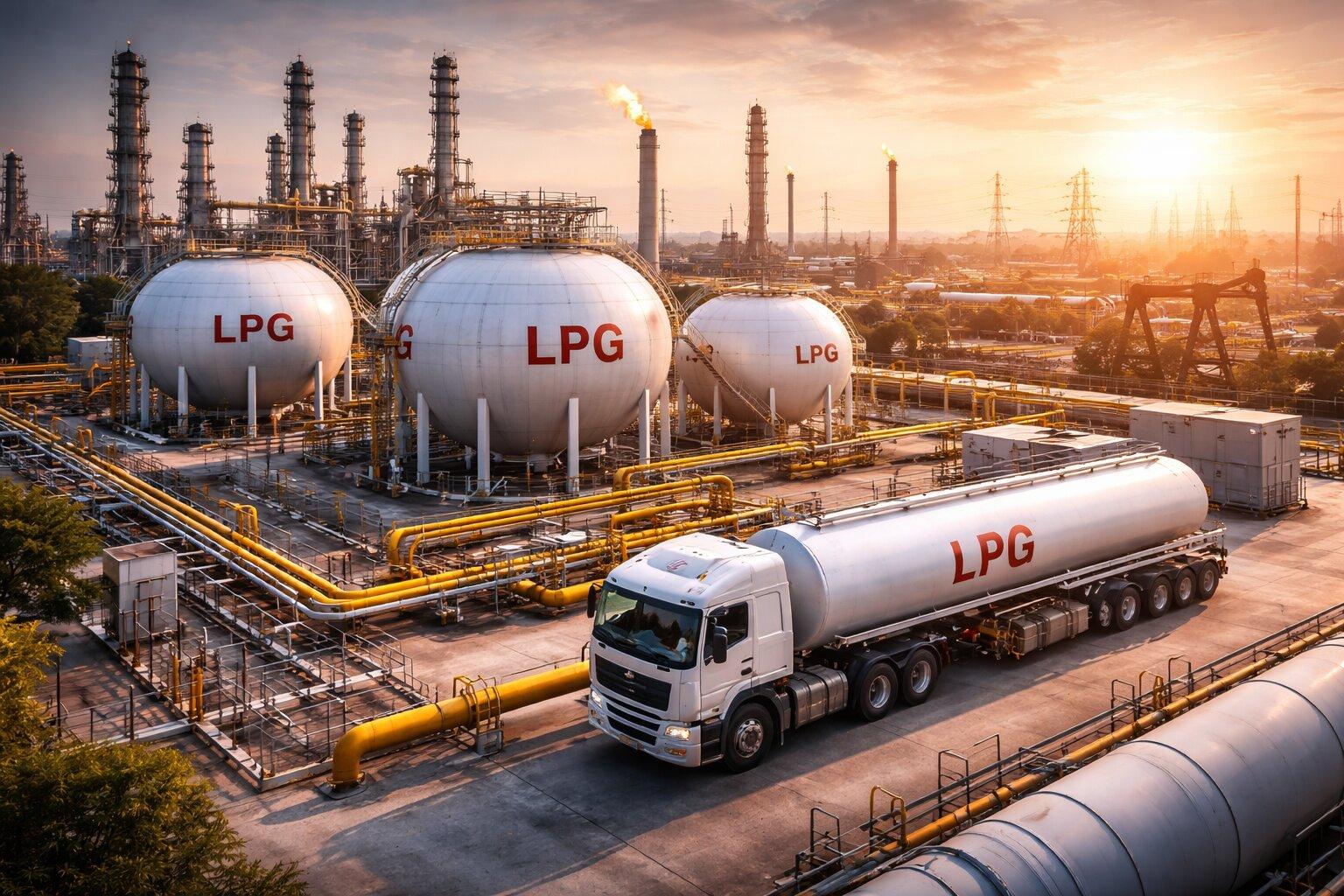
Rising oil prices and supply disruptions are forcing a delicate balance between household consumption and industrial demand
✨ एआय पॉवर्ड सारांश
There is a quiet but important shift happening in India’s energy landscape. The government has decided to increase commercial LPG supply to industries to 70 per cent of pre-crisis levels, up from 50 per cent earlier. On the surface, this may look like a routine administrative move. In reality, it reflects the growing stress within the energy system and the difficult trade-offs policymakers are being forced to make.
This decision comes at a time when global crude oil prices have surged sharply, moving from around USD 70 to over USD 120 per barrel, driven by geopolitical tensions in West Asia and concerns around supply disruptions. As energy prices rise, the pressure is not limited to fuel costs alone it begins to affect industrial production, inflation, and overall economic momentum.
Why LPG Supply Became a Constraint
Industrial fuel shortages emerged as a second order effect of the global energy shock. To understand the significance of this move, it is important to look at what happened over the past few months. As global energy markets tightened due to geopolitical tensions, India faced disruptions in LPG imports. Given that the country imports a large portion of its LPG requirements, supply constraints began to emerge quickly.
In response, the government prioritised domestic consumption, particularly household cooking gas, which remains politically and socially sensitive. Industrial LPG supply was cut sharply, at one point falling to nearly 20 per cent of normal levels in March 2026. This ensured that household demand was met, but it shifted the burden onto industries.
For several sectors, this was not a minor disruption. LPG is not just an alternative fuel it is often a critical input in manufacturing processes where substitutes like natural gas or other fuels are not easily viable. As a result, industries began to face rising costs, operational disruptions, and in some cases, production cuts.
Why the Government Is Now Reversing Course
Restoring industrial supply is essential to prevent a broader slowdown in production The increase in LPG allocation to 70 per cent signals that the government is now attempting to stabilise industrial activity. This is not just about easing supply it is about preventing second order economic damage.
Sectors such as steel, automobiles, textiles, chemicals, and plastics are particularly dependent on LPG for heating and processing. Many of these are labour intensive industries or part of export oriented value chains. When fuel supply becomes uncertain, it does not just impact margins it disrupts entire production cycles.
There were already early signs of stress. MSMEs and small manufacturers were facing cost pressures, while some factories had begun scaling down operations. With migrant workers gradually returning and demand conditions stabilising, prolonged supply disruptions could have created a mismatch between capacity and output.
By restoring LPG supply gradually from 20 per cent to 50 per cent, and now to 70 per cent the government is trying to ensure that industrial activity does not slow down further at a time when external conditions are already challenging.
The Oil Shock Behind Everything
Energy markets are being driven by geopolitics, not just demand and supply fundamentals. The trigger for this entire situation lies in the sharp rise in global oil prices. Brent crude has been trading in the range of USD 105 to USD 115 per barrel, with spikes even higher during periods of heightened tension. The pace of this increase is significant, and it reflects not just supply-demand imbalance but geopolitical risk premiums.
Disruptions linked to West Asia, particularly concerns around key supply routes such as the Strait of Hormuz, have amplified uncertainty. For energy importing countries like India, this creates a direct and immediate impact. Higher crude prices translate into higher LPG import costs, which then feed into both household consumption and industrial usage.
This is where the policy challenge becomes more complex. The government is not just managing prices it is managing allocation under constraint.
India’s LPG Dependence and Structural Risk
High import dependence makes the system vulnerable during global disruptions. India consumes roughly 33 million tonnes of LPG annually, making it one of the largest consumers globally. However, nearly 60 per cent of this demand is met through imports. This creates an inherent vulnerability, especially during periods of global supply disruption.
The LPG ecosystem in India is also highly concentrated. Public sector companies dominate the market, with Indian Oil Corporation holding close to half the market share, followed by Bharat Petroleum and Hindustan Petroleum. Together, these three players control almost the entire residential LPG distribution network in the country.
This concentration has advantages in terms of distribution efficiency and reach especially in ensuring last mile delivery across urban and rural India. But it also means that any supply shock has to be managed centrally, often requiring policy intervention rather than market-driven adjustments.
In a normal environment, this structure works smoothly. In a stressed environment, it becomes a system that needs active balancing between competing priorities.
Industrial Impact: Relief, But Not Resolution
Higher allocation eases immediate pressure, but cost challenges remain. The increase in LPG supply to industries will provide near term relief. Sectors that were facing operational disruptions will see improved stability, and production cycles are likely to normalise gradually. Export oriented industries, particularly in engineering goods, textiles, and chemicals, could benefit from reduced uncertainty.
However, this does not fully solve the problem. Even with improved availability, the cost of LPG remains elevated due to high global crude prices. This means that while supply disruptions may ease, margin pressures are likely to persist.
For many companies, especially in sectors where pricing power is limited, this creates a challenging environment. They may be able to continue production, but profitability could remain under pressure. This distinction between volume recovery and margin recovery becomes important from an earnings perspective.
A Policy Balancing Act
The government is managing competing priorities across households, industry, and inflation. What this episode highlights is the complexity of energy policy in a country like India. LPG is not just an industrial fuel it is also a critical household necessity. Any shortage or price increase directly affects millions of households, making it a politically sensitive commodity.
At the same time, restricting industrial supply has broader economic consequences. It impacts employment, exports, and overall industrial output. The government, therefore, has to constantly balance between protecting household consumption and sustaining industrial activity.
The gradual restoration of LPG supply reflects this balancing act. It is not a full normalisation, but a calibrated approach based on evolving supply conditions and demand priorities.
The Bigger Structural Push
Short-term fixes are being complemented by long-term shifts toward alternative energy. Alongside managing immediate supply constraints, there is also a longer-term policy direction emerging. The government has been pushing for a gradual shift toward piped natural gas (PNG) and other alternative energy sources for industrial use.
The rationale is clear. LPG, given its import dependence, exposes the economy to global volatility. Expanding the use of PNG and other domestic or diversified energy sources can reduce this vulnerability over time.
However, this transition is not immediate. Infrastructure constraints, cost considerations, and process specific requirements mean that LPG will continue to remain a critical fuel for many industries in the near to medium term.
Bottom Line
This is not just about LPG supply it is about how energy shocks transmit into the real economy. The increase in LPG supply to industries is a necessary step to stabilise production, but it also reflects a deeper reality. India’s energy system remains highly sensitive to global disruptions, and policy responses often involve trade-offs between competing priorities.
What this episode clearly shows is that energy is no longer just a cost variable it is a strategic constraint that can influence industrial output, inflation, and market dynamics simultaneously. As global volatility persists, such interventions may become more frequent.
For investors, the focus should not just be on fuel prices, but on how these shifts impact sectoral earnings, cost structures, and policy direction. Because when energy becomes uncertain, its impact is rarely contained it spreads across the entire economy.
Disclaimer: This article is for informational purposes only and not investment advice.