तांत्रिक विश्लेषण सोपे केले: प्रत्येक नवशिक्याने समजून घ्यावे लागणारे मूलभूत निर्देशक
 आमच्यासोबत जोडा
 आम्हाला फॉलो करा
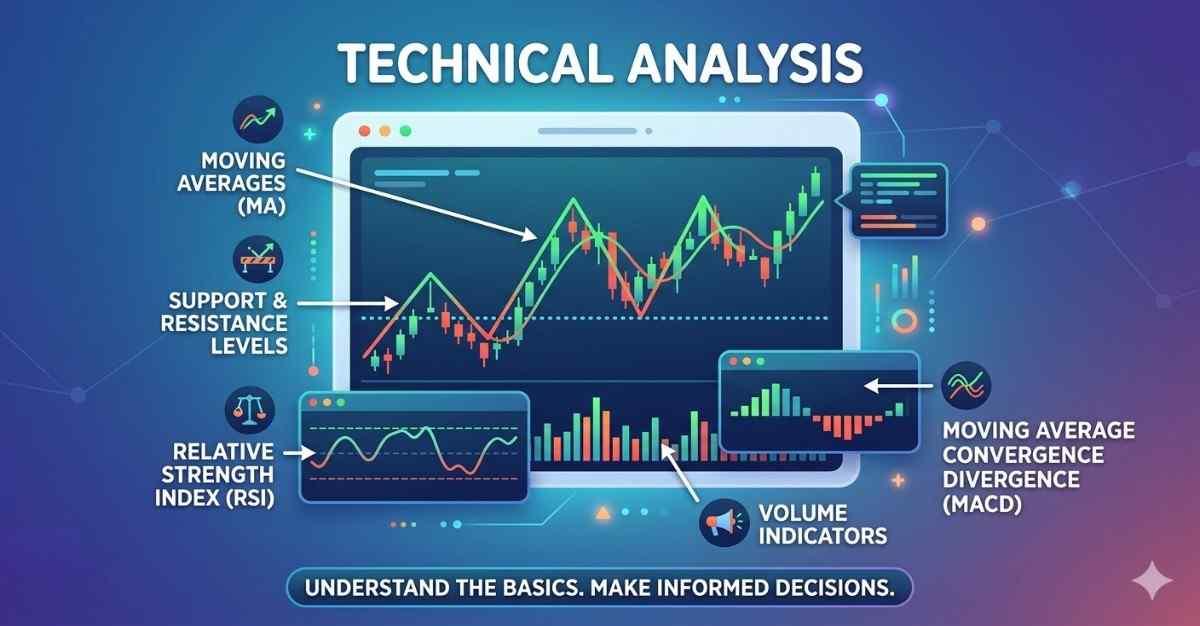
नवीन व्यापाऱ्यांसाठी RSI, MACD, ADX, चार्ट पॅटर्न्स आणि कँडलस्टिक्ससाठी साध्या भाषेतील मार्गदर्शक
✨ महत्त्वाचे मुद्दे
अनेक लोक शेअर बाजारात प्रवेश करतात, असा विचार करून की चार्ट्स गुंतागुंतीचे आहेत आणि तांत्रिक निर्देशक फक्त तज्ञांसाठी आहेत. हे खरे नाही. तांत्रिक विश्लेषण म्हणजे किंमत वर्तन वाचण्याचा एक मार्ग आहे. हे व्यापाऱ्यांना आणि गुंतवणूकदारांना समजून घेण्यास मदत करते की एखादा स्टॉक मजबूत, कमजोर, जास्त खरेदी केलेला, जास्त विक्री केलेला किंवा संभाव्य ट्रेंड बदलासाठी तयार आहे का. हे भविष्यातील अचूक भविष्यवाणी करत नाही, परंतु अधिक माहितीपूर्ण, संभाव्यता-आधारित निर्णय घेण्यास मदत करते.
तांत्रिक विश्लेषण म्हणजे काय?
तांत्रिक विश्लेषण म्हणजे किंमत, खंड आणि चार्ट नमुन्यांचा अभ्यास. एखाद्या कंपनीच्या ताळेबंद किंवा कमाईकडे पाहण्याऐवजी, तांत्रिक विश्लेषण चार्टवरील किंमत काय करत आहे यावर लक्ष केंद्रित करते.
मूलभूत कल्पना सोपी आहे. किंमत बाजारातील मानसशास्त्र प्रतिबिंबित करते. जर खरेदीदार मजबूत असतील, तर किंमत वाढण्याची प्रवृत्ती आहे. विक्रेते मजबूत असतील तर किंमत खाली जाण्याची प्रवृत्ती आहे. निर्देशक आम्हाला त्या हालचालींमागील ताकद किंवा कमजोरी मोजण्यास मदत करतात.
RSI: किंमत शक्ती समजून घेणे
RSI म्हणजे रिलेटिव स्ट्रेंथ इंडेक्स. हे तांत्रिक विश्लेषणातील सर्वात लोकप्रिय निर्देशकांपैकी एक आहे.
RSI आम्हाला अलीकडील किंमत हालचाल किती मजबूत किंवा कमजोर आहे हे सांगते. हे आम्हाला सांगत नाही की एखादी कंपनी मूलभूतदृष्ट्या चांगली आहे की वाईट. हे फक्त आम्हाला सांगते की स्टॉक खूप वेगाने वर गेला आहे, खूप वेगाने खाली गेला आहे किंवा मजबूत किंवा कमजोर होण्याची सुरुवातीची चिन्हे दर्शवत आहे.
RSI 0 ते 100 च्या श्रेणीत हलतो. हे वाचण्याचा एक सोपा मार्ग असा आहे:
जेव्हा RSI 30 च्या खाली असतो, तेव्हा स्टॉकला ओव्हरसोल्ड मानले जाते
जेव्हा RSI 70 च्या वर असतो, तेव्हा स्टॉकला ओव्हरबॉट मानले जाते
याचा नेहमीच अर्थ असा होत नाही की किंमत त्वरित उलटेल. याचा फक्त अर्थ असा आहे की हालचाल ताणली गेली असावी.
बुलिश आणि बेअरिश ट्रेंड्समध्ये RSI कसे वागते
RSI अधिक उपयुक्त होते जेव्हा तुम्ही पाहता की ते ट्रेंड्स दरम्यान कसे वागते, फक्त टोकांवर नाही.
बुलिश मार्केटमध्ये, RSI अनेकदा 45 ते 50 झोनच्या आसपास समर्थन शोधतो. याचा अर्थ असा की जरी किंमत दुरुस्त झाली तरीही, RSI फारसा खाली जात नाही. हे सामान्यतः आपल्याला सांगते की अंतर्निहित ताकद अजूनही कायम आहे.
बेअरिश मार्केटमध्ये, RSI ला 50 ते 55 झोनच्या वर जाण्यासाठी संघर्ष करावा लागतो. अत्यंत कमकुवत ट्रेंडमध्ये ते पुनर्बांधणीवर देखील 30 ते 40 च्या आसपास राहू शकते. हे दर्शवते की किंमत थोडी वाढली तरीही, अंतर्गत ताकद फारशी सुधारत नाही आहे.
म्हणूनच RSI हे फक्त जास्त खरेदी आणि जास्त विक्री याबद्दल नाही. हे आपल्याला ट्रेंडचा स्वभाव समजून घेण्यास देखील मदत करते.
RSI मध्ये बुलिश डायव्हर्जन्स
बुलिश डायव्हर्जन्स तेव्हा होते जेव्हा स्टॉकची किंमत सतत कमी होत राहते किंवा नवीन नीचांक बनवते, परंतु RSI तितके खाली जात नाही आणि उच्च नीचांक दर्शवू लागते.
साध्या शब्दांत, किंमत खाली जात आहे, परंतु निर्देशक असे सांगत आहे की विक्रीची ताकद पूर्वीइतकी मजबूत नाही. याचा अर्थ असा होऊ शकतो की खाली जाणारी हालचाल गती गमावत आहे. यामुळे त्वरित वाढ होण्याची हमी मिळत नाही, परंतु हे अनेकदा एक प्रारंभिक चिन्ह म्हणून कार्य करते की कमकुवतपणा कमी होत आहे.
बुलिश डायव्हर्जन्सचे उदाहरण:
समजा एखादा स्टॉक Rs 500 वरून Rs 450 वर पडतो, आणि RSI 28 पर्यंत कमी होतो. नंतर, स्टॉक पुन्हा Rs 440 पर्यंत पडतो, पण RSI कमी होण्याऐवजी 34 वर राहतो. किंमतने कमी किमतीचा निचांकी स्तर बनवला आहे, पण RSI ने उच्च निचांकी स्तर बनवला आहे. याला बुलिश डायव्हर्जन्स म्हणतात. हे आपल्याला सांगते की किंमत अजूनही कमी होत आहे, पण कमी होण्याच्या मागील ताकद कमी होत आहे.
RSI मधील बेअरिश डायव्हर्जन्स
बेअरिश डायव्हर्जन्स हे उलट आहे. हे तेव्हा होते जेव्हा स्टॉकची किंमत वाढत राहते किंवा नवीन उच्च स्तर बनवते, पण RSI जास्त वाढत नाही आणि कमी उच्च स्तर बनवायला सुरुवात करते.
सोप्या शब्दांत, किंमत वाढत आहे, पण संकेतक तीच ताकद दाखवत नाही. याचा अर्थ असा होऊ शकतो की वर जाणारी हालचाल गती गमावत आहे.
बेअरिश डायव्हर्जन्सचे उदाहरण:
समजा एखादा स्टॉक Rs 700 वरून Rs 760 पर्यंत वाढतो आणि RSI 74 पर्यंत पोहोचतो. नंतर स्टॉक पुन्हा Rs 775 पर्यंत वाढतो, पण RSI फक्त 68 पर्यंत पोहोचतो. किंमतने उच्च स्तर बनवला आहे, पण RSI ने कमी उच्च स्तर बनवला आहे. हे बेअरिश डायव्हर्जन्स आहे. किंमत वर जात आहे, पण हालचालीच्या मागील ताकद शांतपणे कमकुवत होत आहे.
MACD: गती आणि ट्रेंड बदल ट्रॅक करणे
MACD चा अर्थ मूव्हिंग अॅव्हरेज कन्वर्जन्स डायव्हर्जन्स आहे. हे गती आणि ट्रेंड दिशा समजण्यासाठी आणखी एक व्यापकपणे वापरले जाणारे साधन आहे.
EMA म्हणजे काय?
EMA चा अर्थ एक्स्पोनेंशियल मूव्हिंग अॅव्हरेज आहे. एक सामान्य मूव्हिंग अॅव्हरेज सर्व भूतकाळातील किंमतींना समान वजन देते. EMA वेगळा आहे कारण तो अलीकडील किंमतींना जास्त वजन देतो, ज्यामुळे तो सध्याच्या बाजाराच्या क्रियाकलापांना अधिक प्रतिसाद देतो.
सोपी मूव्हिंग अॅव्हरेज म्हणजे गेल्या आठवड्याचे वर्तमानपत्र वाचणे आणि EMA म्हणजे आजच्या मथळ्यांचे वाचन समजा. EMA सध्याच्या घडामोडींवर जलद प्रतिक्रिया देते, त्यामुळे अनेक व्यापारी सोप्या मूव्हिंग अॅव्हरेजपेक्षा त्याला प्राधान्य देतात.
MACD कसे गणना केले जाते
MACD तीन घटकांचा वापर करून तयार केले जाते.
MACD लाइन, ज्याला फास्ट लाइन देखील म्हणतात, ही 12-दिवसांच्या EMA आणि 26-दिवसांच्या EMA मधील फरक आहे. त्यानंतर, MACD लाइनचा 9-दिवसांचा EMA प्लॉट केला जातो. याला सिग्नल लाइन किंवा स्लो लाइन म्हणतात. दोन रेषांमधील फरक हायस्टोग्राम म्हणून दर्शविला जातो, जे दोन रेषा किती दूर किंवा जवळ आहेत हे दृश्यरित्या दर्शवते.
MACD कसे वाचावे
जेव्हा MACD लाइन खालून सिग्नल लाइनच्या वर जाते, तेव्हा सामान्यतः ते तेजीचे चिन्ह मानले जाते. याचा अर्थ असा की गती सकारात्मक होत आहे.
जेव्हा MACD लाइन सिग्नल लाइनच्या वरून खाली जाते, तेव्हा सामान्यतः ते मंदीचे चिन्ह मानले जाते. याचा अर्थ असा की गती कमी होत आहे.
हायस्टोग्राम बार उंच होत असल्यास, ट्रेंड मजबूत होत आहे हे सूचित करते. बार कमी होत असल्यास, गती कमी होत आहे हे सूचित करते. MACD उपयुक्त आहे कारण ते एकाच निर्देशकामध्ये ट्रेंड आणि गती दोन्हीचे संयोजन करते. तथापि, कमजोर व्यापक बाजारात तेजीचे क्रॉसओव्हर अयशस्वी होऊ शकते आणि मजबूत ट्रेंडमध्ये मंदीचे क्रॉसओव्हर फक्त तात्पुरते थांबणे ठरू शकते.
ADX: ट्रेंडची ताकद मोजणे
ADX म्हणजे सरासरी दिशात्मक निर्देशांक. हे RSI आणि MACD पेक्षा मूलभूतपणे भिन्न आहे कारण ते तुम्हाला ट्रेंड वर आहे की खाली हे सांगत नाही. ते फक्त तुम्हाला ट्रेंड किती मजबूत आहे हे सांगते.
हे एक खूप महत्त्वाचे वेगळेपण आहे. ADX एका अपट्रेंडमध्ये आणि डाउनट्रेंडमध्ये दोन्हीमध्ये वाढू शकतो. हे फक्त मोजते की सध्याच्या ट्रेंडमध्ये त्याचे अनुसरण करण्यासाठी पुरेशी शक्ती आहे की नाही.
मुख्य स्तर: २५
ADX मध्ये एक सामान्यतः पाहिले जाणारे स्तर २५ आहे.
जेव्हा ADX २५ पेक्षा जास्त असतो, तेव्हा तो सहसा सूचित करतो की एक मजबूत ट्रेंड खेळात आहे.
जेव्हा ADX २५ पेक्षा कमी असतो, तेव्हा तो सहसा सूचित करतो की बाजार कमजोर आहे किंवा बाजूला हलत आहे.
प्लस DMI आणि मायनस DMI ची भूमिका
ADX रेषेसोबत, दोन दिशात्मक रेषा त्यासोबत प्रवास करतात. यांना प्लस DMI आणि मायनस DMI म्हणतात.
प्लस DMI अपवर्ड किंमत हालचालीची ताकद मोजतो. मायनस DMI डाउनवर्ड किंमत हालचालीची ताकद मोजतो. एकत्रितपणे, ते ट्रेंडची दिशा ओळखण्यात मदत करतात.
जेव्हा प्लस DMI मायनस DMI वर क्रॉस करतो, तेव्हा तो सहसा बुलिश चिन्ह मानला जातो. जेव्हा मायनस DMI प्लस DMI वर क्रॉस करतो, तेव्हा तो सहसा बेअरिश चिन्ह मानला जातो.
पण पाहण्यासाठी एक अतिरिक्त अट आहे. सिग्नलला खरोखर वजन मिळण्यासाठी, ADX आदर्शतः त्याच वेळी २५ पेक्षा जास्त असावा. ते तुम्हाला सांगते की ट्रेंडच्या मागे ताकद आहे. जर प्लस DI मायनस DI वर क्रॉस करतो पण ADX २५ पेक्षा कमी आहे, तर हालचाल टिकून राहू शकत नाही. जेव्हा प्लस DI मायनस DI वर क्रॉस करतो आणि ADX देखील २५ पेक्षा जास्त असतो, तेव्हा ते एक अपट्रेंड खरा आहे याचा मजबूत आत्मविश्वास देते.
RSC: उत्कृष्टता आणि कमी प्रदर्शन समजून घेणे
RSC म्हणजे रिलेटिव्ह स्ट्रेंथ कॉम्पॅरेटिव्ह. काही व्यापारी याला फक्त एक बेंचमार्क किंवा दुसऱ्या स्टॉकच्या तुलनेत रिलेटिव्ह स्ट्रेंथ म्हणतात.
हा साधन वापरला जातो जेणेकरून एखादा स्टॉक काहीतरी दुसऱ्या गोष्टीच्या तुलनेत, जसे की निफ्टी ५०, बँक निफ्टी, किंवा त्याच सेक्टरमधील दुसरा स्टॉक, किती चांगला किंवा वाईट कामगिरी करत आहे हे समजण्यासाठी.
हे जितके दिसते तितकेच उपयुक्त आहे. कधी कधी एखादा स्टॉक वाढत असला तरी, जर व्यापक बाजार वेगाने वाढत असेल, तर त्या स्टॉकची कामगिरी तुलनेत कमी आहे. तसेच, एखादा स्टॉक जो कमजोर टप्प्यात बाजारापेक्षा कमी पडत आहे, तो तुलनेत स्ट्रेंथ दर्शवत आहे, ज्यामुळे मागणी किंवा संस्थात्मक स्वारस्य संकेत मिळतात.
याचे वाचन करण्याचा एक सोपा मार्ग:
जर एखादा स्टॉक बेंचमार्कपेक्षा चांगला करत असेल, तर त्याची रिलेटिव्ह स्ट्रेंथ सुधरत आहे
जर एखादा स्टॉक बेंचमार्कपेक्षा वाईट करत असेल, तर त्याची रिलेटिव्ह स्ट्रेंथ कमजोर होत आहे
RSC हे थेट खरेदी किंवा विक्री संकेत म्हणून वापरण्याऐवजी निवड फिल्टर म्हणून सर्वोत्तम आहे. व्यापक रॅली दरम्यान, ज्या स्टॉकची RSC वाढत आहे त्यावर लक्ष केंद्रित करा. बाजार नेते नेहमी नेते राहतात.
सूचकांचा वापर एकट्याने करू नका
तांत्रिक विश्लेषणातील हे सर्वात महत्त्वाचे धडे आहे. कोणताही एक संकेतक एकट्याने वापरू नये. RSI ओव्हरसोल्ड दर्शवू शकतो, परंतु स्टॉक अजूनही पुढे पडू शकतो. MACD बुलिश क्रॉसओव्हर देऊ शकतो, परंतु व्यापक बाजार कमजोर राहू शकतो. ADX ट्रेंडची ताकद दर्शवू शकतो, परंतु तो स्वतःच दिशा सांगत नाही. कँडलस्टिक पॅटर्न आकर्षक दिसू शकतात, परंतु किंमत संरचना किंवा व्हॉल्यूमच्या समर्थनाशिवाय, ते पुढे जाण्यात अपयशी ठरू शकतात.म्हणूनच व्यापारी साधारणपणे साधने एकत्र करतात. RSI ताकद किंवा कमजोरी ओळखण्यास मदत करू शकतो. MACD गती बदल शोधण्यात मदत करू शकतो. ADX ट्रेंड मजबूत आहे का हे पुष्टी करू शकतो. RSC स्टॉक बाजारपेक्षा चांगले प्रदर्शन करत आहे का हे दर्शवू शकतो. चार्ट पॅटर्न आणि कँडलस्टिक्स वेळ सुधारण्यात मदत करू शकतात.जेव्हा अनेक संकेत एकाच दिशेने सूचित करतात, तेव्हा विश्लेषण अधिक मजबूत होते आणि बरोबर असण्याची शक्यता सुधारते.
एक अंतिम विचार
तांत्रिक विश्लेषण जादू नाही, आणि ते प्रत्येक वेळी बरोबर असण्याबद्दल नाही. हे संभाव्यता सुधारण्याबद्दल आहे. जर योग्यरित्या वापरले गेले, तर RSI, MACD, ADX, आणि RSC सारखे संकेतक तुम्हाला किंमत वर्तन अधिक चांगल्या प्रकारे समजून घेण्यास मदत करू शकतात. परंतु ते एकत्र वापरले असता आणि नेहमीच योग्य धोका व्यवस्थापनासह उत्तम कार्य करतात. उद्दिष्ट फक्त एक संकेत शोधणे नाही. उद्दिष्ट म्हणजे चार्ट काय सांगण्याचा प्रयत्न करीत आहे ते समजून घेणे.