Medical Inflation Is Running at 12-14% Annually and Your Health Cover Is Probably Already Outdated
 எங்களுடன் சேருங்கள்
 எங்களைப் பின்தொடரவும்
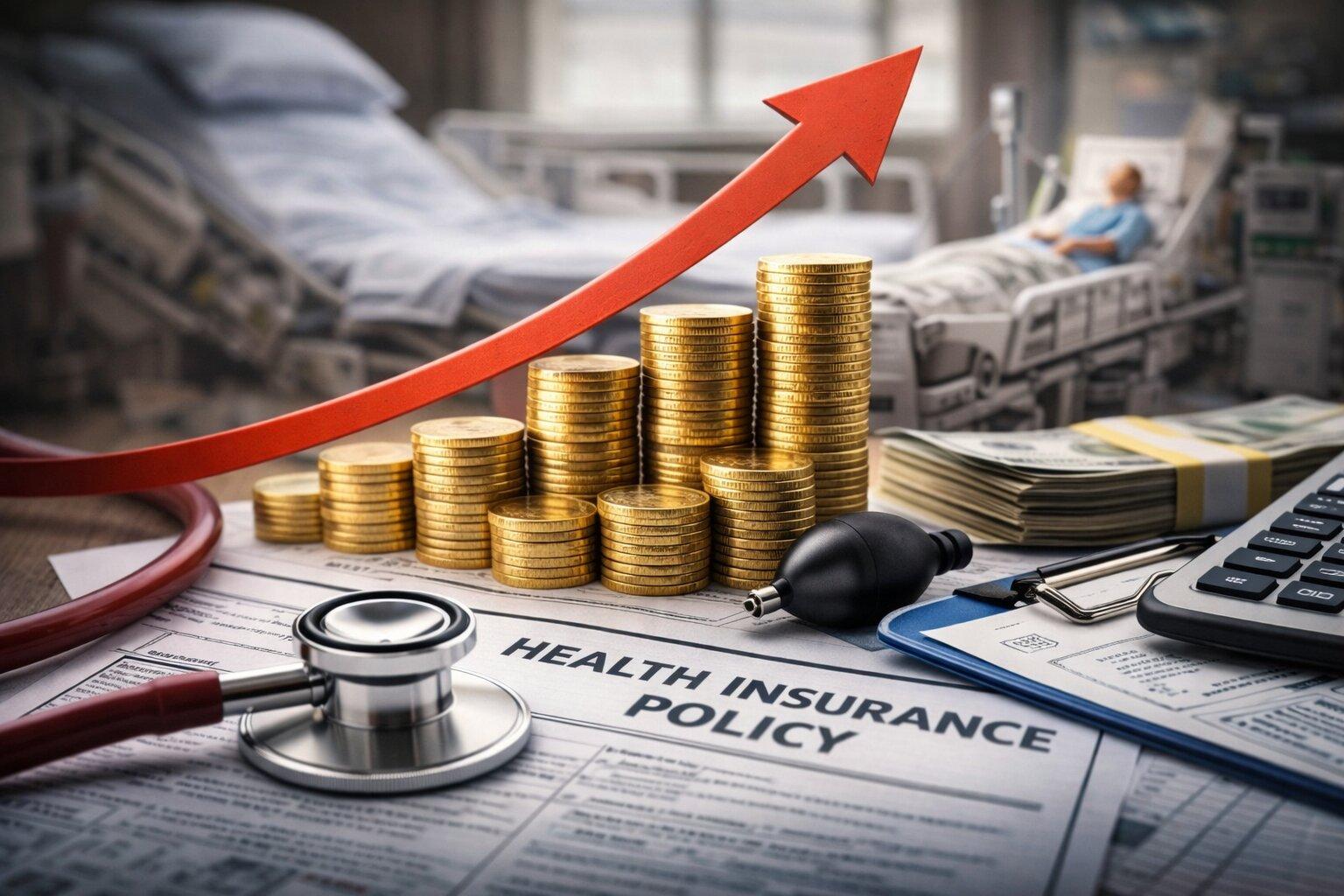
India's healthcare costs are compounding at more than double the general inflation rate and most people only discover their coverage is inadequate when they are already in the hospital
✨ AI இயங்கும் சுருக்கம்
There are two inflations that quietly destroy household finances far more effectively than the one economists discuss most. Education inflation is one. Medical inflation is the other. And unlike education, where you can plan years ahead, a medical emergency arrives without announcement and presents a bill you have no time to negotiate.
India's medical inflation has averaged 10 to 14 per cent annually over the past several years. General CPI inflation has run at 4 to 6 per cent over the same period. That gap roughly double the rate of general price rise compounds silently inside every health insurance policy you hold, eroding its real value year after year even while the premium you pay keeps rising.
What the Numbers Actually Show
The most reliable data on medical inflation does not come from government statistics. It comes from insurance companies, because they are the ones paying the claims and adjusting for actual cost trends.
ACKO Insurance data shows hospitalisation claims rose 12.8 per cent in FY24, with the average claim value climbing from Rs 62,548 to Rs 70,558 in a single year. Care Health Insurance reports medical inflation running at 12 to 14 per cent annually, with a particularly stark illustration in infection-related hospitalisation costs — average claims moved from Rs 24,569 in 2018 to Rs 64,135 in 2022, a 160 per cent increase in just four years. WTW and Milliman surveys of insurers peg medical inflation at 12 per cent in 2024, with peaks reaching 14 per cent in certain periods.
Looking ahead, Aon's insurer survey projects medical inflation at 13 per cent for 2025 and 11.5 per cent for 2026. WTW estimates 13.2 per cent for 2025. As per IRDAI industry wide data, health insurance claims surged by 21 per cent in FY25, while payouts grew by only 12.8 per cent indicating higher claim volumes but tighter settlements amid rising costs. Even in the optimistic scenario, medical costs in India are expected to compound at 11 to 13 per cent annually through 2026 well above the global average of approximately 9.8 to 10 per cent.
To understand what this means in practice: a procedure that costs Rs 5 lakh today will cost approximately Rs 8.9 lakh in five years at 12 per cent medical inflation. At 14 per cent it reaches Rs 9.6 lakh. Your health insurance policy, if its sum insured has not kept pace, will cover a steadily shrinking fraction of that bill.
Why India's Medical Inflation Is Structurally High
Several forces drive medical costs above general inflation persistently and they are not going away.
Technology adoption in hospitals raises both the quality and the cost of care simultaneously. An MRI or robotic surgery that was not available a decade ago is now standard and priced accordingly. Specialist consultation fees have risen sharply as demand has outpaced the supply of trained physicians. Post-COVID, utilisation of health insurance jumped dramatically as deferred procedures were processed and awareness of chronic disease risks increased. The claims data shows this clearly insurance companies saw utilisation surges that forced premium adjustments of 15 to 20 per cent in 2024 alone.
The chronic disease burden is a particularly important structural driver. Cancer treatment costs, cardiovascular interventions and diabetes management are increasingly common claims — and these are inherently expensive conditions to treat. Care Health Insurance data shows that senior citizens now spend 17.4 per cent of their income on healthcare, a figure that will only grow as India's population ages.
The Under-Coverage Problem
The most dangerous aspect of medical inflation is not the rate itself it is what it does to insurance coverage that appears adequate on paper but is not.
A Rs 5 lakh health insurance policy purchased five years ago has the same nominal sum insured today. But at 12 per cent annual medical inflation, that Rs 5 lakh in purchasing power has eroded to effectively Rs 2.8 lakh in real terms relative to today's hospital costs. The policyholder does not see this erosion until the bill arrives.
India's insurance penetration means a large share of hospitalisations are still paid out of pocket. For those who do have insurance, coverage is often a base policy from an employer typically Rs 3 to 5 lakh that has not been reviewed in years. The standard wisdom of maintaining a Rs 5 to 10 lakh sum insured, which was considered reasonable five years ago, is now functionally inadequate for any serious illness in a tier-1 city hospital. A cardiac procedure, cancer treatment cycle or ICU stay routinely generates bills of Rs 15 to 25 lakh or more.
What Optimum Coverage Actually Looks Like
Solving the medical inflation problem requires thinking about health insurance the way you think about any inflation sensitive financial position not as a fixed nominal amount but as something that needs to grow faster than the underlying cost trend.
The minimum effective framework today for a family in a metro city involves a base health policy of at least Rs 10 lakh, supplemented by a super top-up policy that activates above the base deductible and extends coverage to Rs 50 to 75 lakh. Super top-up premiums are significantly cheaper than equivalent base cover and solve the tail risk problem of a catastrophic illness depleting both the base policy and savings simultaneously.
Restoration benefits where the sum insured is reinstated after a claim matter because medical emergencies do not follow policy year boundaries. Critical illness covers that pay a lump sum on diagnosis of cancer, heart attack or stroke address the income disruption that accompanies serious illness, not just the hospitalisation cost. And review frequency matters. A health policy that is not reassessed every two to three years is almost certainly under-insured relative to current medical cost inflation.
The mathematics of compounding works in both directions. Medical inflation at 12 per cent doubles healthcare costs approximately every six years. A sum insured that is not growing either through enhanced cover or through adding top-up layers is a policy that becomes half as effective every six years in real terms.
The Bigger Picture
Medical inflation is the one financial risk most households chronically underestimate because it is invisible until it materialises. You do not receive a monthly statement showing your health coverage has lost 12 per cent of its real value this year. You only discover the gap when you are already inside a hospital, facing a bill that your policy will not fully cover.
The data from India's health insurers is unambiguous. Costs are rising at 11 to 14 per cent annually, premiums are following them up and the gap between what people think they are covered for and what they actually need is widening every year. Addressing that gap proactively through adequate sum insured, top-up layers, and regular policy review is not a discretionary financial decision. At these inflation rates, it is a necessary one.
Disclaimer: This article is for informational purposes only and not investment advice.