Textile Sector
Sayali Shirke / 13 Nov 2025/ Categories: DSIJ_Magazine_Web, DSIJMagazine_App, Special Report, Special Report, Stories
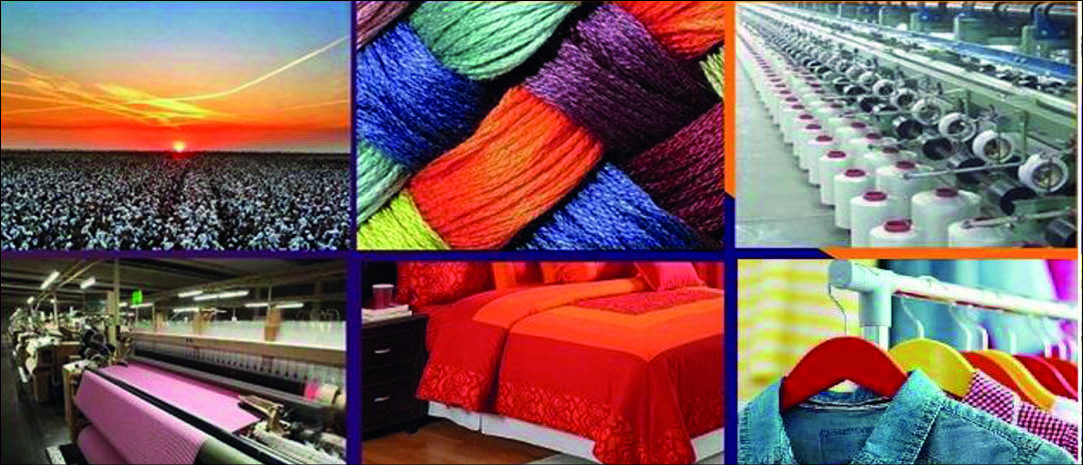
The key question for investors now is whether this is the right time to enter the textile space.
Once viewed as a legacy industry weighed down by volatility and global competition, India’s textile sector is quietly weaving its comeback. Global trade shifts, policy support, technology, and sustainability are reshaping the weave, but not without challenges. Mandar Wagh unravels how one of India’s oldest industries is finding new life in modern markets, where cost, creativity, and competitiveness must align to sustain this delicate recovery. Will it succeed? [EasyDNNnews:PaidContentStart]
India’s textile industry stands at a turning point, one shaped by shifting trade winds, reform-driven competitiveness, and a quiet resurgence in global confidence. Once considered a legacy sector, textiles are now emerging as a modern growth engine powered by technology, sustainability, and a broad-based revival in domestic and export demand. The story is not just about fabric and yarn anymore; it’s about resilience, reinvention, and relevance in a world that is reconfiguring its supply chains.
The industry contributes around 2 per cent to India’s GDP and nearly 11 per cent to manufacturing gross value, and it is one of the largest employers outside agriculture. From cotton cultivation and spinning to garments and home furnishings, India’s textile value chain is among the most comprehensive in the world. The domestic textile and apparel market is valued at around USD 225 billion, and is projected to reach USD 350 billion by 2030, indicating a promising compound annual growth rate (CAGR) of about 8 per cent.
The relevance of this story today lies in the fact that global trade dynamics are shifting in ways that could redefine India’s textile map for the next decade. The key question for investors now is whether this is the right time to enter the textile space. To assess that, we begin by examining how leading textile companies have performed, along with their valuations and stock trends, offering insights into the sector’s growth trajectory. Let’s take a look.
Spinning Revival: Earnings Reflect Gradual Improvement
To gauge the financial pulse of India’s textile sector, we analysed the top 10 listed companies by market capitalisation. While a few have already announced their September quarter results, the June quarter performance has been used as a common benchmark to ensure a consistent comparison. At an aggregate level, the sector delivered a modest 2 per cent year-on-year

revenue growth in Q1FY26, while net profit expanded by around 7 per cent.
In terms of top-line performance, Raymond Lifestyle was the only company to record double-digit revenue growth. On the profitability front, Page Industries’ 22 per cent rise and Trident’s nearly 90 per cent year-on-year surge in net profit were the key contributors to the sector’s overall profit growth. The modest earnings growth was reflected in the stock performance, as most textile stocks delivered negative returns over multiple periods.
This raises an important question: is the sector unattractive for investment, or could it present a compelling contrarian opportunity given the notable decline in stock prices and the potential for an earnings recovery ahead? Let’s take a closer look at the other side of the story. Although aggregate numbers appear modest, they mark early signs of recovery for a sector that has weathered two challenging years.
FY23 and FY24 were marked by multiple headwinds, including

volatile cotton prices, subdued export demand, high inventory levels, and margin pressures due to elevated input and energy costs. Global retailers had also slowed their orders amid recessionary concerns and excess inventory, but the challenges for India’s textile exports ran deeper. Geopolitical tensions, particularly the Russia-Ukraine conflict, disrupted the smooth flow of raw materials and shipping routes, leading to longer delivery timelines and higher freight costs.

At the same time, China’s aggressive dumping of cheaper textile products in key global markets intensified competition and eroded India’s export competitiveness. These combined pressures, ranging from supply chain disruptions to pricing distortions, created a difficult landscape for Indian exporters, forcing many to scale back production or delay new orders. However, as cost pressures have eased and raw material prices stabilised, the sector is now witnessing a gradual improvement in both demand and profitability.
Export opportunities are opening up as global supply chains diversify away from China and the government pursues proactive trade initiatives. Domestically, consumption has started to pick up on the back of festive demand, urban income growth, and recovery in discretionary spending. Together, these trends indicate that the industry’s cyclical downturn may be giving way to a slow but steady rebound. Let’s explore the key growth triggers that are fuelling optimism about the sector’s long-term prospects.
Factors Strengthening Industry Optimism
▪️Diversification is the New Defence
One of the defining developments of 2025 has been the recalibration of India’s trade strategy. The United States’ tariff measures on certain categories of textile imports, particularly from Asia, initially posed challenges to Indian exporters. However, these measures also accelerated diversification into alternative markets such as Europe, Latin America, and Africa. Indian apparel manufacturers have started receiving new orders from European brands seeking stable suppliers outside China and politically volatile regions. Latin America, too, is becoming an emerging market for Indian home textiles and technical fabrics, with countries such as Brazil and Chile exploring long-term sourcing partnerships.
Meanwhile, Africa’s growing middle class presents a new frontier for affordable apparel and home furnishing exports. This geographic diversification is helping the industry de-risk its exposure from traditional markets and expand its footprint in regions with untapped potential. The progress on the India-United Kingdom Free Trade Agreement (FTA) has raised expectations of duty relief on key textile categories and better market access by 2026. The agreement could provide a major boost to exporters who have long been at a disadvantage compared to competitors from countries that enjoy preferential trade terms.
▪️Shifting Trade Winds Open New Doors
The global textile trade is in flux, and that’s creating new opportunities for India. China’s retreat from labour-intensive manufacturing due to rising wages, environmental constraints, and ongoing trade tensions with the United States is leading global brands to diversify their sourcing. Many are adopting a ‘China Plus 1’ strategy, seeking stable and cost-effective alternatives, and India stands out as a natural choice. Meanwhile, Pakistan and Bangladesh, both major textile exporters, are facing significant economic pressures.
Pakistan continues to grapple with currency depreciation, political instability, and power shortages, while Bangladesh’s economy is under stress from high inflation and dwindling foreign reserves. These challenges have disrupted their textile production cycles, prompting global buyers to shift some orders to Indian suppliers who offer both scale and reliability. India’s large domestic cotton base, skilled workforce, and expanding synthetic fibre capacity provide it with a balanced edge over its regional peers. With strategic policy support, India can capture a larger slice of the global textile market that is gradually realigning in its favour.
▪️Policy Momentum
Policy reforms have been central to the sector’s revival story. In the Union Budget 2025-26, the government allocated ₹5,272 crore to the Ministry of Textiles, marking a 19 per cent increase over the previous year. The sector also continues to benefit from the policy provision allowing 100 per cent foreign direct investment under the automatic route. In states such as Gujarat, Tamil Nadu, Madhya Pradesh and Maharashtra, supportive state policies are further driving investments in textile parks, integrated processing clusters, and modern warehousing facilities.
The government’s push for PM Mega Integrated Textile Region and Apparel (PM MITRA) parks is also set to create world-class infrastructure and promote economies of scale in manufacturing. The government has been focusing on rationalising the Goods and Services Tax (GST) structure for textiles, aiming to simplify compliance and improve cash flow predictability for small and medium enterprises (SMEs). Additionally, the revival of the Production-Linked Incentive (PLI) scheme for textiles has been received positively, particularly by companies investing in man-made fibre (MMF) and technical textiles, two segments with immense growth potential.
▪️Competitiveness Push
For years, Indian exporters have struggled with the twin challenges of cost competitiveness and fragmented supply chains. Bangladesh, for instance, enjoys duty-free access to the European Union, while Vietnam has leveraged its proximity to East Asian markets and favourable trade pacts to strengthen its apparel exports. However, India is steadily narrowing the gap through policy support, infrastructure improvements, and scale expansion. The government’s focus on cost competitiveness aims to lower Logistics expenses, energy costs, and compliance overheads.
The dedicated freight corridor and upgrades in port connectivity are helping reduce turnaround times for exports. Moreover, initiatives like PM MITRA parks and textile clusters are expected to consolidate small-scale operations and encourage integration of spinning, weaving, and garmenting units under one roof. Digitisation of export documentation and customs clearance has also cut down lead times, a critical advantage when competing against fast-turnaround exporters.
Companies are increasingly investing in automation and modern machinery, particularly in spinning, weaving, and processing. This is enhancing productivity and consistency in quality, enabling Indian producers to meet global standards. The integration of Industry 4.0 practices such as data analytics, AI-driven inventory management, and predictive maintenance is helping larger players optimise operations. These efforts, although gradual, are setting the foundation for long-term competitiveness.
▪️The Green Thread of Transformation
Sustainability has become the defining narrative of modern textiles. Indian textile clusters, once criticised for pollution and water-intensive processing, are now embracing change. Cities like Surat, Coimbatore, Tirupur, and Panipat are taking tangible steps to build eco-friendly ecosystems. Investments are flowing into water recycling, zero-liquid discharge plants, energy-efficient looms, and renewable power sources such as rooftop Solar. Brands are increasingly demanding traceability and ethical production, and Indian exporters are responding proactively.
Some companies have begun adopting Global Organic Textile Standard (GOTS), while others are moving towards recycled polyester and biodegradable fibres. The growing interest in circular fashion and sustainable blends is also giving rise to new business models. Sustainability, once seen as a compliance burden, is now a competitive advantage. Indian companies that adapt early are gaining long-term contracts with global brands looking to align their sourcing strategies with environmental and social governance (ESG) principles.
▪️Technical Textiles: The Rising Star of the Industry
Among all textile segments, technical textiles are emerging as the fastest-growing and most promising. The segment, which includes products used across healthcare, automotive, Construction, defence and agriculture, has grown significantly. Its rise is a direct result of increased awareness, policy push, and the growing need for performance-based materials. India’s share in the global technical textiles market is still small, but expanding rapidly due to rising domestic demand and government incentives.
With applications ranging from geotextiles used in infrastructure to medical textiles like PPE kits and surgical materials, this segment represents the next frontier for valueadded growth. The government’s National Technical Textiles Mission aims to position India as a global hub in this field by supporting R&D, innovation, and capacity expansion.
Risk Factors
While the outlook appears positive, several risks still loom over the sector. The first is raw material volatility, especially in cotton prices, which directly impacts margins for spinning and weaving units. The dependence on imported synthetic fibres also exposes manufacturers to currency fluctuations and global price swings. The second major risk comes from global demand uncertainty. Although exports are recovering, they remain sensitive to inflation and consumer sentiment in key markets such as the U.S. and European Union. A prolonged slowdown or rising protectionism could dent export orders.
The third concern lies in infrastructure bottlenecks and uneven technological adoption across clusters. Many small and mid-sized firms continue to face challenges in financing and compliance, which affects their ability to scale up or invest in modern machinery. Finally, competition from neighbouring countries remains intense. Despite Bangladesh’s economic challenges, its strong integration with European buyers and low-cost production base still poses competitive pressure. To sustain its growth momentum, India must continue to enhance productivity, reduce costs, and strengthen its brand as a reliable

global sourcing destination.
Conclusion
The outlook for India’s textile sector in FY26 and beyond is one of cautious optimism. The confluence of supportive policies, global realignments, and domestic consumption growth presents a powerful opportunity. India’s strong foundation across the textile value chain, from fibre to fashion, gives it a structural advantage few countries can match. The domestic market, driven by rising disposable incomes, urbanisation, and digital retail penetration, will continue to expand.
The increasing popularity of ethnic wear, activewear, and home furnishings among young consumers is adding new dimensions to the sector’s growth story. On the export front, continued progress on trade agreements and improved competitiveness could help India regain lost ground in global markets. The next five years could also see a deeper integration of technology across the industry. From digital design and automated stitching to predictive demand planning, technology will reshape the way fabrics are made and marketed.
Sustainability will remain a core focus, not just to meet compliance but to create differentiation. Investors should view the textile sector as a long-term opportunity and look past short-term volatility, as several textile stocks present a compelling contrarian opportunity for patient investors. After a period of muted sentiment, several quality names are trading well below their historical valuations, even as earnings growth and operating margins show signs of improvement.
Investors should focus on companies with strong balance sheets, low leverage, scalable capacity, and a consistent export track record. Companies investing in sustainability, man-made fibre integration, and technical textiles are better placed to capture the next leg of growth. For those willing to look beyond near-term headwinds, India’s textile sector offers an attractive blend of value, recovery potential, and long-term structural promise.
[EasyDNNnews:PaidContentEnd] [EasyDNNnews:UnPaidContentStart]
To read the entire article, you must be a DSIJ magazine subscriber.
[EasyDNNnews:UnPaidContentEnd]