India: Between High Expectations and Realities – Rana Kapoor
 Join Us
 Follow Us
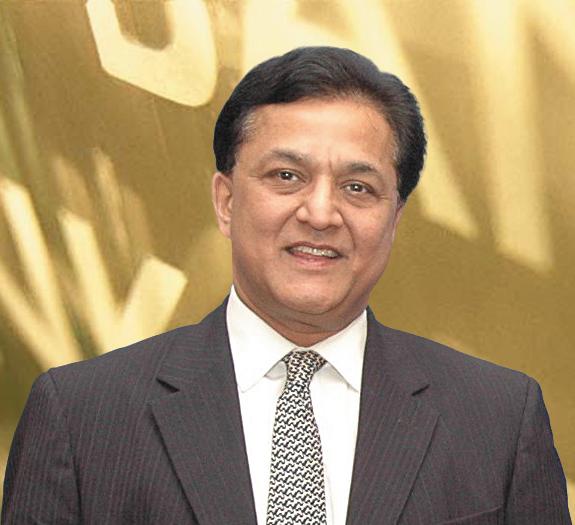
The perspective is specially penned by Mr. Rana Kapoor, MD and CEO, YES BANK, keeping in mind the upcoming budget, current economic scenario & how important it is to revitalize the economy.
‘Roman lustrum’ is a ceremony held every 5 years in ancient Rome, to undertake a ritual cleansing of the State to lay foundation of new finances and morals of the State. In that sense, expectations from the Modi-led Government’s imminent Budget runs beyond a presentation of its balance sheet, to a manifestation of the policy driven chosen path of achieving the goals, set by it, for overall socio-economic development. In the current context, this will provide the avenue for enacting the much stronger political dictum of ‘Maximum Governance, Minimum Government’ – an offshoot of Roman-way of laissez faire Governance!
Against this backdrop, the forthcoming budget holds significance as expectations rein high from the government towards initiating an investment led recovery, which will have a huge multiplier impact through job creation while creating the much needed supply response for combating inflation.
I list down my Top 10 Priority Focus Areas for propelling the economy towards a higher orbit without compromising on the objective of fiscal consolidation.
FISCAL CONSOLIDATION
I. Rationalize Subsidy Burden
The Budget must deliver on subsidy rationalization by placing a non-negotiable cap of 1.8% of GDP on the total subsidy bill. A focused approach by targeting cash based transfers, phased deregulation of all petroleum based products, and greater flexibility to states for implementation of Centrally Sponsored Schemes will act as key enablers to lower the subsidy burden in the subsequent quarters. Likewise, although contentious, the government must initiate the process of limiting the fertilizer subsidies by correcting the excessive consumption of urea by including it in the ambit of Nutrition Based Subsidy Policy and progressively hiking the prices. The detrimental impact of higher urea prices can be offset by ensuring uninterrupted power and creation of new farmer-retail linkages that allow farmers to get higher remunerative price for their produce.
II. Create Plan Expenditure Synergies
In order to rationalize plan expenditure, it is critical to assimilate similar programs under one common head so as to improve execution, effective monitoring and prevent duplication. For instance, The National Food Security Act guarantees entitlement of nutritious food to pregnant and lactating women and children of 6 months to 14 years of age. However, a provision for providing nutritious/energy food for children below 6 years of age and expecting and lactating women in BPL families also exists under the ‘Wheat based nutrition program’ (WBNP) administered by Ministry of Women & Child Development. With both the schemes aiming to provide nutritional food security to a similar type of target population, scope exists to merge the two. Likewise, other food security programs such as Annapurna Scheme under the Ministry of Rural Development, Scheme for Supply of Food grains to Welfare Institutions under Ministry of Consumer Affairs, Food & Public Distribution must be merged under the larger ambit of ‘ food security’ and should be implemented through revamped PDS model.
III. Augment Tax Buoyancy
Amidst weakening growth and unrealistically optimistic tax revenue target, meant that last two fiscal years saw an unfair share of expenditure cuts being borne by plan expenditure to limit the overall deficit. To renew growth, expenditure restraint needs to be accompanied by augmentation of tax buoyancy with an aim to increase Tax/GDP ratio to 12% by FY17 from 10% currently via expansion of tax base, immediate implementation of DTC, and GST rollout from April 2015.
IV. Disinvestment of PSU Companies
Additional revenue augmentation through strategic Disinvestment of PSU companies needs to be undertaken within a well-defined framework. Towards this, a structure including a timeline as well as alternative investment routes must be formulated, to ensure disinvestment proceeds are no longer a stop gap measure to bridge the deficit. With sentiment in the equity market remaining conducive, I hope the target for disinvestment would be scaled up to Rs 75,000 cr vis-à-vis 21,992 cr in 2013-14.
GROWTH & INFLATION
V. Boost Capital Expenditure
To reinvigorate the investment cycle, it is critical to raise capital expenditure to 2.2% of GDP (from 1.7% in FY14) in order to crowd in private investments. To promote private sector capex, the budget should focus on providing tax incentives for infrastructure development and investment in Power and Housing sectors. Further, sustainable rural development can be attained by redesigning existing rural programs like MNREGA, and linking them with asset creation.
VI. Generate Jobs
The budget must focus on encouraging labour-intensive Sunrise Sectors like urban infrastructure, affordable housing, tourism, and healthcare. Furthermore the budget should facilitate manufacturing sector growth by introducing investment allowance and increasing the rate of depreciation on machinery. Most of these sectors have a significant multiplier impact in the economy through backward and forward linkages. In addition, simultaneous emphasis should be laid upon promotion of skill development for enhancing employability and job creation. Further, a reformation of labour laws will ensure the needed impetus to the job market in India by creating enabling conditions for employing the mass pool of labour, which is currently engaged in informal sector.
VII. Incentivize Financial Savings
The Budget must aim to increase financial savings by correcting domestic distortions in savings behavior through incentives to retail savers. Over the last 2-3 years, a disproportionate portion of household savings has been invested in physicals assets like gold and land, rather than financial assets. As such, appropriate measures to promote retail investors, in equity and debt markets, by way of reducing securities transaction tax (STT) or by increasing the 80C deductions limits (under the Income Tax Act) should be considered. In this direction it is also important, that government takes all necessary steps to control inflation, which at present level has put the real interest rate into negative zone and thus discouraged savings in the form of bank deposits. In addition, the Government should focus on leveraging the financial inclusion platform to broaden the savings pool by converting India Post into Postal Bank of India.
VIII. Create Opportunities for Foreign Investment
Towards this, the Budget must allow higher foreign investment in Railways along with increasing threshold in Insurance and Pension sector upto 49% and Defence from the current 26% cap. Further, focus must be on liberalization of tax guidelines and financial sector reforms to make it conducive for foreign financial companies to operate in India which would enable creation of an international financial centre in India akin to London, New York and Hong Kong.
STRUCTURAL & INSTITUTIONAL MEASURES
IX. Strengthen Tax Administration
Ambiguity and uncertainty in tax policy should be minimized to infuse confidence among investors by assuring no sudden or sharp changes in the tax regime. Forward looking changes should be strategized as a vision, communicated to all stakeholders, and actualized only in the medium to long term. Any retrospective amendments should be strictly avoided. Further, a key concern today is the locking up of productive time and capital involved in litigation on tax disputes. Hence, it becomes vital to have an effective and timely resolution of tax disputes through an efficient tax dispute settlement mechanism that balances the need to maximize tax revenue and deters non-compliance at the same time.
X. Recapitalize Public Sector Banks
In order to divert fiscal pressure, the Government must stick to the FY15 Interim Budget target of Rs 11,200 cr for recapitalization of PSU Banks. Demand for additional recapitalization should be met through offloading of equity, hiving off non-core business, issuing bonds, so as to facilitate credit off take to productive sectors of the economy, thus aiding industrial growth.If you want to stay updated with the Share Market News Today, keep a close watch on the Indian Stock Market Today with real time movements like Sensex Today Live and overall trends. Investors tracking IPO Allotment Status, IPO News Today, or the Latest IPO India can also follow daily updates along with BSE Share Price Live data. Whether you are learning How To Invest in Stock Market in India, preparing for a Market Crash Today, or searching for the Best Stocks to Buy in India, insights on Top Gainers Today India, Top Losers Today India, Trending Stocks India and Long Term Stocks India help in making informed investment decisions.
Stay informed, stay disciplined, and make smarter investment choices with timely and reliable market insights.