Is it right time to invest in Balanced Funds?
The bellwether equity market indices are currently trading at their life-time highs. As an investor, if you want to take exposure to the equity market, a balanced fund may be the right investment, to begin with.
Equity markets are currently trading at their life-time highs and many investors are anxious about investing in equity market at such high levels. They fear that the markets may correct significantly from the current levels and hence they feel they should stay away from investing in equities now. While investing in a fund that is highly equity-oriented may not be suitable for you, if you are a first-time investor, a balanced fund may make sense to you in such a rising market. This fund is also advisable for you if you are a conservative investor who would like to create wealth without too much volatility.
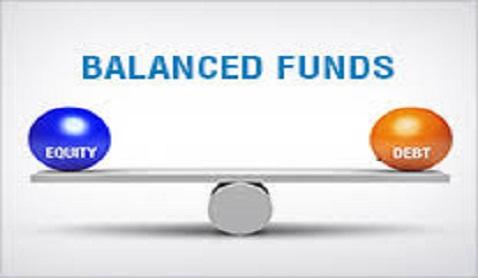
Balanced fund invests in both equity and debt instruments. These funds invest in equities for capital appreciation and in debt for interest income, which provides stability to overall returns. There are basically two types of balanced funds, one is equity-oriented fund and the other is debt oriented fund. In equity-oriented balanced funds, the equity-debt investment is in the ratio of 65:35. In the debt-oriented fund, the investments in debt are 65% and 35% is in equity. Equity-oriented balanced funds allow the investors to retain the tax benefits of equity funds. As equity funds and debt funds are taxed differently, gains on investments held for over a year in an equity-oriented balanced fund are tax-free. The other benefit of a balanced fund is that it helps in re-balancing the portfolio. Studies have shown that re-balancing of portfolio helps to optimise gains. As balanced funds maintain their equity and debt allocation at the predetermined level, the fund manager keeps booking profit from the asset that is doing well and investing in the asset that is underperforming and is undervalued.
Risk-Return matrix of balanced fund
Balance funds tend to give return like large-cap funds. In the last one year, 40 balanced funds have generated an average return of 14 per cent. Average returns given by large-cap funds was 19 per cent during the same period. However, when we look at the risk part of the funds measured by standard deviation, we see that balanced funds are less risky than large-caps funds. Over the last one year, the standard deviation of balanced funds was less than 10 per cent, while for large-cap equity funds, it was around 14 per cent.
Selecting a balanced fund
To select the right balanced fund, you must first define your investment objective, that is, the purpose of making investment, such as retirement or buying a house or a car. This will help you to decide the risk that you can take. The second is to define the time frame for which you are investing. This will help you to zero in on the right balanced funds.
In the current scenario, when the market has already run up quite a lot and the risk-reward ratio is tilted towards risk, it is advisable to invest in a balanced fund that is equity-oriented. Nevertheless, conservative investors should go for debt-oriented balanced funds.
If you want to stay updated with the Share Market News Today, keep a close watch on the Indian Stock Market Today with real time movements like Sensex Today Live and overall trends. Investors tracking IPO Allotment Status, IPO News Today, or the Latest IPO India can also follow daily updates along with BSE Share Price Live data. Whether you are learning How To Invest in Stock Market in India, preparing for a Market Crash Today, or searching for the Best Stocks to Buy in India, insights on Top Gainers Today India, Top Losers Today India, Trending Stocks India and Long Term Stocks India help in making informed investment decisions.
Stay informed, stay disciplined, and make smarter investment choices with timely and reliable market insights.
 Join Us
 Follow Us