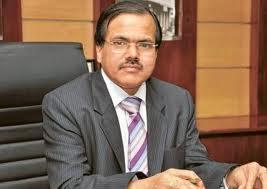
M Narendra, CMD, Indian Overseas Bank
 Join Us
 Follow Us
What factors have helped the bank register an impressive growth rate which is in fact better than the industry average?
The bank witnessed a significant business growth of 35.20 per cent in 2010-11 and as at the end of June 2011 it posted year-on-year growth of 40.49 per cent in business. The driving factors of the bank’s impressive growth include reaching out to the customers through the ‘walk-in-bank’ campaigns by all the employees at all levels for resource mobilisation and expanding the customer base, improved credit delivery through focused vertical approach viz. large and mid-corporates and SMEs.
What have been the thrust areas for the bank in recent times?
The bank plans to add 400 branches across the country to widen its pan-India presence which will go a long way in furthering its business expansion. Also, mobilisation of the current account and saving account (CASA) is the need of the hour to keep the cost of deposits low. The bank is focusing on lending to the MSME and the agricultural sectors which are the nation’s priorities. The bank will also look for good credit proposals in the infrastructure and industrial sectors, apart from expanding other retail loans for housing and education.
What are your plans for enhancing your overseas’ presence in this financial year?
We are planning to open a branch in Nepal and also proposing to take up with the Monetary Authority of Singapore for granting a qualifying full bank’s license in order to further exploit the business potential at Singapore. The bank has also taken up with the RBI for permission to upgrade its representative offices at Guangzhou (China), Al Karama (Dubai) and Ho Chi Minh City (Vietnam) into full-fledged branches. We have also sought the RBI’s permission to open an additional branch in Bangkok at Sukhumvit. The bank also plans to set up its third remittance centre at Singapore. Meanwhile, our bank, along with Bank of Baroda and Andhra Bank, is actively working towards the commencement of operations of the joint venture subsidiary established at Malaysia.
What are the various SME products that IOB offers?
The Indian Overseas Bank offers a wide range of MSME products and services catering to the need and prosperity of our customers. Our MSME product portfolio has been tailor-made to suit individual and industry requirements as well as to meet the requirement of the SME entrepreneurs comprehensively. Apart from our traditional asset creation loans (term loans) and working capital management loans (cash credit), the following are our distinct SME products:
- IOB SME Term Loan.
- IOB – CA for chartered accountants.
- IOB – Sanjeevini for medical professionals.
- Scheme for small transport operators under a tie-up arrangement with Ashok Leyland Ltd, Bajaj Auto Ltd, Tata Motors Ltd, Asia Motors Ltd and TVS Motor Co Ltd.
- IOB MSE PLUS – a combo product to meet the investment needs and working capital needs of the MSEs through a term loan account in a simplified and hassle-free manner.
- IOB MSME Insta Fund to meet genuine unforeseen working capital needs.
- Collateral-free loans under CGTMSE.
- Government-sponsored schemes such as PMEGP, TUF and CLCSS.
What is your view on the current performance of SMEs and their future?
The MSME sector is one of the largest contributors to domestic production and export earnings with its substantial industrial output, employment generation and quality products and services. The nation has witnessed the capacity of this sector to boost the country’s economic growth by acting as a supply chain with its innovative products and services to large corporates. However, despite growth and business development, these small players do not have adequate margins to fall back on during difficult times. The present market scenario indicates that the sector is under stress with rising input and interest costs.
What, according to you, should be the financial management approach for the SMEs to do better?
No business unit can survive even with the best products and exemplary marketing mechanism if its financials are not adequately managed. Most of the small and mid-size business units lack expertise in managing their cash flows, capital expenditure planning, negotiating favourable deals with suppliers, balancing quality and costs and predicting market demand. Apart from the traditional financial management of book-keeping, working capital management and cost control, the business unit must also concentrate on the following areas for effective financial management:
- Composite annual budget and monthly targets with a monitoring mechanism.
- Continuous surveillance of areas which affect the liquidity of the business.
- Capex planning.
- Cost-saving strategies.
- Quality control measures.
What measures have you taken to reduce to improve your NPAs considerably? Going forward how are you going to bring this down below 1 per cent?
The right selection of borrower with proper credit appraisal, closer monitoring of accounts and periodical guidance will help in maintaining the health of the portfolio. In case of difficulties, timely restructuring of the credit facilities should be carried out to tide over the units’ problems. This approach will keep the NPAs low and we definitely plan to bring our net NPA to below 1 per cent.
What HR practices are being adopted for the improved performance of the employees?
A large number of training programmes are conducted for officers and the clerical staff at our staff training college and ten staff training centres. Recently senior officers and executives were deputed to national level institutes like the National Institute of Bank Management, College for Agricultural Banking, Management Development Institute, Administrative Staff College of India, etc for specialised trainings. Senior executives were also deputed to overseas’ training programmes to gain exposure about the latest global developments and international practices. Promotion at all levels and new recruitment of officers and clerks is also taken up to take care of succession planning and support the increased business.
How are you creating value for your investors?
Our bank has a continuous history of dividend payment and its performance during the year 2010-11 has been quite impressive, thereby returning good yields to the investors. Further, we take every effort to ensure the wealth maximisation of the bank’s shareholders by declaring higher dividend coupled with increased book value/earning per share by attaining better performance every year.
If you want to stay updated with the Share Market News Today, keep a close watch on the Indian Stock Market Today with real time movements like Sensex Today Live and overall trends. Investors tracking IPO Allotment Status, IPO News Today, or the Latest IPO India can also follow daily updates along with BSE Share Price Live data. Whether you are learning How To Invest in Stock Market in India, preparing for a Market Crash Today, or searching for the Best Stocks to Buy in India, insights on Top Gainers Today India, Top Losers Today India, Trending Stocks India and Long Term Stocks India help in making informed investment decisions.
Stay informed, stay disciplined, and make smarter investment choices with timely and reliable market insights.