Rupee Will Rebound, Say Experts
 Join Us
 Follow Us
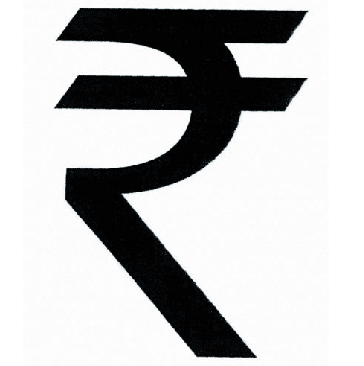
The rupee’s downfall augurs well for the Pharma and IT sectors. The Oil & Gas, Power and Fertiliser sectors may however have to bear the brunt of the this fall as it will increase their input costs.
The exit of FIIs and the news of the Fed cutting on the quantitative easing have had a highly negative impact on the national currency. The rupee, this year, touched the level of 60 against the USD and has depreciated over 9%. On April 4, 2013, it stood at 52.97 against the dollar from where it fell by more than 13%. There are combinations of factors such as widening current account deficit (CAD), a huge rise in gold imports, capital outflows and the possibility of the termination of the quantitative easing (QE) that have led to this downfall of the rupee.
The INR, however, is not the only currency that has depreciated this year. Japan's Yen is also down heavily. Following this trend, currencies of Brazil, South Africa are also down against the dollar.
 Sujan Hajra, Executive Director, Chief Economist, Co-Head Research at Anand Rathi Securities said, “The global factors have caused a huge correction in the rupee. India is not alone as currencies of South Africa and Indonesia have also remained volatile against the dollar. The possibility of the Fed tapering the QE is a big concern as the capital flows will reduce drastically”. He further added that the gold imports have been a worry for the markets as it will lead to a rise in the CAD. “The tapering of the QE will make it difficult for India to finance its CAD, which is why the rupee is experiencing a downward journey”, he said.
Hajra said that the rupee will rebound in a short term. The currency’s behavior, going forward, may be non-linear, which means that it will not trade in a straight line. “In the next one month, the rupee may trade at the levels of 57 against the dollar, while in the next 3 months it will be trading at the levels of 55. Eventually in another 9-12 months, it will again fall to the level of 60”.
 Shubhada Rao, Chief economist at Yes Bank said that the drastic overnight fall in the rupee does not seem to persist. The national currencies have fallen in countries which are facing a gap in their CADs. Brazil's Real, Turkey’s Lira and South African Rand too have shown a fall in the year due to heavy capital outflows. We are currently seeing a knee jerk reaction to the rupee’s fall which is also seen in the global capital markets. She also said that the RBI has not taken any step at the moment but if the rupee sustains at the level of 60, then some intervention from the government or the RBI may be expected. The rupee may rebound in a week or so, she added.
On the Fed’s statement she said that the Fed has given an indication that it may be cutting down on the QE next year but the fate of the currency will depend upon a number of macro factors.
Overall, the rupee scenario remains sluggish and we, at DSIJ, believe that the rupee may not see any major appreciation this year and it should continue to trade at higher levels. This augurs well for the Pharma and IT sectors. The Oil & Gas, Power and Fertiliser sectors may however have to bear the brunt of the INR fall as it will increase their input costs. Besides, the streak of moderation in inflation may end soon, meaning there could not be more rate cuts this year.
If you want to stay updated with the Share Market News Today, keep a close watch on the Indian Stock Market Today with real time movements like Sensex Today Live and overall trends. Investors tracking IPO Allotment Status, IPO News Today, or the Latest IPO India can also follow daily updates along with BSE Share Price Live data. Whether you are learning How To Invest in Stock Market in India, preparing for a Market Crash Today, or searching for the Best Stocks to Buy in India, insights on Top Gainers Today India, Top Losers Today India, Trending Stocks India and Long Term Stocks India help in making informed investment decisions.
Stay informed, stay disciplined, and make smarter investment choices with timely and reliable market insights.