Auto Ancillary
 Join Us
 Follow Us
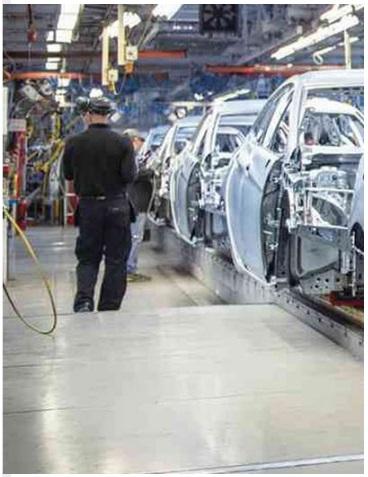
Amidst a scorching June heat wave that has impacted automotive sales, automotive and ancillary stocks are soaring to new heights, bolstered by strong performances from the companies.
✨ Key Takeaways
Amidst a scorching June heat wave that has impacted automotive sales, automotive and ancillary stocks are soaring to new heights, bolstered by strong performances from the companies. Diverse perspectives on government initiatives and budgetary expectations, coupled with anticipation surrounding major IPOs, are shaping a dynamic landscape in the industry. What exactly is unfolding in the automotive industry? Mandar Wagh delves into the factors driving optimism within the industry and offers forecasts for its future trajectory
During a robust and uninterrupted uptrend, the Indian benchmark indices BSE Sensex and Nifty 50 consistently reached new record highs on the bourses. Numerous sectors reaped substantial benefits, with the Indian automobile and ancillary industry emerging as one of the best performers. The BSE Auto index, the sectoral gauge, significantly outpaced the main indices, delivering impressive returns of 37 per cent year-to-date and 67 per cent over the past year.

Furthermore, the industry shielded investors’ wealth during a market bloodbath amidst heightened volatility and uncertainties surrounding the Lok Sabha election results, surging over 8 per cent in the week of the results. Despite a scorching June heat wave impacting automotive sales, its effect on the price movement of automotive and ancillary stocks was relatively minimal. Let’s explore the factors contributing to this optimism within the industry and understand its future potential outlook.
About the Industry
The Indian automobile and ancillary industry includes automobile manufacturers of passenger vehicles, commercial vehicles, two-wheelers and three-wheelers. It also involves the production of automotive components such as engine parts, transmission systems, suspensions, electrical parts and tyres.Additionally, the industry covers fuel systems, lubricants, automotive electronics and aftermarket services. Research and development, logistics, supply chain management and dealerships for new and used vehicles are integral parts too. The industry serves as a steadfast barometer of the country’s economic vitality, pivotal in driving macroeconomic growth and technological advancement.
According to the Department for Promotion of Industry and Internal Trade (DPIIT) report of March 2024, the automobile industry accounted for 5.34 per cent of the total foreign direct investment (FDI) inflow into India. It employs around 19 million people, both directly and indirectly. India ranks as the world’s third-largest automobile market, holding the top position globally for manufacturing three-wheelers, passenger vehicles and tractors, and standing as the second-largest manufacturer of two-wheelers. India is a significant exporter of automobiles, with strong expectations for export growth in the near future.
In 2023-24, the country exported a total of 45,00,492 vehicles, with two-wheelers comprising approximately 76.8 per cent of these exports. With a strong emphasis on the burgeoning middle-class and a sizeable youthful demographic, the industry is predominantly led by the two-wheeler segment, which has experienced notable expansion. In 2021, the Indian passenger car market was valued at USD 32.70 billion. It is projected to reach USD 54.84 billion by 2027, with a CAGR of over 9 per cent from 2022 to 2027.
The electric vehicle (EV) market is projected to achieve a CAGR of around 50 per cent from 2022 to 2030. By 2030, it is anticipated that the EV industry will generate approximately 5 million direct and indirect jobs. The Indian automotive component industry achieved a record-high turnover of USD 69.7 billion, marking a 33 per cent growth in FY 2022-23. The industry is poised to invest up to ₹58,000 crore by FY28 to enhance the localisation of advanced components, including electric motors and automatic transmissions. This move aims to reduce imports and leverage multinational companies’ China Plus One sourcing strategy.

Drivers of Sector Growth
The growth of India’s automotive and ancillary industry is driven by several key factors. Firstly, expanding consumer demand across vehicle segments, including passenger cars and commercial vehicles, continues to fuel production and sales. As more people move to urban areas, there is a heightened demand for personal vehicles and urban transport solutions. Higher disposable incomes enable consumers to afford and upgrade to personal vehicles, thereby boosting sales across vehicle segments and stimulating demand for automotive products and services.
Technological advancements, such as the adoption of EVs, connected technologies and autonomous driving systems, are reshaping the industry’s landscape, encouraging innovation and meeting evolving consumer preferences. Government subsidies and tax incentives on electric vehicles in India aim to boost their adoption and support the growth of the EV market. These incentives include subsidies on EV purchase prices, reduced GST rates and Income Tax benefits for buyers. These government initiatives not only incentivise local production but also strengthen the industry’s competitiveness in the global markets, fostering export opportunities and reducing dependency on imports.
Additionally, enhancements in supply chain capabilities and localisation efforts are improving operational efficiencies and cost structures within the sector. This strategic focus on strengthening the supply chain not only enhances resilience but also supports sustainable growth by mitigating risks associated with global supply chain disruptions. Overall, these factors collectively underpin the robust growth trajectory of India’s automotive and ancillary industry, positioning it as a pivotal contributor to the country’s economic development and industrial competitiveness on the global stage.
Government Initiatives Automotive Mission Plan 2047
The Automotive Mission Plan 2047 is a visionary strategic framework established by the Indian government, aiming to transform India into the world’s largest automotive manufacturing hub by the centenary year of India’s independence. This plan aspires to significantly boost the sector’s contribution to India’s GDP, create millions of new jobs and position India as a global centre for automotive research and innovation. The key objectives include promoting sustainability and green mobility by extensively advancing electric and hybrid vehicles, developing indigenous battery technologies and enhancing charging infrastructure. The plan also emphasises the use of alternative fuels like hydrogen and biofuels and aims to implement stringent emission norms to minimise the carbon footprint. Technological advancements are a core focus, with investments in autonomous and connected vehicle technologies, advanced manufacturing techniques such as Industry 4.0 and smart factories.
Click to download - Financial Performance of Leading Auto Ancillary Companies by Market Capitalisation
FAME
The Faster Adoption and Manufacturing of (Hybrid) and Electric Vehicles (FAME) scheme is a pivotal initiative launched by the Indian government in 2015 under the National Electric Mobility Mission Plan (NEMMP), aimed at accelerating the adoption and manufacturing of electric and hybrid vehicles. The primary goal of the FAME scheme is to reduce vehicular emissions, decrease dependence on fossil fuels, and foster a sustainable transportation system by offering financial incentives to buyers, thus lowering the initial cost of ownership.
The scheme is being implemented in two phases: FAME I (2015-2019) focused on creating demand for EVs through subsidies for two-wheelers, three-wheelers, four-wheelers and buses, and supporting charging infrastructure and research and development. FAME II (2019-2024), with a budget of ₹10,000 crore, further emphasises public transportation and shared mobility, providing incentives for electric buses, three-wheelers, passenger cars and two-wheelers, and aims to establish a network of 2,700 charging stations across India. The FAME scheme has significantly contributed to the growth of the EV market, promoting a cleaner and more sustainable automotive future for the country.


PLI Scheme
The Production Linked Incentive (PLI) scheme is a strategic initiative launched by the Indian government in March 2020 to bolster domestic manufacturing and enhance India’s global competitiveness across various sectors, including electronics, pharmaceuticals, automotive and textiles. The scheme offers financial incentives to eligible companies based on their incremental sales from products manufactured in India, with the primary objectives of creating large-scale employment, attracting investment, increasing exports and establishing India as a global manufacturing hub.
In the automotive sector, the PLI scheme particularly focuses on the production of electric vehicles (EVs) and advanced automotive technologies, aiming to promote the local manufacturing of critical components such as battery cells and electric drive-trains. This initiative is designed to reduce import dependency and support the development of a robust EV ecosystem in India. The PLI scheme has been successful in attracting substantial investments from both domestic and international companies, providing a predictable and stable policy environment that encourages long-term planning and capacity expansion.
Automotive IPO Buzz
The recent news surrounding IPOs in the automobile industry has sparked discussions among investors, renewing confidence in the industry. Hyundai Motor India Limited, the Indian arm of South Korean automotive giant Hyundai Motor Co., has submitted preliminary documents to the Securities and Exchange Board of India (SEBI) to initiate an initial public offering (IPO) aiming to raise approximately ₹25,000 crore.
Ola Electric, the electric vehicle maker, has received official approval from SEBI for its IPO, through which the company aims to raise ₹7,250 crore. It will be intriguing to observe investors’ reactions to Hyundai Motor India’s plan to dilute a substantial stake in its Indian unit, as well as the level of investor interest Ola Electric manages to garner in terms of subscription.
Revving Up Profits
We have selected the top 30 BSE-listed automotive ancillary companies for analysis, based on their latest market capitalisation. Analysing the year-on-year financial performance for Q4FY24, a majority of the companies achieved double-digit revenue growth, contributing to an aggregaterevenue growth of about 19 per cent. Although a few companies saw a slight decline in operating profit and net profit growth, the majority reported significant double-digit growth in these metrics.
Aggregate operating profit and net profit exhibited substantial year-on-year growth rates of 33 per cent and 60 per cent, respectively. Steel Strips Wheels Ltd., Lumax Auto Technologies Ltd. and ASK Automotive Ltd. showed remarkable triple-digit growth in net profit. Lumax Auto Technologies Ltd. and HBL Power Systems Ltd. led in revenue growth with significant figures.
Though the sequential performance was less impressive compared to year-on-year results, the aggregate figures still showed a 4 per cent increase in revenue and a 28 per cent rise in net profit. The strong financial performance of companies, coupled with government initiatives and sectoral tailwinds, bolstered investor confidence, resulting in a robust rally in automotive ancillary stocks. Remsons Industries Ltd., Sharda Motor Industries Ltd. and TVS Holdings Ltd. led the sectoral gains. Remarkably, around 15 automotive ancillary stocks have doubled investors’ wealth over the past year!
The impressive performance of automotive and ancillary stocks may prompt investors to consider entering the market to capitalise on the current opportunities. However, with many stocks already experiencing significant gains, it is crucial to consider the valuations carefully. The Nifty Auto index’s current PE ratio is around 25 times, which is relatively low compared to its one-year PE range, where the low and high are 22 times and 32 times, respectively.

Investors should focus on companies with strong fundamentals, consistent growth and lower valuations that offer more upside potential. A key concept to remember is the margin of safety – the difference between a stock’s intrinsic value and its market price. The larger the margin of safety, the lower the investment risk. Investing in the automotive sector can be a prudent choice if you carefully evaluate the current economic and market conditions, industry trends and specific growth drivers.
The Indian automotive component industry achieved a record-high turnover of USD 69.7 billion, marking a 33 per cent growth in FY 2022-23. The industry is poised to invest up to `58,000 crore by FY28 to enhance the localisation of advanced components, including electric motors and automatic transmissions.
Adapting to Challenges
The Indian automotive and ancillary industries confront several formidable challenges that impact their operational resilience and growth prospects. Economic disruptions can dampen consumer demand for vehicles, directly affecting sales volumes and production levels. Moreover, regulatory fluctuations, such as stringent emission norms and safety standards, necessitate continual investment in technology upgrades and compliance measures, adding to operational costs. The industry also faces the disruptive impact of technological advancements, particularly the shift towards electric vehicles (EVs) and autonomous driving technologies, requiring substantial research and development investments and infrastructure adaptations.
Environmental concerns drive the need for sustainable practices and cleaner technologies, which entail additional expenditures. Intense competition, both domestically and internationally, adds pressure on profit margins, while skill shortages and infrastructure limitations, such as inadequate road infrastructure and EV charging networks, present ongoing operational challenges.
Industry stakeholders are navigating these complexities by adopting agile strategies that include innovating in technology and business models, advocating for policy reforms, initiating skill development programmes and forging strategic collaborations. In conclusion, the government’s focused support, robust backing, India’s ability to attract investments, strategic technological collaborations with global leaders, and a positive shift in public sentiment towards embracing change collectively position the country to overcome these challenges and emerge as the world’s leading automotive manufacturing hub!