Capital Markets 2.0: From a Banyan Tree to Billion-Dollar Trades
 Join Us
 Follow Us
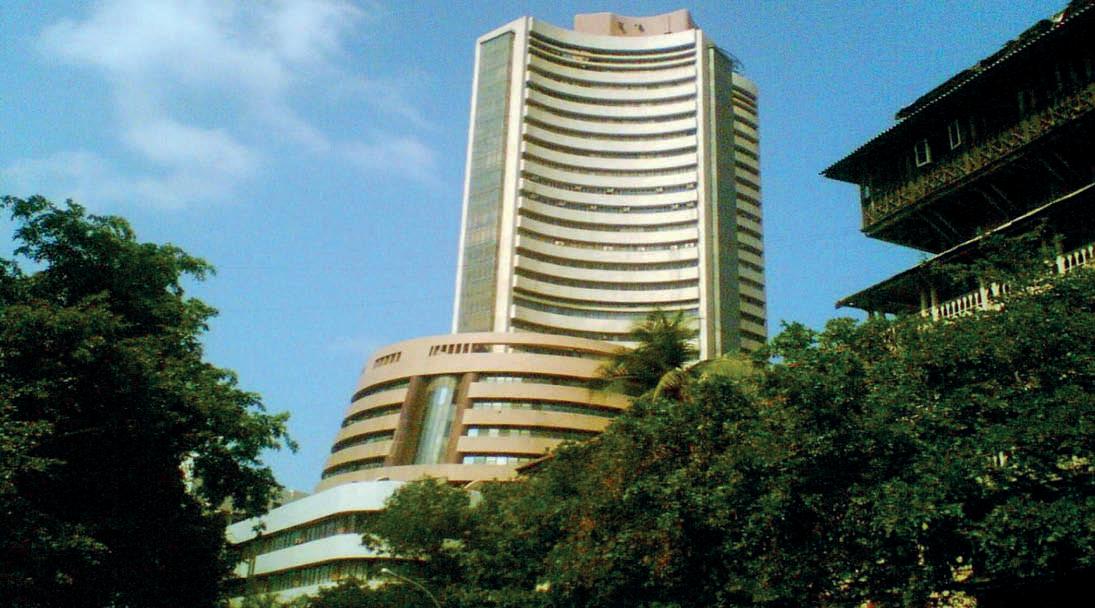
Over the decades, this informal street-level hustle transformed into a full-fledged marketplace for wealth creation.
✨ Key Takeaways
From open street gatherings to today’s tech-driven markets handling crores in daily turnover, India’s capital markets have truly come a long way. But the transformation isn’t over yet. In this story, Mandar Wagh explores the next wave of evolution reshaping India’s financial landscape, highlighting SEBI’s progressive reforms, the rise of a strong digital backbone, and the key companies positioned to benefit from this structural shift
Long before towering terminals and lightning-fast trading algorithms defined India’s financial landscape, the heart of Indian capital markets beat under the open sky. On a dusty stretch of road, what we now know as ‘Dalal Street’, indigenous brokers huddled beneath banyan trees, shouting bids and striking deals in a swirl of paper slips and hand signals. There were no screens, no structured regulations, just a chaotic but spirited bazaar of commerce.
Over the decades, this informal street-level hustle transformed into a full-fledged marketplace for wealth creation. From the founding of the Bombay Stock Exchange in 1875, the oldest in Asia, to the digital revolution that now enables same-day settlement, India’s capital markets have travelled a remarkable journey. And now, something even more interesting is happening: India is no longer just a compelling domestic story, but is becoming a global magnet.
When a firm like Jane Street, known for its hyper-efficient, quantitative trading models, sets its sights on India, the implications are noteworthy. These are institutions that operate on razor-thin margins and demand seamless execution, minimal latency, and ultra-reliable post-trade systems. Their presence signals trust; not just in the markets, but in the ecosystem that supports those markets.
And this interest is not limited to Jane Street alone. Over the And this interest is not limited to Jane Street alone. Over the last few years, India has quietly become a testing ground for global trading strategies. It's no longer just about scale; it’s about sophistication, stability, and transparency. For Indian investors, both institutional and retail, this development opens up a range of new opportunities and challenges. Let’s explore this further.
SEBI’s Silent Revolution in Indian Capital Markets
If India’s capital markets are today drawing the attention of the world, a large part of the credit goes to the Securities and Exchange Board of India (SEBI). Over the last few years, SEBI has shifted gears from being a reactive regulator to a forwardthinking facilitator of market modernization. Its actions have not only strengthened investor protection but also made the entire ecosystem far more agile, transparent, and globally competitive. One of the most pathbreaking moves has been the introduction of the T+1 settlement cycle, positioning India as the fastest major market in terms of clearing and settlement.
While several developed markets still operate on a T+2 or longer timeline, India is already running pilot programs to test T+0 same-day settlement, an ambitious step that reflects both intent and capability. Another noteworthy reform is platform interoperability, allowing trading members to route transactions through any clearing corporation of their choice. This has broken monopolistic dependencies and reduced systemic risks, while also lowering transaction costs, a win for both brokers and investors. SEBI has also brought stricter surveillance and transparency norms, leveraging real-time data analytics to monitor trading behaviour, prevent manipulation, and boost market integrity.
Additionally, it has introduced frameworks to govern execution-only platforms, algo trading, finfluencer accountability, and compliance automation, making the market not just faster, but fairer. Transparency has long been a cornerstone of investor trust, and SEBI has taken deliberate steps to ensure that listed companies uphold the highest standards in disclosures and governance. In recent years, the regulator has tightened rules around timely and material disclosures, compelling companies to report critical information such as board decisions, financial results, acquisitions, and credit ratings within strict timelines.
Further, SEBI now mandates quantitative thresholds for determining materiality, reducing subjectivity and enhancing consistency across companies. This move is particularly significant in an era where information travels fast, and the line between price-sensitive news and speculation is often blurred. To improve accountability, SEBI has also issued guidelines on disclosure of ESG-related data, sustainability reporting under BRSR (Business Responsibility and Sustainability Reporting), and cybersecurity incidents, acknowledging that today’s investor is not only interested in profits but also in resilience, ethics, and long-term value.
Building the Digital Spine of Indian Markets
What makes these reforms more than just paperwork is the digital infrastructure backing them. India’s capital markets now rest on a tech-first foundation, designed for scale, speed, and security. Today’s retail participant does not need to understand the technicalities of order books or settlement cycles to get started. Thanks to the rise of tech-savvy brokerage firms and app-based platforms, investing in equities, mutual funds, ETFs, IPOs, and even sovereign bonds is now as simple as a few taps on a smartphone.

Leading discount brokers and full-service platforms have invested heavily in creating user-friendly interfaces, offering seamless onboarding, instant KYC, and zero-paper transactions. Features such as real-time portfolio tracking, goal-based investing, AI-driven advisory, and educational content have turned these platforms into comprehensive financial ecosystems. This democratization of investing has helped bring millions of Indians into the fold of formal finance, significantly deepening market participation and creating a strong foundation for sustainable capital formation.
Dematerialisation is now the default, and the number of demat accounts in India has crossed 19 crore, growing at an unprecedented pace. Central Depository Services Limited (CDSL) and National Securities Depository Limited (NSDL), the two central depositories, have ensured that millions of investors can access, hold, and transact securities with minimal friction. The trading architecture itself has gone through a silent but substantial overhaul. Stock exchanges like NSE and BSE have invested heavily in latency reduction, server co-location, and data dissemination systems, enabling seamless trading across asset classes.
Registrar and transfer agents such as Computer Age Management Services Ltd (CAMS) and KFin Technologies Ltd have built robust back-end systems that support mutual fund transactions, corporate actions, investor communications, and recordkeeping at scale. These are not just support functions; they are the core infrastructure allowing asset management and corporate governance to operate smoothly in a digital-first environment. Moreover, SEBI’s encouragement of innovation through regulatory sandboxes and direct market access for institutions reflects a willingness to let technology shape the next leg of growth responsibly.
Strong Fundamentals, Stellar Returns

The financial performance of India’s leading capital market players including stock exchanges, depositories, transfer agents, brokers, and service providers has remained robust across varying market conditions, whether bullish or cautious. Over the past several quarters, these companies have consistently outperformed the broader corporate earnings landscape. In FY25, the sector posted an impressive 28 per cent year-on-year revenue growth, while net profits surged 23 per cent, reflecting the underlying strength of the capital market ecosystem.
BSE Ltd. led from the front, delivering a stellar 116 per cent surge in revenue and a 77 per cent jump in net profit, supported by higher transaction volumes, new services offerings, and increased investor participation. While most companies saw strong growth on both the topline and bottom-line, a few broking firms, including Motilal Oswal Financial Services Ltd. and Angel One Ltd., reported modest single-digit profit growth.

This was primarily due to increased competitive intensity and elevated marketing and tech spends. Investor confidence in the sector has been robust, mirroring the solid fundamentals of capital market companies. Buoyed by sustained buying interest, a majority of these stocks have delivered triple-digit returns over the past three years.
BSE Ltd stood out as the star performer, delivering an eyepopping 1,000 per cent return, capturing the market’s attention and reinforcing the sector’s long-term potential.
Challenges on the Road Ahead
India’s ambition to become a global capital market powerhouse is not without its set of challenges. While regulatory reforms and digital infrastructure have made impressive strides, execution consistency, cybersecurity preparedness, and investor grievance redressal continue to demand close attention. The increasing reliance on technology means that any lapse, be it a system glitch, data breach, or platform downtime can shake investor confidence, particularly when millions are transacting simultaneously.
Additionally, as India attracts global trading firms and deeppocketed institutions, it must ensure equitable access for domestic investors and guard against market concentration risks. The rise of algorithmic and high-frequency trading also raises questions around market fairness, latency arbitrage, and the role of regulations in ensuring a level playing field.
Compliance complexity for companies, particularly smaller firms, has also increased as disclosure norms tighten. While this improves transparency, it can at times be burdensome for businesses navigating both growth and governance expectations.
However, these are the growing pains of a maturing ecosystem. What sets India apart is its proactive regulatory approach, willingness to adapt, and a thriving investor base that continues to evolve. With strong institutional intent, continuous digital innovation, and a collective push towards financial literacy and participation, India is well on its way to building not just a bigger market but a better one. The journey may be complex, but the direction is clear, and the momentum is unmistakable.
Looking Ahead
India’s capital markets are no longer just a reflection of economic activity; they are becoming a driving force behind it. With SEBI laying down a strong regulatory framework, exchanges and depositories embracing technology, and brokers simplifying access for millions, India now boasts one of the most efficient, inclusive, and transparent market infrastructures in the world. The growing interest from global market-makers is not a coincidence; it’s a recognition of India’s preparedness and potential. Whether it is T+0 settlements, real-time disclosures, or frictionless investing, India is setting new benchmarks.
Yes, challenges remain, from cybersecurity to compliance, but they are not roadblocks; they are signposts on the path to progress. For investors, this is more than a regulatory or technological story. It is a structural opportunity to participate in the very foundation of India’s financial future. As capital markets evolve from being mere enablers to engines of growth, those who understand and invest in this ecosystem today will be well-positioned to benefit from its future.
Market infrastructure companies may lack the glamour of unicorn tech stocks or high-growth banks, but they are the rails on which the next phase of India’s capital market story will run. With rising volumes, digitization, and global validation, these companies could quietly deliver compounding returns with stability and scale. Hence for investors, the message is clear: Don’t just invest in what the markets trade; invest in what makes the markets work.