Commodity Markets Brace for Volatility Amid Economic Realignments
 Join Us
 Follow Us
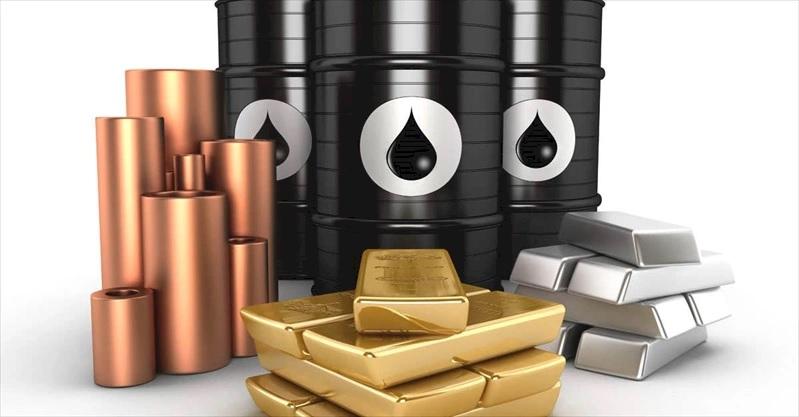
The anticipation of a new global era has intensified as countries adjust to shifting trade dynamics and geopolitical policies.
✨ Key Takeaways
As the global economy and geopolitical tensions evolve, commodity markets are entering a period of significant volatility. Market participants and investors must remain agile and prepared for transformative changes reshaping the economic landscape
The anticipation of a new global era has intensified as countries adjust to shifting trade dynamics and geopolitical policies. The inauguration of Donald Trump marks a turning point, with his “America First” agenda driving protectionist policies that placed China under scrutiny. Economic decoupling looms as a key concern, with the United States exhausting fiscal measures and China grappling with the limits of traditional monetary and fiscal interventions.
In December, Chinese policymakers signalled a departure from past strategies, adopting their most dovish stance in over a decade. A Politburo meeting revealed plans for “appropriately loose” monetary policies and “more proactive” fiscal measures to mitigate the potential fallout of U.S. tariffs on China's 2025 growth ambitions. Over the years, global economies—including China and West Asia—have leaned on debt-driven growth, but both regions are now exploring alternative models.
New Economic Framework and Its Implications The global commodity markets are poised for heightened volatility as the reliance on a U.S. dollar-dominated reserve currency system gives way to a potential commodity-backed, multi-currency structure. This transition represents a fundamental shift, reversing decades of dollarization that began in the 1970s. Such a systemic reset is likely to trigger prolonged volatility across commodities, financial assets, and digital currencies, signalling the need for economies to brace for substantial change.
Divergent Trends in Commodity Markets Recent weeks have highlighted contrasting trends across commodity segments. In the metals market, gold showcased resilience, buoyed by central bank and investor demand, while silver tracked copper lower due to breached technical levels. Despite China's optimistic policy stance, copper prices remained subdued, exerting downward pressure on silver. However, silver may regain momentum as markets anticipate a 25-basis-point Federal Reserve rate cut.
On the Multi Commodity Exchange (MCX), silver has established strong support at ₹90,000 and ₹89,000 per kilogram,

with spot market support near USD 30.20 and USD 29.60 per ounce. Copper prices, facing continued downward pressure, are expected to stabilize near ₹800 - ₹802 per kilogram. Gold, with robust support between ₹76,200 and ₹76,400 per 10 grams on the MCX, is poised to attract buyers at these levels.
Base metals like aluminium and zinc have shown modest appreciation, driven by supply constraints. Aluminium prices are projected to climb to ₹246 per kilogram, while zinc could reach ₹294. These trends reflect the impact of global supply disruptions.
Surge in Crude Oil In the energy sector, crude oil prices surged by 5.4 per cent in December, fueled by OPEC+ decisions to delay output increases and escalating sanctions on Iran. Crude oil is likely to remain range-bound, with support at ₹5,650 - ₹5,700 per barrel and resistance at ₹6,150 - ₹6,200. Natural gas continues to experience high volatility, driven by fluctuating winter weather patterns, with a bullish outlook on the MCX as long as support at ₹250 holds, targeting ₹305 in the near term.
Adapting to a Changing Landscape The convergence of geopolitical tensions, monetary policy shifts, and structural trade changes highlights the need for strategic investment. As commodity markets face unprecedented challenges, caution will be key for investors looking to leverage opportunities while mitigating risks. The path ahead is uncertain, but being prepared will pave the way for resilience in an era of transformation.