Inox Wind : Breezy But Turbulent Too
 Join Us
 Follow Us
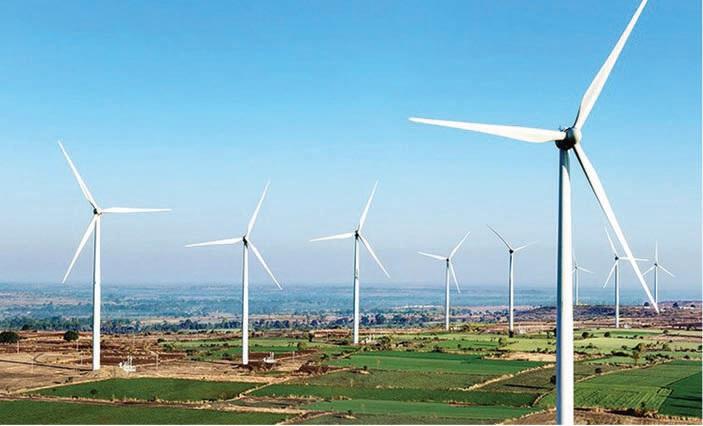
In the current scenario, the market appears to be allocating a premium value to companies engaged in the production of clean energy, which is why Inox Wind has also attracted fair bit of attention among investors.
✨ Key Takeaways
In the current scenario, the market appears to be allocating a premium value to companies engaged in the production of clean energy, which is why Inox Wind has also attracted fair bit of attention among investors. It has been up by 30 per cent in the last one month. This may be due to the orders the company has received, sparking optimism among investors. However, there is also news that the company’s wind turbines may be blacklisted
Inox Wind is a part of the Inox Group, which operates in a number of businesses, including renewable energy, specialty chemicals, fluoropolymers, gases and wind turbines. The company provides wind energy solutions in India, offering services to IPPs, utilities, PSUs, businesses and retail investors. Three cuttingedge manufacturing plants located in Gujarat, Himachal Pradesh and Madhya Pradesh makes the company a fully integrated player in the wind energy sector. It manufactures all the vital components of the wind turbine generator (WTG) to guarantee quality based on cutting-edge technology, performance reliability and cost-effectiveness. While hubs and nacelles are manufactured in its plant in Himachal Pradesh, blades and tubular towers are produced at the plants in Gujarat and Madhya Pradesh. The company operates on two business models including turnkey solution model and equipment supply model. It also offers comprehensive solutions such as wind studies, energy evaluations, land acquisitions, site development, power evacuation, regulatory approvals and supply of wind turbine generators, erection and commissioning along with long-term operation and maintenance of the wind farms. In short, it has a strong presence in all the segments of wind energy production and distribution.
Sector Overview
The heavy electrical equipment industry is a key manufacturing sector that serves the needs of the energy sector and other industrial sectors and its performance is closely connected to the country’s power capacity addition programme. The industry includes power generation, transmission and distribution and utilisation equipment. It includes items such as generators, boilers, turbines, transformers, switchgears, and so on. The establishment of Heavy Electricals (India) Ltd. in 1956 marked the beginning of this industry. After a new business called Bharat Heavy Electricals was established, the two entities were eventually merged to create Bharat Heavy Electricals Ltd. (BHEL).
BHEL is a significant turning point in the growth of the heavy electrical equipment industry in India. Today, India ranks third in both the production and consumption of electricity globally. Any developing country must have enough power generation, transmission and distribution systems, and given the size and population of India, this requires significant infrastructure development. Although the country has enough capacity to generate electricity, a sizeable section of the population still lacks access to suitable transmission and distribution systems.
India’s need for electrical equipment is very high as the country tries to ensure that all of its citizens have access to electricity. According to Technavio’s market research report, the industry’s growth rate is expected to accelerate at a CAGR of 9 per cent from 2021 to 2025 with the electrical equipment market in India projected to grow by USD 33.74 billion to USD 70 billion. The cables market will account for more than a third of this expansion with the remaining market made up of switchgears, boilers, transformers and transmission lines. In the years to come, greater power generation from renewable energy sources will also offer new growth opportunities.
Sector Outlook
The electrical equipment industry has found a new market in semi-urban and rural India as a result of the country’s improved electricity access. A favourable environment for the industry is being enabled by tailwinds like the government’s emphasis on infrastructure, the real estate sector’s revival and healthy demand visibility across numerous end-user industries. Furthermore, the 100 per cent foreign direct investments (FDI) authorised in the power industry has driven FDI inflows. A sizeable amount was allotted for a PLI scheme to increase production of highefficiency solar modules. The government has also announced the issuance of sovereign green bonds as well as the granting of infrastructure status to energy storage systems.

The demand for electrical machinery will rise even more as power generation capacity expansion incentives are offered. The power sector’s new domestic sourcing rules and the ‘Make in India’ initiative are giving the electric equipment market a boost. Additionally, the recent push to make India selfsufficient is encouraging for the industry. Making India a preferred location for the production of electrical equipment is the goal of the Indian Electrical Equipment Industry Mission Plan (2012-2022). Indian manufacturers are stepping up their game in terms of facility capabilities for manufacturing, testing and product design. The Indian Energy Exchange Limited (IEX) is India’s first and largest power exchange. It controls over 98 per cent of the traded volume in electricity. Electricity trading can help reduce energy costs, safeguard against power surges, relieve shortages, speed up carbon reduction and offer incentives for market expansion and integration.
Financial Overview
Considering the company’s quarterly performance, on a consolidated basis it reported a considerable growth of 40.3 per cent from ₹137.40 crore registered in Q4FY22, recording total revenue of ₹192.77 crore in Q4FY23. When the net earnings for the fourth quarter of FY23 were compared to the same quarter last year, the net loss was reduced from ₹255.64 crore to ₹117.51 crore. In terms of annual performance, net sales advanced by 17.99 per cent to ₹736.98 crore as against ₹624.62 crore during the previous year ended in March 2022.
Unfortunately, the company’s net loss expanded to ₹666.87 crore from ₹480.20 crore the previous year. At the time of writing, the company was valued on the market at ₹4,850 crore with the promoters holding 72.01 per cent of the company. Institutional investors own a modest 1.89 per cent while noninstitutional investors control a sizeable 26.10 per cent. Significant promoter ownership and management optimism regarding the company’s growth will continue to be positives for the company.
The shares of the company recently witnessed a significant rally it announced receiving an order for a 150 MW wind power project from NTPC Renewable Energy Ltd., a wholly owned subsidiary of NTPC Green Energy Ltd, the renewable energy business vertical of NTPC Ltd. Additionally, the company received a 100 MW wind power project order from independent power producer AB Energia Renewables (P) Ltd., giving the stock an additional boost. Its shares were trading at ₹149.40 per share on the BSE at the time of writing, with a 52-week high and low of ₹160.40 and ₹75.40, respectively.
Company Outlook
According to an article published by Business Line, the Adani Group was among those that voiced objections to Inox Wind’s equipment at a meeting organised by the Central Electricity Authority (CEA) on May 18 to address the ‘first time charging’ of newly installed wind turbines. Energy companies developing wind farms are required to do simulation tests to demonstrate how the turbines will operate and then submit a report. A number of compliance problems with Inox Wind’s turbines were reported. The company’s wind turbines could be blacklisted if some specific tests are not completed by June 15, 2023. The company has been able to boost sales while lowering its net loss. Also, there are companies that have reported losses for a longer period of time and then recovered rapidly.
However, regulatory issues may affect business operations differently and have a greater long-term impact. Considering the optimistic long-term outlook for the industry and the opportunities that the company has lined up, one should keep up with the latest developments, including the results of the company’s tests, in order to make a sound investment decision. Since the company has been unable to produce net profits for several quarters, it is obvious that it has negative return ratios and a negative price-to-earnings (PE) ratio. If we look at other valuation parameters such as market capitalisation to sales, it is 5.6 times, which is higher than most of the listed players posting profits. Therefore, for the time being, we recommend AVOID.