Investors Await Supportive Data For Upcoming Trades
 Join Us
 Follow Us
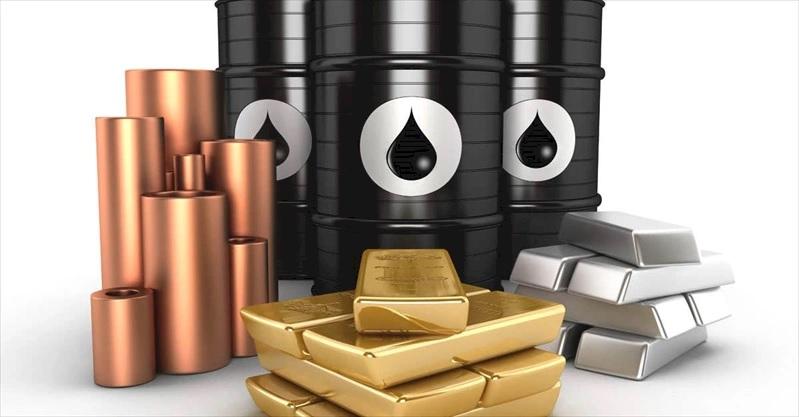
In the past fortnight, the dollar was strong above 105, supported by Fed Chair Jerome Powell's dovish comments and tensions in the Middle East.
✨ Key Takeaways
After the release of official jobs data, commodity markets are now looking for more data to confirm expectations for a September rate cut, starting with U.S. inflation figures. The U.S. CPI is expected to rise by 0.1 per cent after being unchanged in May, while the Core CPI is expected to remain steady at 0.2 per cent.
In the past fortnight, the dollar was strong above 105, supported by Fed Chair Jerome Powell's dovish comments and tensions in the Middle East. Powell acknowledged progress in reducing inflation but said more evidence is needed before lowering interest rates. An unexpected increase in U.S. job openings in May pushed the dollar to a two-month high of 106, but it fell to 104.88 after the jobs report showed a steady slowdown in the labour market.
The Bureau of Labor Statistics reported that the U.S. added 2,06,000 non-farm payroll jobs in June, higher than the estimated 1,90,000, but job growth for the prior two months was revised down by 1,11,000. The unemployment rate rose to 4.1 per cent, the highest since November 2021, and wage growth slowed to 3.9 per cent annually, the smallest increase in three years.
The report confirmed a moderation in the U.S. labour market and increased the chances of a September Fed rate cut. This pushed the S&P 500 and Dow Jones to record highs and COMEX Gold above USD 2,400 per ounce for the first time since early June. According to the CME’s Fed Watch Tool, there is now a 72 per cent chance of a 25 basis point rate cut in September, up from 57.9 per cent a week ago. Silver also rallied by 6.5 per cent, following gains in gold and base metals.
The report confirmed a moderation in the U.S. labour market and increased the chances of a September Fed rate cut. This pushed the S&P 500 and Dow Jones to record highs and COMEX Gold above USD 2,400 per ounce for the first time since early June. According to the CME’s Fed Watch Tool, there is now a 72 per cent chance of a 25 basis point rate cut in September, up from 57.9 per cent a week ago. Silver also rallied by 6.5 per cent, following gains in gold and base metals.
MCX Gold (August) broke out of its ‘Cup & Handle’ chart pattern, indicating an upward trend. The RSI (14) is around 74.80, showing bullish dominance. The next resistance levels are at ₹73,550 and ₹74,000 per 10 grams.
WTI Crude oil reached USD 84.52 per barrel, the highest since late April, due to a severe storm season, the largest inventory drawdown in over a year, and escalating geopolitical tensions. The Lebanese Hezbollah group launched over 200 rockets at Israeli military bases, further boosting oil prices.

LME base metals closed higher last week, with copper gaining nearly 4 per cent, driven by optimism about a Fed rate cut despite concerns about China's economic recovery. WTI Crude oil reached USD 84.52 per barrel, the highest since late April, due to a severe storm season, the largest inventory drawdown in over a year, and escalating geopolitical tensions. The Lebanese Hezbollah group launched over 200 rockets at Israeli military bases, further boosting oil prices.
Markets are now awaiting more data to confirm the likelihood of a September rate cut, starting with U.S. inflation figures next week. A larger-than-expected increase in CPI could make investors reconsider the chances of a rate cut, while a negative surprise could increase market confidence. Fed Chair Powell's upcoming testimony will also be closely watched.
Additionally, China's CPI is expected to improve to 0.4 per cent in June, following stagnant growth of 0.3 per cent in April and May, and PPI deflation is projected to narrow to 0.8 per cent. Meeting these estimates would suggest an improvement in domestic demand.
Farmers across India have sown Kharif crops over 37.9 million hectares as of July 8, an increase of 14 per cent compared to the same time last year, according to the farm ministry. The sowing season for Kharif crops has started strong thanks to improved southwest monsoon rainfall following a slow start. The above-normal rainfall this season has significantly boosted the acreage of key crops like paddy, pulses, and oilseeds compared to the previous year.