Is It The Right Time To Invest in Gold and Silver?
 Join Us
 Follow Us
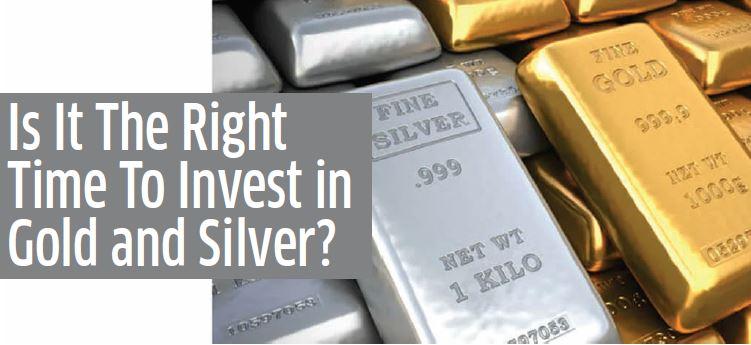
Disruption in world affairs, rising inflation, low equity returns and fear of a looming recession are leading many investors to assess alternative forms of investment. Not surprisingly, many are turning to precious metals like gold and silver to act as a safe haven. But is it the right time? Vardan Pandhare helps you answer the question
✨ Key Takeaways
Disruption in world affairs, rising inflation, low equity returns and fear of a looming recession are leading many investors to assess alternative forms of investment. Not surprisingly, many are turning to precious metals like gold and silver to act as a safe haven. But is it the right time? Vardan Pandhare helps you answer the question
Precious metals have a somewhat soft spot in the investing community. And why not? These finite resources, notably gold, have served as a safety net whenever the world has spiralled into a new catastrophe. India’s 1991 economic crisis – probably its worst ever – was resolved thanks to the yellow metal. These metals prevented the financial systems from collapsing in 2008 when the Lehman crisis struck the world. Today, the global economy is experiencing a gridlock brought on by the pandemic and then the unstable geopolitical scenario. This has resulted in many participants returning to precious metals.
Stabilising the Volatility
Silver has been historically more erratic than gold. Despite the huge demand, there are now about a billion ounces available, according to statistics. In addition, industries are the main source of demand. This implies that depending on how the business is run, the demand for silver changes, and is primarily cyclical in character. As a result of this constant tugging on the demand-supply rope, small differences have a big impact on silver prices. It might be surprising to learn that silver, which currently trades at approximately Rs 57,000 reached an all-time high of Rs 74,000 per kg in 2011.
This further demonstrates the highly volatile nature of silver. Again, this may make silver both a wonderful commodity for producing profits as well as a risky investment. When we contrast it with gold, we discover that gold has retained significantly more stability than silver. Some of the factors to consider when investing in gold and silver include:
■ Silver could be more dependent on the world economy. According to the World Silver Survey, majority of silver is utilised in heavy industry and high technology, including solar panel cells, cell phones, tablets and many other goods and applications. Due to its limited usage outside of jewellery and investment, silver is more susceptible to economic fluctuations than gold. Silver is typically in higher demand when economies are doing well.
■ Silver can be more volatile than gold. On any given day, the volatility of silver prices might be two to three times higher than that of gold. Although traders may profit, controlling portfolio risk can be difficult with such volatility.
■ Silver has a moderately weak positive correlation to equities, bonds and commodities, making it a good portfolio diversifier. Gold, on the other hand, is seen as a stronger diversifier. With good reason, unlike silver and industrial base metals, gold is less impacted by economic downturns because of its relatively limited industrial applications. As a result, it has consistently had very low correlations with other major asset classes and has been consistently uncorrelated to stocks.
■ Silver is more accessible. Currently, silver is less expensive per ounce than gold, which makes it more accessible to small retail investors who want to possess precious metals as tangible assets.

India’s silver prices are influenced by global silver price movements, which are constantly evolving. The exchange rate of the Indian rupee against the US dollar affects the price at which silver is sold. Silver will cost more in India if the rupee depreciates against the dollar while global prices remain steady.

Indians are among the world’s top gold buyers and the precious metal accounts for a sizeable share of all of our imports. Indians frequently purchase gold because it is regarded as a ‘secure’ investment. Investors monitor the markets for changes in price since they determine demand.

ETF: A Convenient Investment Option
At the moment, silver can be purchased physically or as futures on commodity exchanges. However, exchange-traded funds (ETFs) now make it easier for investors to invest in this metal. In November 2021, the Securities and Exchange Board of India (SEBI) outlined the rules for silver ETFs, paving the way for a new type of investment. Fund houses have jumped at the chance to introduce their offers after the rule was passed. To serve investors with and without a demat account, AMCs like ICICI Prudential, Aditya Birla and Nippon have already launched their silver ETFs and fund of funds (FoFs) variations. For SEBI’s clearance, some fund houses, including DSP, HDFC and Mirae have submitted their offer documents.
When it comes to precious metals, ETFs are highly useful since they relieve investors of the responsibility of maintaining purity and safekeeping. A cherry on top are the additional benefits of hassle-free investing and increased liquidity. Silver is much more difficult to store in physical form than gold, even though gold ETFs have been in existence for more than 14 years. When purchased in big quantities, the latter, which is relatively less expensive, becomes larger to store. It is also susceptible to corrosion over time. Silver ETFs are a good idea from this perspective.
Way Forward
Based on the past two years of experience, many would prefer to continue taking profits after a brief and intense rise in precious metals in the hopes of repurchasing at a lower price. However, experts think that the present northward movement may continue for some time. Depending on the actions the US Federal Reserve will take to combat inflation, gold prices will fluctuate. Gold prices could experience a significant increase if inflation stays as high as it is today, or if it declines but stays comparatively higher above the long-term average, and the Federal Reserve decides to halt hiking rates to prevent the economy from entering a deep recession. Experts predict that gold prices would rise in 2023 and reach Rs 65,000 per 10 grams.
Conclusion
For portfolio diversity, commodities like gold work well, especially for investors who find the sudden ups and downs in the equities markets unsettling. Gold, however, is not a productive asset class. Investors are therefore better off sticking to the stock market in terms of wealth creation. The question now is whether or not silver should share in this limited allotment for the shining metal. The comparison of the two commodities above shows that when gold is already present in the portfolio, silver does not bring any significant advantages.