Let Your Diwali Shine With Gold
 Join Us
 Follow Us
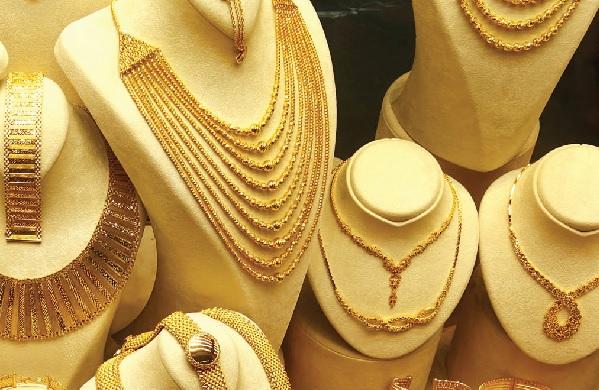
Diwali is regarded as one of the most auspicious days for purchasing gold. However, with so many options for investing in gold widely available, it adds to investors’ perplexity. In this article, Henil Shah explores the importance of having exposure to gold as well as multiple ways to invest in gold, and also reveals which is the wisest approach to invest in gold this Diwali.
✨ Key Takeaways
The love of gold in India extends back several centuries when kings honoured talent with gold coins as awards or exchanged them for goods. Even today, gold is more than simply another investment asset class, and India is one of the world’s major marketplaces for the yellow metal. Gold is said to be extreme - ly fortunate. Most individuals buy gold because they believe it is a safe haven. Any important occasion – whether a wedding, the birth of a child or even festivals like Diwali – is incomplete without the gifting or purchasing of gold. In fact, throughout the festival season that ends with Diwali, people go out to acquire gold for a number of reasons.

The digital revolution that we are now experiencing has introduced a new type of investment to Indians, known as digital gold. Digital gold is quickly gaining popularity among investors. Simply defined, digital gold is an alternative to purchasing the genuine precious metal. In the next few paragraphs, we will go through all these aspects in further detail. This article will explain why it is vital to have gold in your portfolio, the numerous ways you can invest in gold, and which is the wise approach to do so. However, before we proceed, let us study how gold has performed as an asset class.

Performance of Gold
The graph Movement of Spot Gold Price depicts the trend of spot gold prices from April 1979 to October 7, 2022. As can be seen, the gold price has risen significantly, despite a number of pitfalls. For the same time span, gold’s compound annual growth rate (CAGR) was 11.4 per cent.

The graph Median Rolling Returns of Gold depicts the median rolling returns of gold. We estimated one-year, three-year, five-year, 10-year and 15-year rolling returns from April 1979 to October 7, 2022. According to our research on gold’s rolling returns, the average return is between 8 per cent and 10 per cent.
The performance of gold from Diwali to Diwali can be seen in the graph above. We can see here that just five times out of about 21 times did gold provide a negative return. This indicates that the possibilities of gold doing well from Diwali to Diwali are higher. Gold’s median performance from Diwali to Diwali is 12 per cent.
Reasons to Invest in Gold
Many financial planners and experts have advised their clients not to hold gold. However, we believe that gold has its own value in your portfolio because it is an excellent portfolio diversifier. We estimated the one-year rolling correlation between the spot gold price and the Sensex to demonstrate our point.

As observed in the graph above, the correlation between gold and Sensex has generally been negative. The average one-year rolling correlation is negative 0.05. This suggests that there is no relationship between gold and equities. In fact, the strongest one-year correlation ever obtained was 0.35, indicating that there is no correlation. As a result, when equity markets decline, particularly owing to a weak economy, gold is a useful asset class to help safeguard against the downside. This was quite clear during the March 2020 collapse of the equities in the midst of a pandemic.
Ways to Invest in Gold
There are several ways to invest in gold, ranging from traditional to digital. In the following sections, we will go through seven different approaches to invest in gold.
■ Physical Gold — Physical gold is available from jewellers. Since ancient times, jewellers have been the main source of purchasing gold. The most popular way to acquire actual gold is via gold jewellery. Gold coins, utensils, sculptures, bars and other items are also available from jewellers. When it comes to jewellery, Indians are great fans of gold. Wearing gold is regarded as a status symbol. Gold jewellery should be acquired primarily for ornamental purposes and not as an investment because it loses value when converted to cash due to wear and tear. However, many continue to prefer purchasing jewellery because they love wearing it and displaying their status.
As an alternative, you may also purchase real gold via banks. Almost every bank has gold coins or bars. The decision now is whether to buy actual gold from jewellers or from a bank. The benefits of buying gold from a jeweller are that you receive gold at the current market rate and secondly, you have the opportunity to sell it back to the jeweller from whom you initially purchased the gold at the current market rate. The benefits of buying gold from a bank are that because gold comes in tamper-proof packaging, the purity and weight can be trusted and secondly, banks include a certificate of purity with the gold they sell.
■ Monthly Investment Schemes — Monthly investment schemes (MIS) are now widely available from jewellers. In this system, the investor pays a certain amount every month for the full year with certain jewellers contributing one or two instalments as well. MIS is classified into two categories: The investor invests in rupee terms and then redeems the amount deposited at the current market price of gold. The investor invests in gold in terms of grams. The investor has the option of receiving the money or using the accumulated gold to make jewellery. This is also known as ‘gold bhishi’ in the state of Maharashtra.
The second alternative is the favoured one since it allows the investor to gradually acquire gold in order to spend it for a child’s wedding. This appears to be a methodical approach to gold accumulation, comparable to the systematic investment plan (SIP) in mutual funds. The main disadvantage of purchasing physical gold is that you never get the current spot price. This functions in a manner similar to the foreign exchange. A jeweller’s commission is involved. Furthermore, you must keep it secure because of the significant danger of theft. As a result, most individuals utilise bank vaults to store their physical gold, for which they must pay fees to the bank.
■ Gold ETFs — Gold Exchange Traded Fund (ETF) has become highly popular these days. Here you do not physically hold the gold. Typically, one unit of gold ETF is comparable to around one gram of gold, and hence its price is also about one gram of gold. Furthermore, gold ETF units are traded on stock exchanges and may be purchased and sold like shares. The primary benefit of investing in gold ETFs is that they are free from the fear of theft. Because they are openly traded on stock exchanges, you must have a demat account to buy and sell gold ETFs, or any ETF for that matter. As a result, you must pay brokerage fees when purchasing and selling gold ETFs. Because a demat account is required to purchase and sell gold ETFs, demat maintenance fees apply

■ E-Gold — E-gold is a type of gold investment in which no actual gold is traded. In order to facilitate investors wanting to invest in gold, the National Spot Exchange (NSEL) established e-gold in India in 2010. E-gold is another electronic way of holding the yellow metal, with the sole distinction being that the investor owns the gold directly, whereas with gold ETFs the asset management company (AMC) owns the gold on behalf of the investors. E-gold is the electronic purchase of gold. To invest here, you must have a trading account with one of the NSEL dealers. E-gold units – like shares and gold ETFs – may be purchased and sold on the exchange (NSEL). In this case, one unit of e-gold equals one gram of gold.
The benefits of investing in e-gold are: n NSEL gold rates are based on Indian market pricing. n Gold may be purchased and sold in tiny sums by investors, as for example, 1 gram and 2 grams of gold. n One of the most significant advantages of this product is its pricing transparency and easy trade. n This product has a high level of liquidity. It is possible to sell it at any moment. n No impurity concerns.
At any moment, you can obtain physical delivery of gold by redeeming e-gold units in your demat account.
■ Gold Mutual Funds — Mutual funds have created gold funds as a fund of fund (FoF) strategy that invests in gold ETFs. Gold mutual funds, unlike gold ETFs, cannot be traded on exchanges. However, the most significant advantage of investing in gold mutual funds is that a demat account is not required. You may also create a SIP and invest in a systematic manner. However, because they are in a FoF structure, they are more expensive than gold ETFs. In addition, unlike e-gold, in case of gold mutual funds physical gold cannot be redeemed.
■ Gold Futures — These are derivatives with gold as the underlying asset. Understanding how local commodity exchanges operate and the macro and micro factors that influence the price of gold are prerequisites for trading in gold futures. This is a short-term instrument designed primarily for gold trading rather than investment. As a result, avoiding them is the smartest thing you can do as an investor.
■ Sovereign Gold Bond — Government securities valued in grams of gold are known as sovereign gold bonds (SGBs). Investors must pay the issue price in cash and the bonds must be redeemed in cash when they reach maturity. The Reserve Bank of India (RBI) issues the bonds on behalf of the Government of India. A sovereign gold bond is denominated in one-gram increments of gold. As a result, the initial investment in a SGB is one gram. These bonds are available in both physical and dematerialised form. They can be purchased from banks, stock holding corporations, post offices and recognised stock exchanges.
SGBs have an eight-year term although the plan permits investors to elect for early redemption at any point after five years on the interest payment dates. Even during the first five-year lock-in term, the investor is able to sell the bonds on stock exchanges. SGBs are valued in a nominal price per gram based on the average price of 0.999 purity gold announced by the Indian Bullion and Jewellers Association Limited (IBJA) for the previous three days of the week before the week of issue. The redemption price of these bonds will be determined in the same way as the issuance price. At the moment of redemption, no actual gold is delivered. SGB investors get annual interest of 2.5 per cent on the issue price of the bonds, which is paid semi-annually.
Conclusion
As you may have understood, there are several methods to purchase gold and gain exposure to it as an asset class. However, we feel that the best option to invest in gold this Diwali is through gold ETFs and sovereign gold bonds. Physical gold and other methods have their own set of disadvantages. Gold ETFs and SGBs are efficient and cost-effective gold investment vehicles. So, if you want to invest in gold this Diwali, gold ETFs and SGBs are the ideal options. However, if you want to acquire physical gold, e-gold would be a better alternative than purchasing it from a jeweller.