Oil & Gas Industry Energised For Better Performance
 Join Us
 Follow Us
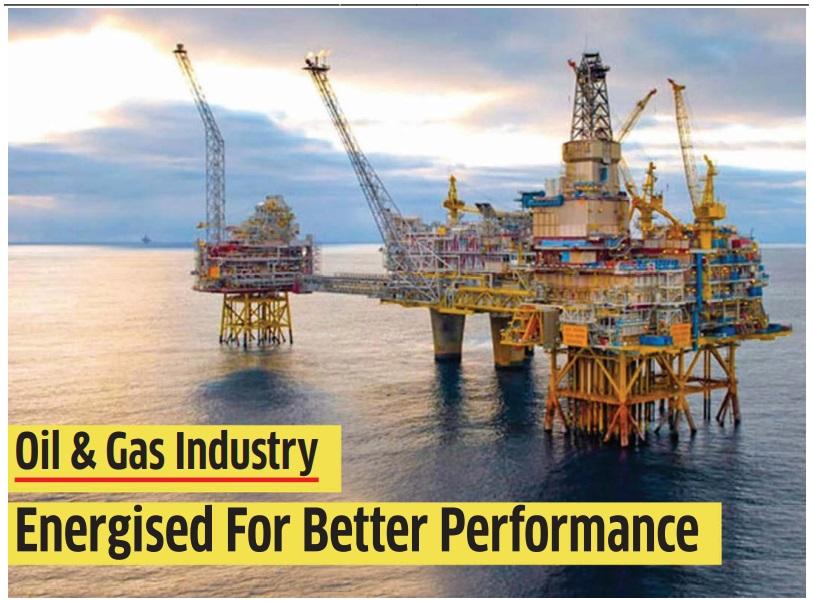
Against the backdrop of global market volatility and mounting economic uncertainties, the oil and gas industry continues to capture headlines. As oil prices bounce from eight-month lows and geopolitical tensions stir the pot, understanding the intricate dynamics of this critical industry becomes ever more crucial.
✨ Key Takeaways
Against the backdrop of global market volatility and mounting economic uncertainties, the oil and gas industry continues to capture headlines. As oil prices bounce from eight-month lows and geopolitical tensions stir the pot, understanding the intricate dynamics of this critical industry becomes ever more crucial. Mandar Wagh explores the current state of the oil and gas industry, assesses the financial performance of leading players, and investigates the industry’s opportunities and challenges to offer insights into its future prospects
Following a strong global rally, most markets are now overshadowed by uncertainties, fuelled by U.S. recession fears, geopolitical tensions in the Middle East, and an overall decline in investor confidence, with many anticipating a long-overdue market correction. Amid these factors, oil has continuously dominated headlines, underscoring its critical role in daily life worldwide. Oil prices have touched eight-month lows but then rose notably following hopes of potential U.S. interest rate cuts, which could boost economic activity and fuel demand.
The movement of oil prices is crucial, as an increase often triggers inflation, adversely impacting both consumption and investment. Higher energy costs can reduce disposable income and erode consumer spending, while escalating production costs may lead businesses to cut back on investments. Conversely, while lower oil prices might reduce the country’s import bill and provide short-term relief to its balance of payments, they also come with drawbacks. These include revenue shortfalls and a potential negative impact on investment, which could stall new exploration and development projects.
Since oil is a cornerstone of the global economy, impacting everything from transportation and electricity to industrial production and manufacturing, it is essential to closely monitor related developments. This report examines the current state of the oil and gas industry, analyses the financial performance of leading players, explores the opportunities and challenges the industry faces, and offers insights into its future prospects.
About the Industry
Oil and gas are essential components of India’s energy landscape, supporting the country’s economic growth and ensuring energy security. As the world’s third-largest energy consumer, India relies extensively on this industry to sustain its rapidly expanding economy. The industry’s importance is highlighted by its substantial contribution to GDP, its role in job creation, and its significant influence on the nation’s trade balance. As one of the country’s eight core industries, the crude oil and gas sector plays a critical role in shaping decisions across all the key sectors.
The Indian oil and gas industry is a complex sector encompassing upstream, midstream, and downstream activities. Upstream activities include the exploration and production of oil and natural gas, with state-owned enterprises such as Oil and Natural Gas Corporation (ONGC) and Oil India Limited (OIL) leading the sector, alongside significant contributions from private players like Reliance Industries. Midstream activities involve the transportation and storage of crude oil, natural gas, and refined products. Major players in this segment are GAIL (India) Ltd and Petronet LNG.
Downstream activities cover the refining, distribution, and marketing of petroleum products. India stands as one of Asia’s largest refining hubs, with key refineries operated by Indian Oil Corporation (IOC), Bharat Petroleum Corporation Limited (BPCL), and Hindustan Petroleum Corporation Limited (HPCL). According to India Energy Outlook, primary energy demand is expected to nearly double to 1,123 million tonnes of oil equivalent as India’s GDP is expected to increase to USD 8.6 trillion by 2040. The country’s exploration acreage is expected to grow by 0.5 million sq. km till 2025 and by 1 million sq. km till 2030. India aims to increase its refining capacity by nearly 80 per cent to around 450 MMTPA by 2030 and also plans to raise the proportion of natural gas in its energy mix to 15 per cent by the same year.
Financial Snapshot: Gas Gains and Refinery Pains
To compile the financial summary, we evaluated the top 20 BSE-listed oil and gas companies by market capitalisation, covering sub-segments such as oil exploration, refining, industrial gases and fuels, and gas transmission/marketing. For Q1FY25, the sector’s aggregate revenue showed modest 4 per cent year-on-year growth, although it experienced a slight decline on a sequential basis. Operating profit and net profit both recorded significant declines sequentially, with year-on-year decreases of 27 per cent and 43 per cent, respectively.
The sector’s overall weak performance primarily stemmed from the disappointing financial results of refinery businesses, which represent a substantial portion of the sector’s total revenue and profit figures. Segment-wise, oil exploration and gas companies outperformed refineries. GAIL (India) Ltd led the sector with an impressive 92 per cent year-on-year net profit growth, the highest among its peers. Gas companies have shown strong profitability due to a combination of rising demand for natural gas, driven by the shift towards cleaner energy and supportive government policies.

The sector has benefited from a stable and favourable pricing environment, enhanced by market-linked gas pricing. Additionally, companies have improved operational efficiencies and made strategic investments in infrastructure, such as pipelines and LNG terminals, enabling them to meet the growing demand effectively. These factors have collectively contributed to the robust financial performance of gas companies, distinguishing them from other segments within the oil and gas industry. Oil India Ltd., a leader in oil exploration, outpaced its peers with an impressive 46 per cent year-on-year revenue growth.
However, a majority of refinery companies reported substantial declines in net profit, with Hindustan Petroleum Corporation Ltd., Indian Oil Corporation Ltd., and Bharat Petroleum Corporation Ltd. experiencing sharp drops of 96 per cent, 78 per cent, and 76 per cent, respectively. The substantial decline in net profits for India’s state-owned fuel retailers can be attributed to a combination of challenging factors, with fluctuations in their gross refining margins (GRMs) playing a central role. GRM is a crucial financial metric in the oil and gas industry, representing the difference between the cost of crude oil and the selling price of refined products.
It effectively reflects the profitability of a refinery’s operations before considering operating expenses, taxes, and other costs. Rising crude oil prices have led to increased input costs, but due to regulated fuel pricing in India, these higher costs could not be fully passed on to consumers, resulting in compressed margins. Additionally, inventory losses occurred when refineries purchased crude oil at elevated prices but were forced to sell refined products at lower rates due to market conditions and regulatory constraints.
The impact of foreign exchange fluctuations, particularly the depreciation of the Indian rupee against the U.S. dollar, further exacerbated import costs, squeezing profitability. These refineries also faced higher operational and maintenance expenses, including costs related to environmental compliance and refinery upgrades to meet stricter fuel standards. Global demand-supply imbalances, driven by economic slowdowns and a shift towards alternative energy sources, further pressured sales volumes.
India’s Energy Challenges
Global Demand and Pricing - Global oil demand and pricing have consistently been critical factors to monitor. Currently, demand is under pressure due to concerns about a potential U.S. recession, which could reduce consumption from the world’s largest oil consumer. On the contrary, rising tensions in the Middle East, a significant oil-producing region, heighten worries about possible supply disruptions, further complicating the market outlook and driving up prices.
Dependence on Imports - India’s energy security is significantly challenged by its heavy reliance on imports, with over 80 per cent of its crude oil requirements sourced from abroad. This dependence exposes the country to fluctuations in global oil prices and potential supply disruptions. Although there have been efforts to boost domestic production, these have met with varying degrees of success, leaving import dependency a persistent issue.

Infrastructure Bottlenecks - Despite progress in expanding energy infrastructure, significant gaps remain, particularly in storage and transportation. Insufficient storage facilities lead to inefficiencies and increased wastage, while outdated transportation networks hinder the efficient movement of resources. Addressing these infrastructure challenges is essential for the sector’s sustainable growth.
Technological Advancements - The industry requires technological upgrades to enhance efficiency, reduce costs, and improve safety. Although digitalisation and automation are on the rise, the pace of technological advancement lags behind global standards. Investing in cutting-edge technologies is crucial for staying competitive and adapting to a rapidly changing energy landscape.
Regulatory and Environmental Challenges - The oil and gas industry face stringent environmental regulations that drive the need for cleaner and more sustainable practices. Compliance with these regulations often leads to higher operational costs and project delays. Moreover, the complex and sometimes opaque regulatory landscape creates uncertainty for investors, complicating the approval process for new projects.
Long-Term Viability - The global effort to reduce carbon emissions and address climate change is driving a shift away from fossil fuels, including oil. While natural gas is cleaner than coal and oil, it remains a fossil fuel and contributes to greenhouse gas emissions. The growing transition to renewable energy sources poses challenges to the long-term viability of the fossil fuel industry.
Opportunities in India’s Evolving Energy Landscape
Rising Energy Demand - India’s energy consumption is projected to double by 2040, driven by rapid urbanisation, industrialisation, and population growth. This growth presents significant expansion opportunities across all segments of the oil and gas industry, highlighting the urgent need for enhanced refining capacity, improved distribution networks, and more efficient transportation infrastructure.
Investment in Exploration and Production - The liberalisation of the exploration and production sector has created new investment prospects. Government initiatives like the Open Acreage Licensing Policy (OALP) and the Hydrocarbon Exploration and Licensing Policy (HELP) have streamlined the process for domestic and international investors to explore and develop untapped reserves. These policies aim to attract investment, minimise exploration risks, and boost production, offering attractive opportunities for companies in upstream activities.
Push Towards a Gas-Based Economy - The Indian government is targeting an increase in the share of natural gas in the energy mix from 6 per cent to 15 per cent by 2030. This shift towards a cleaner energy source has spurred substantial investments in natural gas infrastructure. The expansion of the national gas grid, development of city gas distribution networks, and construction of new LNG terminals are generating significant growth opportunities in the midstream and downstream sectors.
Renewable Energy Integration - In response to the global shift towards cleaner energy, Indian oil and gas companies are diversifying into renewables. Investments in solar, wind, and biofuels, along with the adoption of green hydrogen, are creating synergies between traditional and renewable energy sectors. This transition not only helps reduce carbon footprints but also opens new revenue streams for companies.
Government’s Focused Support - The government demonstrates robust support for the industry through various initiatives, including the Pradhan Mantri Ujjwala Yojana, National Gas Grid Expansion, Hydrocarbon Exploration and Licensing Policy, and Open Acreage Licensing Policy. This focus is also evident in recent budgetary announcements. For the fiscal year 2024-2025, the Ministry of Petroleum and Natural Gas has been allocated a substantial budget of `1,19,402.52 crore, underscoring a strong financial commitment to enhancing India’s energy infrastructure and capabilities.
Conclusion
The Indian oil and gas industry is at a critical juncture, navigating the balance between traditional energy needs and the rising demand for cleaner, more sustainable alternatives. Despite facing substantial challenges, such as import dependency and regulatory complexity, the industry offers numerous growth opportunities driven by increasing energy demand, investments in exploration and production and a transition towards a gas-based economy. From an investment perspective, refinery stocks may be less attractive currently due to issues with gross refining margins and declining profitability.
However, as conditions improve, they could present valuable opportunities given the ongoing and essential demand for refining services. Conversely, oil exploration and gas distribution companies, bolstered by strong financial performance, remain appealing to investors. Yet, it is important to consider valuation, as these stocks have experienced significant rallies. With a strategic blend of innovation, investment, and supportive policies, the Indian oil and gas industry is well-positioned to play a key role in the country’s energy future. Embracing technological advancements and expanding into renewable energy will enable the industry to evolve and contribute to India’s path towards energy selfsufficiency and sustainability.