Over 1,000 Jobs and Rs 2,000 Crore Revenue Potential: Company Announces Big Investment in 3 Greenfield Manufacturing Plants in Gujarat Amid Rising Power Demand
 Join Us
 Follow Us

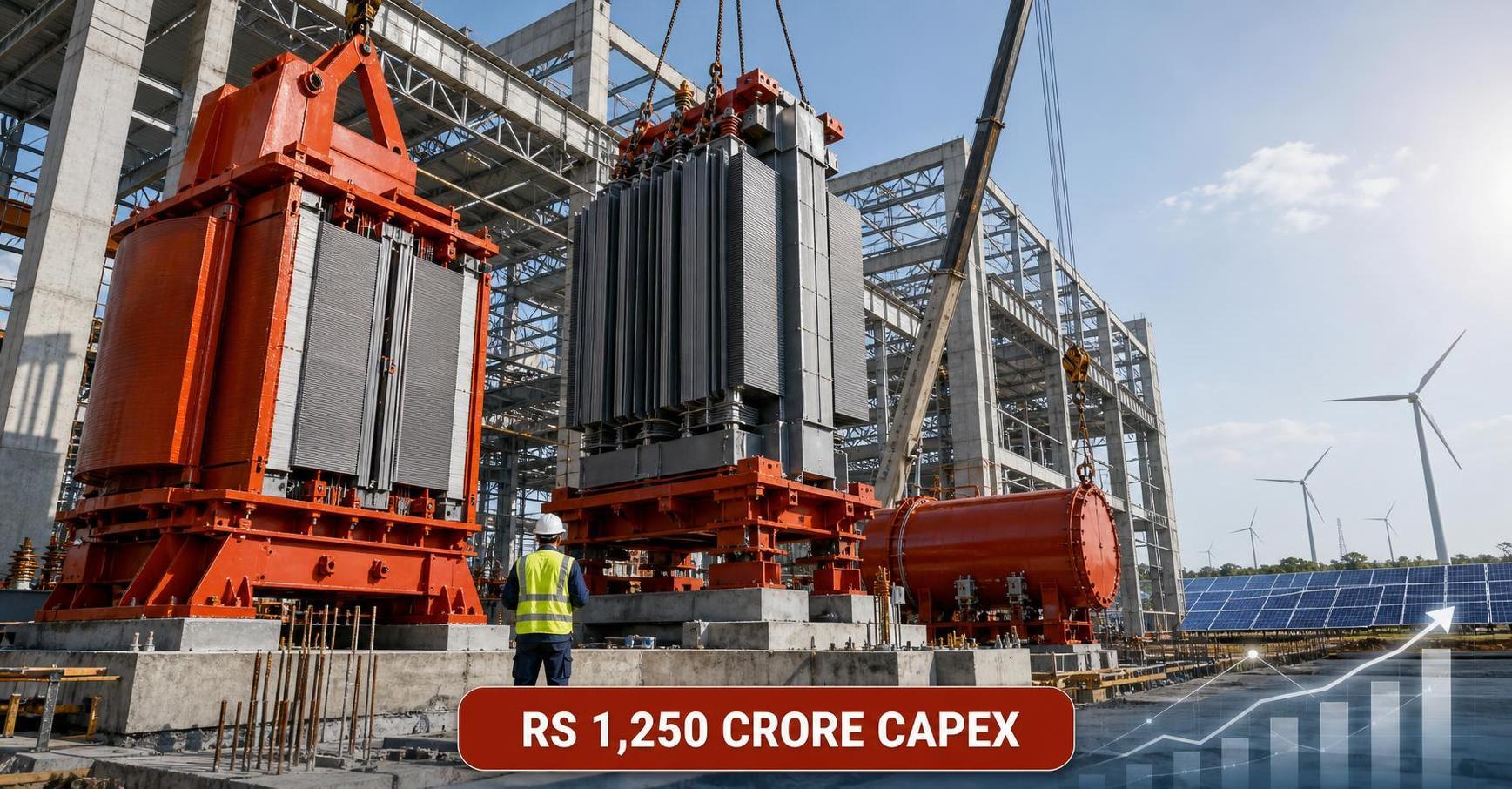
Transformers and Rectifiers India will invest Rs 1,250 crore in three Gujarat plants for critical transformer components, with annual revenue potential of about Rs 2,000 crore after full ramp-up.
✨ Key Takeaways
Transformers and Rectifiers (India) Limited, or TARIL, is expanding transformer capacity and pursuing backward integration as India adds transmission corridors and renewable energy evacuation infrastructure. The company has now announced a Rs 1,250 crore investment in three greenfield component-manufacturing plants at its Chiyada complex in Gujarat.
The facilities will produce transformer bushings, pressboard and insulation materials, and continuously transposed conductors, or CTC. These are critical inputs for high-voltage transformer manufacturing. Construction began in December 2025, while commercial operations are targeted from the first quarter of FY2027-28.
TARIL expects the plants to generate annual revenue potential of around Rs 2,000 crore once fully operational and to create more than 1,000 direct jobs. That potential is sizeable relative to the company’s consolidated revenue from contracts with customers of Rs 2,461.71 crore in FY2025-26, although it will depend on commissioning, production stabilisation and customer demand.
The bushing plant will manufacture Oil Impregnated Paper, Resin Impregnated Paper and Resin Impregnated Fibre bushings up to 800 kilovolts. TARIL said the three units will operate through a wholly owned subsidiary, allowing it to retain control over technology, procurement, quality and delivery schedules.
The announcement formalises a wider integration strategy that also covers CTC, pressboard, bushings, electrical-steel processing and other components. TARIL has said it aims to reduce import dependence and improve control over raw-material availability, particularly as copper, grain-oriented electrical steel and specialised components remain important cost and supply-chain considerations. Its September 2026 net sales rose 60.74 per cent YoY to Rs 739.44 crore, supported by stronger execution and plant utilisation.
The strategic rationale is clear, but delivery remains the key condition. TARIL’s Changodar expansion had previously faced a four-to-five-month delay, underlining the importance of timely construction, technical qualification and ramp-up before the proposed plants can contribute materially to revenue or margins.
As of 11:41 am on October 27, 2026, TARIL shares were trading at Rs 315.95, up 5.44 per cent from the previous close. The stock remains 33.1 per cent below its 52-week high of Rs 472.35. Over one year, it has declined 39.15 per cent, compared with a 9.01 per cent fall in the BSE 500, showing that investors have been more cautious on the company despite improving operating momentum and a large Order Book.
What This Means for Investors
The new facilities could widen TARIL’s role from transformer assembler to a more integrated power-equipment manufacturer. In-house component production may improve procurement control, lead times and quality assurance, while also supporting margins over time. The Rs 2,000 crore annual revenue potential is meaningful against FY2025-26 consolidated revenue, but the contribution is expected only after commercial operations begin in FY2027-28 and the plants achieve stable utilisation.
The development is potentially supportive for TARIL’s long-term growth case because it addresses supply-chain dependence in high-voltage equipment. However, execution and cash conversion remain central risks. The company reported a 199-day consolidated cash-conversion cycle in FY2025-26, while its capacity and integration projects require disciplined commissioning. At 29.54 times trailing twelve-month earnings, the valuation places importance on delivery of the planned capacity ramp-up, working-capital improvement and eventual margin benefits from integration.
Disclaimer: The article is for informational purposes only and not investment advice.