Solar Industry: Bright Prospects, But Valuation Clouds Ahead
 Join Us
 Follow Us
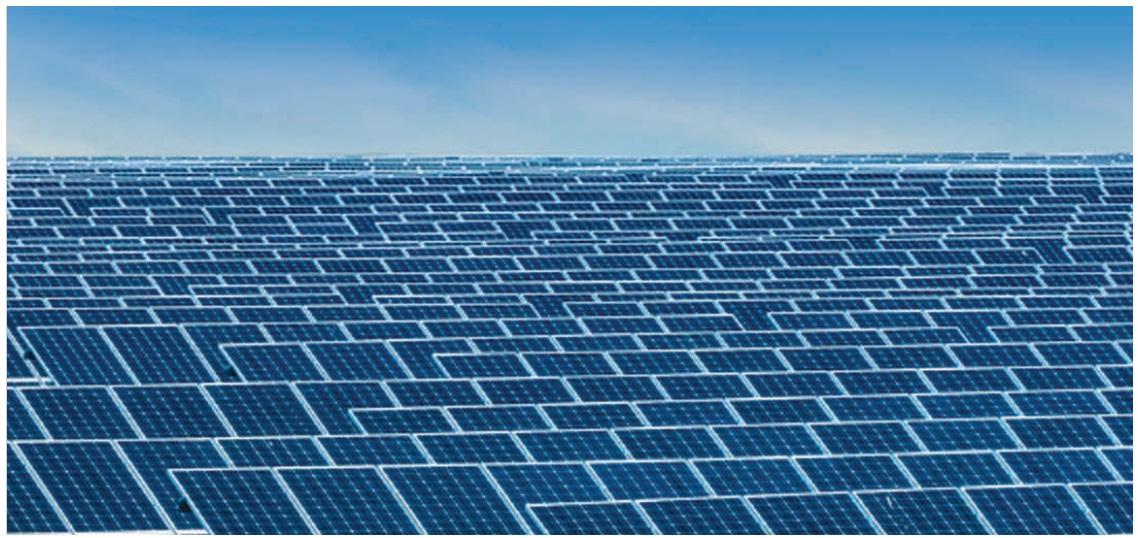
Investors who placed their bets on solar stocks in the last few years have witnessed extraordinary wealth creation, fuelled by global trends, policy changes, advancements in technology, and the Indian government’s robust support for the sector, particularly given the challenges and environmental disadvantages associated with fossil fuels.
✨ Key Takeaways
When we talk about sunrise sectors, which refer to emerging segments of the economy in the early stages of growth with significant potential for expansion and substantial returns on investment, renewable energy, especially solar energy, has always been a prominent name. Investors who placed their bets on solar stocks in the last few years have witnessed extraordinary wealth creation, fuelled by global trends, policy changes, advancements in technology, and the Indian government’s robust support for the sector, particularly given the challenges and environmental disadvantages associated with fossil fuels.
The sector has been riding a wave of investor optimism, evident in the overwhelming demand in the primary market for solar and renewable energy-related companies and the strong performance of such IPOs post-listing. However, these stocks have also experienced significant volatility, with sharp uptrends or downtrends driven by sector-specific positives or negatives. Following his recent election victory, Donald Trump’s pledge to halt renewable energy projects on his first day in office sent shockwaves through the renewable energy sector, sparking fears of a potential shift in global energy policy favouring fossil fuels over renewable sources.
Domestic stocks such as Premier Energies, Waaree Energies and Waaree Renewable Technologies experienced steep declines, plunging 20 per cent within a week of the announcement. However, the majority of these stocks staged a swift rebound, recovering their losses and signalling resilience despite the initial turbulence. Let’s delve into the factors driving such resilience in the sector, while also examining potential headwinds that could impact its performance. Additionally, analysing the financial performance of solar companies becomes crucial to assess whether their elevated valuations— propelled by frequent stock rallies—are justified. Ultimately, this evaluation will provide clarity on making informed investment decisions in the sector.
About the Industry
India’s solar industry has emerged as a key player in the global renewable energy landscape, showcasing exceptional growth and immense potential. As of 2024, India holds the fourth position globally in solar power capacity and total renewable energy installed capacity. With the nation’s ambitious renewable energy target of 500 GW by 2030, solar power is anticipated to contribute 280 GW, establishing itself as the cornerstone of India’s clean energy transition. The sector encompasses utilityscale projects, rooftop installations, and distributed solar solutions. India’s solar market has witnessed phenomenal growth, achieving an installed capacity of over 70 GW as of 2024, compared to just 10 GW in 2015.
It’s a familiar scenario for investors—buying a stock only to see its price drop, or selling it just before a major rally begins. Recently, solar stocks have presented a similar dilemma, leaving investors puzzled about their future trajectory. While some worry over significant corrections and choose to exit, others grapple with FOMO after missing the sector’s robust rebound. In this edition, Mandar Wagh delves into the solar sector’s outlook, analysing company performances, growth drivers, and potential risks shaping its future path.
Over the past decade, the sector has experienced a robust compound annual growth rate (CAGR) of around 23 per cent. In the solar power generation sector, leading companies like Adani Green Energy, NTPC and Tata Power Solar are spearheading the development of large-scale solar parks and power plants, focusing on tapping into solar energy for both domestic and global markets. Adani Green Energy’s ambitious 30 GW Khavda project in Gujarat aims to become the world’s largest renewable energy plant, incorporating both solar and wind power. The Adani Group has committed to investing ₹2.3 lakh crore in renewable energy and manufacturing capacity by 2030.
Recently, Reliance Power announced that its subsidiary, Reliance NU Suntech, has secured a significant solar project of 930 MW, along with a 465 MW battery energy storage system (BESS) project from the Solar Energy Corporation of India (SECI). This project will feature the second-largest deployment of grid storage batteries at a single site in Asia, following China. In the manufacturing segment, firms like Waaree Energies and Servotech Power Systems are producing top-quality solar panels, inverters, and other essential components. Additionally, a number of companies provide comprehensive solar energy solutions and services, covering everything from installation to ongoing maintenance.
Government Support
In the Interim Budget for 2024-2025, the fiscal allocation for solar power grid infrastructure development saw a substantial rise, rising to ₹8,500 crore, up from ₹4,970 crore in the previous year. This enhanced budgetary allocation will facilitate the development and maintenance of transmission infrastructure, especially as India continues to expand its renewable energy generation capacity. A key highlight of the energy initiatives in the Interim Budget was the Pradhan Mantri Suryodaya Yojana.
Under this scheme, the government plans to install rooftop solar systems in one crore households, providing them with 300 units of free electricity per month. Any surplus energy generated can be sold to power distribution companies, helping alleviate their load and contributing to a more sustainable energy future. The Pradhan Mantri Kisan Urja Suraksha Evam Utthaan Mahabhiyan (PM-KUSUM) scheme, launched by the Government of India in 2019, aims to promote solar energy use among farmers and strengthen the country’s renewable energy landscape.
The scheme is designed to provide financial assistance to farmers for installing solar energy systems, including solar pumps and grid-connected solar power generation. The Solar Parks Scheme is a government initiative aimed at developing large-scale solar power generation facilities across India. It focuses on setting up solar parks with substantial capacities, typically ranging from hundreds of megawatts to gigawatts, by providing land, infrastructure, and grid connectivity. Various state governments have launched their own solar policies to provide incentives, subsidies, and support for solar power adoption.
Growth Drivers
Apart from government initiatives, several other factors have contributed to the robust growth of India’s solar industry. A major trigger is the significant decline in solar technology costs. The cost of solar panels and related equipment has fallen dramatically in recent years, thanks to technological advancements, economies of scale, and international supply chain efficiencies. This has made solar power more competitive with traditional energy sources, driving adoption among both large-scale projects and residential sectors.
Private sector investments have also played a crucial role in driving growth. Leading companies have made substantial investments in solar power generation, often in collaboration with international investors and technology providers. These partnerships have not only boosted the industry’s capacity but also improved technology access, making solar energy more affordable and efficient. Corporate sustainability goals are another significant growth driver. As businesses increasingly prioritise sustainability, many have turned to solar energy to meet their carbon reduction targets.

This shift has led to a rise in corporate purchases of renewable energy and the development of rooftop solar systems in commercial and industrial sectors. Additionally, advancements in energy storage technology have addressed one of the major challenges in solar energy—intermittency. With better and more cost-effective battery storage solutions, solar energy can now be stored and used even when the sun isn’t shining, enhancing the reliability and scalability of solar power.
Challenges
Despite its rapid growth, India’s solar industry faces several risks that could potentially hinder its future development. One significant risk is land acquisition challenges. Although the government has made strides in allocating land for solar parks, acquiring land in certain regions remains difficult due to bureaucratic hurdles, local opposition, and complex land ownership issues. In rural areas, land fragmentation and the need to clear agricultural land can add to the complexity, delaying project timelines. Another key risk is the volatility of raw material prices, particularly for solar panels. India heavily relies on imported raw materials, especially from China, for solar panel manufacturing.
Disruptions in the global supply chain or changes in international trade policies can result in price fluctuations or delays, making solar projects more expensive and less predictable. For instance, the imposition of duties on imported solar cells has raised costs for developers, potentially slowing down project development. There are concerns about the grid integration and storage infrastructure. India’s power grid infrastructure, particularly in rural and remote areas, requires significant upgrades to handle the intermittent nature of solar power. The development of energy storage solutions, such as batteries, is essential to address this issue, but the high cost of storage technology remains a barrier to widespread adoption.
Financing and regulatory risks also pose challenges. While financing options have improved, the solar sector still faces difficulties in securing long-term funding due to concerns over project risks, changing regulations, and uncertain returns on investment. Lastly, weather patterns and climate change could disrupt solar energy generation. Though India is known for its sunny climate, extreme weather events such as monsoons, cyclones, and dust storms could affect the efficiency and output of solar power plants, adding another layer of unpredictability to the industry. The industry could experience strong growth if efforts are made to address and overcome these challenges.
Financials
To offer a more detailed financial perspective on India’s solar industry, we have specifically analysed companies whose core business revolves around solar energy. This approach excludes broader power and energy sector companies, where solar energy may represent a smaller portion of their overall operations, ensuring a more focused and accurate assessment of the solar sector’s financial landscape. An analysis of the financial performances of solar companies reveals a clear trend: most companies have shown significant year-on-year growth, but not on a sequential basis.
For Q2FY25, on an aggregate level, solar companies reported a 6 per cent growth in revenue and an 11 per cent rise in profit compared to the same quarter last year. However, on a sequential basis, both revenue and profitability saw a decline of around 7 per cent. Solar companies typically perform better in the April-June quarter compared to the July-September quarter due to a combination of factors. The summer months bring optimal sunlight and longer daylight hours, resulting in higher solar energy generation, which boosts the performance of solar power companies.
Additionally, many solar projects are completed by the end of the financial year in March, leading to increased project activity and revenue recognition in the first quarter. The demand for electricity also rises during this period due to higher temperatures, further driving solar energy consumption. In contrast, the monsoon season from July to September brings cloud cover and reduced sunlight, which can hamper solar energy generation. Additionally, weather disruptions such as heavy rains can delay the construction and commissioning of new solar projects, negatively impacting performance during this quarter.

High Returns. But is the Stock Price Justified?
Waaree Renewable Technologies emerged as the standout performer, showcasing robust triple-digit growth in revenue, operating profit, and net profit year-on-year, along with strong double-digit growth on a sequential basis. The company specialises in providing comprehensive EPC solutions, covering everything from engineering and solar components such as PV modules, inverters, and transformers to the construction and maintenance of solar projects. The company has delivered exceptional performance, with its stock soaring an astounding 2,443 per cent over the past three years.
While other fundamentals were reviewed for deeper analysis, the stock currently trades at a price-to-earnings (PE) ratio of 71 and a price-to-book (PB) ratio of 45, making it significantly overvalued. Despite being the top return generators among its peers, these valuation metrics raise concerns. As a result, despite the company’s consistent growth in both revenue and profit, the stock has experienced sharp corrections and is currently trading around 55 per cent below its 52-week high.
This decline, along with its status as one of the most heavily beaten-down solar stocks over the past six months, raises questions about the stock’s future trajectory. A similar trend can be observed across numerous companies, regardless of their business or industry. Companies with excessively high valuations often face significant risks as their earnings growth may struggle to keep pace with investor expectations. When a stock trades at inflated multiples, such as a PE ratio well above the industry norms, it implies the market is pricing in exceptionally strong future performance.
However, sustaining such growth rates consistently over time is challenging, especially in competitive or evolving industries. If a company fails to deliver earnings growth that aligns with these lofty expectations, investor sentiment can quickly shift, leading to sharp corrections in the stock price. Even minor deviations from projected earnings or slowing growth rates can trigger significant sell-offs, as the inflated valuation leaves little room for error.
Investor Strategy
In conclusion, the Indian solar industry holds immense growth potential, driven by the global shift towards renewable energy, India's clean energy transition, and robust government support and initiatives. However, investors must carefully assess all essential fundamentals rather than giving in to the fear of missing out (FOMO) on stocks riding a market rally, particularly when building long-term wealth. Currently, solar stocks, like many previously rallied stocks, are undergoing a correction phase amid market weakness.
Investors should exercise caution and avoid ‘catching the falling knife’, as predicting the bottom is inherently uncertain. Instead, the focus should be on averaging investments in fundamentally strong stocks that are reasonably valued, delivering consistent returns, and reflecting a sustainable growth trajectory aligned with their earnings potential. For detailed insights and informed investment strategies, continue reading Dalal Street Investment Journal and visit our website for regular updates.