The HDFC Contagion: Why an Ethical Congruence Crisis is More Dangerous Than a USD 16 Billion Sell-off
 Join Us
 Follow Us
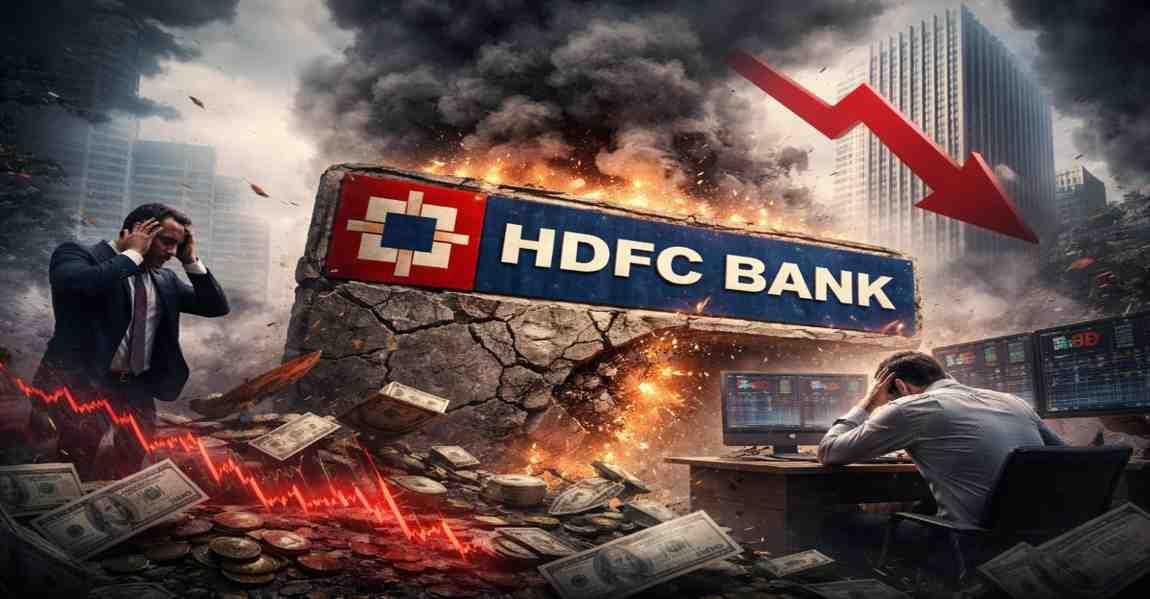
HDFC Bank faces governance crisis after chairman exit, AT1 bond mis-selling allegations, regulatory scrutiny, and investor concerns over transparency and trust.
✨ Key Takeaways

Introduction: The USD 16 Billion Question
In the unsentimental world of global finance, USD 16 billion is more than a rounding error; it is a definitive verdict. When HDFC Bank-an institution categorized by the Reserve Bank of India as too big to fail-witnesses a staggering 23 per cent collapse in its market capitalization within a single quarter, the question is no longer about quarterly slippage. It is about systemic trust. How does a banking titan, long considered the gold standard of Indian private lending, lose the confidence of the market and its own Chairman simultaneously? The departure of Atanu Chakrabarti has unleashed a reputational storm that suggests a deeper rot than a mere bad quarter. For the astute investor, the jarring loss of value is the symptom; the ethical congruence crisis is the disease.
The Ethical Congruence Bombshell: Why the Chairman Walked
In the upper echelons of corporate governance, a chairman’s resignation letter is rarely just a formality; it is an investigative roadmap. To understand the gravity of the current crisis, one must look at the man who walked away. Atanu Chakrabarti is no career retail banker prone to mid-tier office politics. As a former high-ranking civil servant and Finance Ministry official, he shaped national economic policy and oversaw the intricacies of India’s budget-making process. He is an architect of regulation, not a victim of its complexity.
When a man of his pedigree uses his resignation to signal a fiduciary breach, the market did not just listen-it panicked. Chakrabarti did not cite "personal reasons" as a polite fiction. He chose a surgical strike:
"Certain happenings and practices within the bank that I have observed over the last two years are not in congruence with my personal values and ethics. This is the basis of my aforementioned decision."
The strategic danger for HDFC lies in the transparency gap. By leaving the specific practices vague, Chakrabarti created a cloud of suspicion that institutional investors find intolerable especially FIIs, who were anyhow reducing their stake in the bank. In the absence of clarity, the market assumes the worst-case scenario: systemic governance failure. Furthermore, the source context hints at a board-level paralysis; if these concerns were raised and recorded in minutes for two years without resolution, it suggests a management team that prioritized growth over ethical guardrails. This asymmetry of information is precisely what triggered the massive valuation discount.
The Credit Suisse Connection: The AT-1 Bond Ghost
To identify the smoking gun in this ethical divide, we must look toward the Middle East and it has nothing to do with current conflict. While HDFC Bank’s domestic operations remain massive, its Dubai-based NRI branch became entangled in the global fallout of the Credit Suisse collapse. When UBS acquired Credit Suisse in 2023, USD 17 billion in Additional Tier-1 (AT-1) bonds issued by Credit Suisse were written down to zero.
HDFC Bank’s international operations acted as a distributor for these high-risk instruments. Allegations of mis-selling suggest that these bonds-carrying lethal write-down clauses-were marketed to NRI customers as safe, high-yield (12-13 per cent) alternatives to fixed deposits.
This is a fundamental breach of the Know Your Customer (KYC) and Treating Customers Fairly (TCF) mandates. Promising equity-like returns on a safe investment that ultimately vanishes is not a market loss-it is a betrayal of the fiduciary relationship. For a Chairman like Chakrabarti, who understands the spirit of the law, such practices likely represented a line that could not be uncrossed.
The C-Suite Purge: Accountability or Damage Control?
When the dust settled on the bond write-downs and the Chairman’s exit, the bank needed a scalp-or three. In a swift move to signal highest governance standards, HDFC terminated three senior executives: Sampat Kumar (Group Head of Branch Banking for the West and South, who also oversaw international operations), Harsh Gupta, and Payal Madhyan. Kumar has signalled an appeal to the bank’s board, relying on an oversight Defence-arguing he was too far removed from the direct mis-selling to be held personally liable.
The timing of these sackings is an optical nightmare. Investors must ask: is this a proactive cleansing of the ranks, or a reactive attempt to brush it under the rug after a public resignation made silence impossible? The fact that the bank has now appointed an external law firm to conduct an investigation and potentially produce a "white paper" proves that the board is in defensive mode, attempting to contain a contagion that has already breached the C-suite.
The Dubai Lockdown: Operational Constraints and Reputation
The repercussions have moved beyond internal memos to international regulatory sanctions. The Dubai International Financial Centre (DIFC) has reportedly placed a lockdown on HDFC’s ability to onboard new clients.
A DIFC restriction is a regulatory black mark that carries global weight. It doesn't just halt Middle East growth; it signals to global correspondent banks and regulators that HDFC’s internal controls are suspect. The 23 per cent drop in share price reflects the market's realization that HDFC’s business expansion strategy is now hitting a ceiling of its own making. When you are barred from acquiring new customers in a key growth market, your valuation must be re-rated for a stunted future.
The Transparency Gap: Compliance for Thee, but Not for Me?
There is a bitter, systemic irony at play here. When a retail customer walks into an HDFC branch, they are subjected to exhaustive KYC scrutiny-income proofs, address verifications, and credit scores-because the bank demands total transparency to mitigate its own risk.
However, when the bank faces a crisis of its own making, that transparency evaporates into board confidentiality and cryptic resignation letters. We are witnessing a classic case of Hide Your Corporation (HYC) reality masquerading as compliance.
Independent directors are meant to be the guardians of the minority shareholder, yet the tension between recording minutes and going public often leaves them toothless. I believe that when the chairman of India's second-largest bank resigns citing concerns, do the customers not have a right to know what happened here?
The onion-peeling process of this crisis suggests that the bank’s leadership may have prioritized its image over the very transparency it demands from its depositors.
Conclusion: The Retail Investor’s Playbook
The RBI’s reassurance that the bank is too big to fail provides a floor for systemic stability, but it offers no protection against a declining stock price. HDFC remains a top-tier organization, but the blot on its reputation requires a cooling-off period before it can be considered a buy again.
Strategic Next Steps for Investors:
- Avoid Bottom-Finding: With a 23 per cent drop, the temptation to buy the dip is high. However, until the external law firm's probe is concluded and a summary of the findings (or the rumoured white paper) is made public, the true depth of the liability remains unknown.
- Monitor the DIFC Lockdown: The bank cannot return to its growth narrative until the Dubai restrictions are lifted. Watch for regulatory filings regarding the resumption of client onboarding as a signal of restored trust.
- Assess the Interim Stability: The appointment of Keki Mistry-one of the most respected figures in Indian finance-as Interim Chairman is a tactical stabilizing move. However, investors should wait for a permanent appointment that signals a cultural shift toward transparency rather than just a respected figurehead.
- Prepare for Onion-Peeling: Expect more news to be unearthed. When three senior executives are sacked and a chairman resigns over ethics, the first wave of news is rarely the last. Observation, not aggression, is the current mandate.
Disclaimer: The article is for informational purposes only and not investment advice.