The RBI’s New Liquidity Challenge
 Join Us
 Follow Us
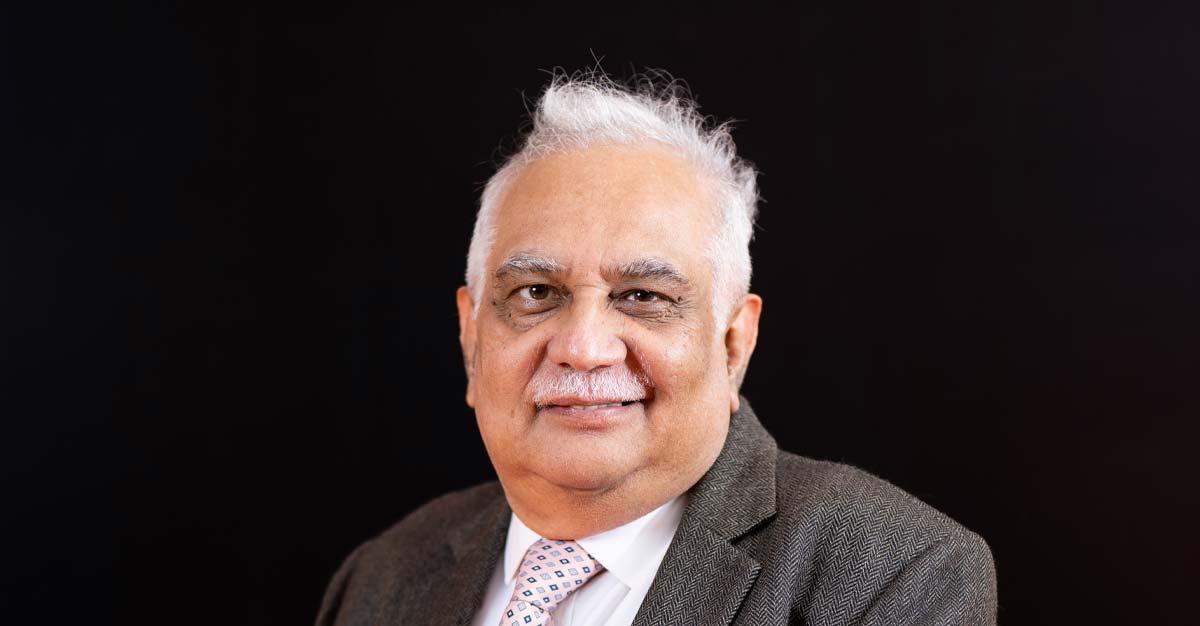
The article was written by Dr. Manoranjan Sharma, Chief Economist, Infomerics Ratings.
✨ Key Takeaways
India’s foreign-exchange reserves are comfortable. But every dollar the RBI buys has a rupee counterpart. Managing those rupees is the liquidity challenge now. As of September 18, inflows under its concessional swap arrangements covering FCNR(B) deposits, overseas foreign-currency borrowings and external commercial borrowings had reached USD 143.5 billion. Such inflows strengthen the external account and add to the RBI’s capacity to withstand external shocks.
But they also have a domestic monetary consequence. Dollars entering the RBI’s balance sheet are paid for with rupees entering the financial system. The RBI must therefore accumulate reserves without allowing the resulting liquidity to alter its monetary stance.
The Paradox of Strong Reserves
India’s reserves of USD 691.1 billion at March 31, 2026, are certainly valuable. But paradoxically, the RBI may buy dollars to prevent excessive or disorderly appreciation. The intervention supports exchange-rate stability and adds to reserves. But the dollars are purchased with rupees. Unless those rupees are subsequently absorbed, system liquidity swells.
The RBI’s framework notes that foreign-exchange purchases inject domestic liquidity, while sales absorb it. Sterilisation is required when the monetary impact of intervention needs to be offset. The sheer volume and two-way nature of intervention complicate the present situation.
In February 2026, net dollar purchases were USD 7.41 billion, but gross purchases were USD 21.4 billion against sales of USD 13.99 billion. In June, net purchases were only USD 561 million, even though purchases and sales were each close to USD 30 billion.
Net intervention can conceal substantial liquidity churn. The RBI may buy and sell large amounts of dollars within the same month, with different consequences for domestic liquidity at different points. Conversely, when the RBI sells dollars to contain excessive rupee depreciation, it receives rupees and drains liquidity.
The Repo Rate Cannot Do Everything
The repo rate is the principal policy signal. But multiple variables shape monetary conditions. When liquidity is abundant, banks need not borrow from the RBI or from one another. Overnight rates can gravitate towards the SDF. Bond yields, commercial paper rates, deposit pricing and credit conditions can respond accordingly.
The RBI can therefore leave the repo rate unchanged while financial conditions become easier. Nor does excess liquidity necessarily show up immediately in CPI inflation. It may first influence bond markets, equities, property prices, credit growth and risk-taking. The transmission can be slow, uneven and discernibly difficult. This is important when headline inflation is temporarily subdued because of food-price disinflation or favourable base effects. A benign CPI number does not automatically imply benign monetary conditions.
Oil prices can rise. The rupee can weaken. Credit can accelerate. Asset valuations can stretch. Global commodity prices can turn adverse. These developments do not wait for headline inflation to cross the RBI’s tolerance band.
Sterilisation is Not Free
The RBI has an array of liquidity-management instruments. But none is costless. The SDF and variable-rate reverse repos are useful for managing short-lived fluctuations. They are flexible and can be deployed quickly. They are less suitable, however, as the principal response when surplus liquidity is being generated repeatedly by sustained foreign-exchange intervention.
OMOs can provide more durable absorption, but large-scale sales of government securities can push up bond yields. That matters in an economy where the government itself has substantial borrowing requirements.
The CRR is more direct. Raising it immobilises bank funds across the system. But its bluntness is precisely its weakness. It can raise the cost of financial intermediation and eventually constrain credit.
Foreign-exchange swaps provide another route. They can alter rupee liquidity without the same immediate impact on the government securities market as outright OMO sales. But they are not free either. They can affect forward premiums and hedging costs, thereby transmitting liquidity conditions into the foreign-exchange derivatives market.
There is, in short, no sterilisation instrument that absorbs liquidity without affecting something else. The RBI is not choosing between good and bad options. It is choosing between different transmission costs.
The New Liquidity Arithmetic
The RBI has increasingly responded through a combination of instruments. The CRR was reduced by 100 basis points to 3 per cent of net demand and time liabilities in a staggered manner, while repo operations, OMOs and USD/Rs swaps have been used at different points. In May 2026, the RBI conducted a USD 5 billion USD/Rs buy-sell swap auction alongside variable-rate repo operations.
Sell government securities and bond yields respond. Change the CRR and bank profitability and credit conditions respond. Conduct an FX swap and forward premiums respond. Inject liquidity and asset prices may respond. The RBI is no longer managing a liquidity tap. It is managing a network of interconnected markets. There is also an important fiscal dimension.
Sterilisation has a carrying cost. The RBI earns returns on its foreign assets while its domestic liabilities may carry different costs. When sterilisation becomes large and persistent, the financial implications can become meaningful.
OMOs also intersect with government borrowing. If the government is issuing securities while the RBI is simultaneously selling securities to absorb liquidity, the bond market must digest both pressures.
Fiscal and monetary policy must remain institutionally distinct. But their balance sheets inevitably meet, for example, the RBI’s Rs 2.87 trillion transfer to the Union government for FY26. Its ultimate liquidity impact depends not on the size of the transfer but on government expenditure, cash balances and the timing of debt-management operations.
Possible Options
The RBI should not stop accumulating reserves or tolerate excessive rupee appreciation simply because intervention creates liquidity. India needs both a strong reserve cushion and an orderly, flexible exchange rate, necessitating calibrated sterilisation.
Temporary liquidity should be addressed with temporary instruments. Persistent liquidity arising from sustained reserve accumulation requires more durable absorption. The response should depend on the source, magnitude and expected persistence of the liquidity, not merely on the latest daily surplus or deficit.
Most importantly, the repo rate should not become the automatic answer to a balance-sheet problem. If the RBI raises the repo rate simply because dollar purchases have created rupee liquidity, it may raise borrowing costs for households and businesses without addressing the source of the liquidity. This would be using the price of money to solve a quantity problem.
The RBI also needs to communicate this relationship more clearly. Markets should understand how the central bank can simultaneously accumulate foreign exchange, absorb rupee liquidity and leave the repo rate unchanged. Greater transparency on the interaction between FX intervention, reserve money, system liquidity and the policy corridor would make monetary-policy signalling more credible.
Larger Point
India’s foreign-exchange reserves defend against external shocks. As capital flows become larger, faster and more volatile, the rupee counterpart becomes increasingly consequential. This necessitates adroitly managing this conversion without compromising inflation control, monetary transmission, financial stability or exchange-rate flexibility. In a more open Indian financial system, liquidity management is no longer a technical adjunct to monetary policy. It is monetary policy in operation.
Disclaimer: The opinions expressed above are of the author and may not reflect the views of DSIJ.