UPI MDR Rollout May Move To January 2027: Key Details Explained
 Join Us
 Follow Us
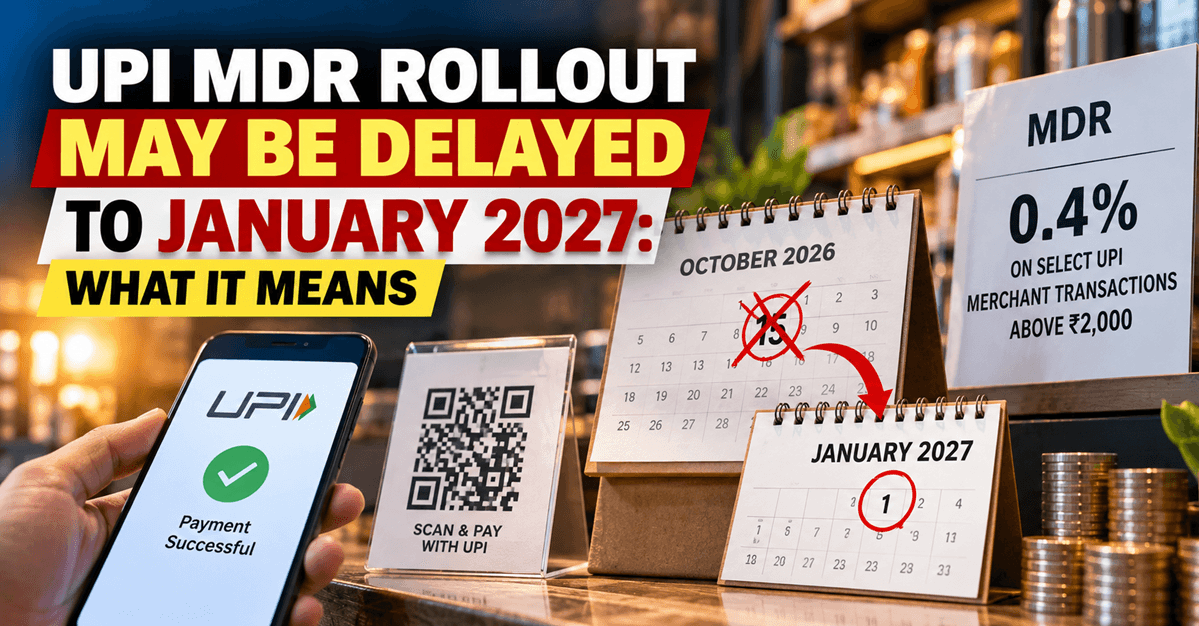
UPI MDR rollout may be pushed to January 2027, giving merchants more time to prepare while delaying a potential new revenue stream for digital payment companies.
✨ Key Takeaways
The proposed rollout of Merchant Discount Rate (MDR) on select UPI transactions may be deferred from October 15, 2026, to January 1, 2027, according to reports on October 8. However, the deferment is not final yet, with a decision expected in the coming days.
Why Is The UPI MDR Rollout Being Deferred?
The proposed delay is aimed at giving merchants and the wider payments ecosystem more time to prepare, particularly during the festive season when digital transactions typically increase. The move also comes amid concerns raised by merchant and industry groups over the new payment economics.
Looking for High-Growth Micro Cap Opportunities?
Explore DSIJ’s Micro Marvel - a research-driven service focused on fundamentally strong microcap stocks with the potential to create long-term wealth through high-growth opportunities.
Download Service BrochureThe original implementation date was October 15, 2026. Under the framework, a 0.4 per cent MDR would apply to specified person-to-merchant UPI transactions above Rs 2,000, with the charge capped at Rs 300 for transactions of Rs 75,000 or more.
What Does The New MDR Mean?
MDR is a fee paid by merchants for processing digital payments. Importantly, the proposed charge is not a fee directly charged to UPI users. Person-to-person transactions remain outside the framework, while P2M transactions up to Rs 2,000 will continue to be free of MDR.
At 0.4 per cent, a Rs 10,000 eligible transaction would attract an MDR of Rs 40, while the maximum charge would be Rs 300 once the transaction value reaches Rs 75,000.
The government has also indicated that consumers should not be charged this MDR separately.
Why Does The Delay Matter?
For merchants, postponing the rollout would provide additional time before the new cost structure takes effect. This is particularly relevant during the festive period, when retailers generally see higher transaction volumes.
For payment companies, however, the delay pushes back the potential revenue benefit from the new MDR framework. This explains why payment stocks came under pressure after reports of the possible deferment emerged. Reuters reported that Paytm shares fell 7.6 per cent and One Mobikwik Systems declined 7.2 per cent on October 8 following reports of the delay.
UPI Continues To Handle Massive Volumes
The proposed MDR comes against the backdrop of enormous growth in UPI usage. NPCI data shows that UPI processed 24,508.96 million transactions worth Rs 29,82,355.95 crore in August 2026.
The scale of the network is one reason the economics of UPI have become increasingly important for Banks, payment aggregators and digital payment companies.
The MDR framework is intended to create a revenue mechanism for eligible transactions while keeping the vast majority of everyday UPI payments free.
What Happens Next?
The key point is that the January 1, 2027 date is currently a proposed deferment, not a confirmed change. Reports indicate that discussions are continuing and a final decision is expected shortly.
If approved, the delay would give merchants a temporary breather but postpone the expected revenue opportunity for participants in the UPI ecosystem. The underlying MDR framework, including the 0.4 per cent rate and Rs 300 cap, is not reported to be changing.
For consumers, there is currently no indication of a direct UPI payment charge under the framework. The bigger impact is likely to be felt by merchants and companies whose business models are linked to processing and monetising digital payments.
Disclaimer: The article is for informational purposes only and not investment advice.