Victory Electric Vehicles International Limited: An Emerging Player Riding India’s L3 & L5 EV Growth Wave
 Join Us
 Follow Us
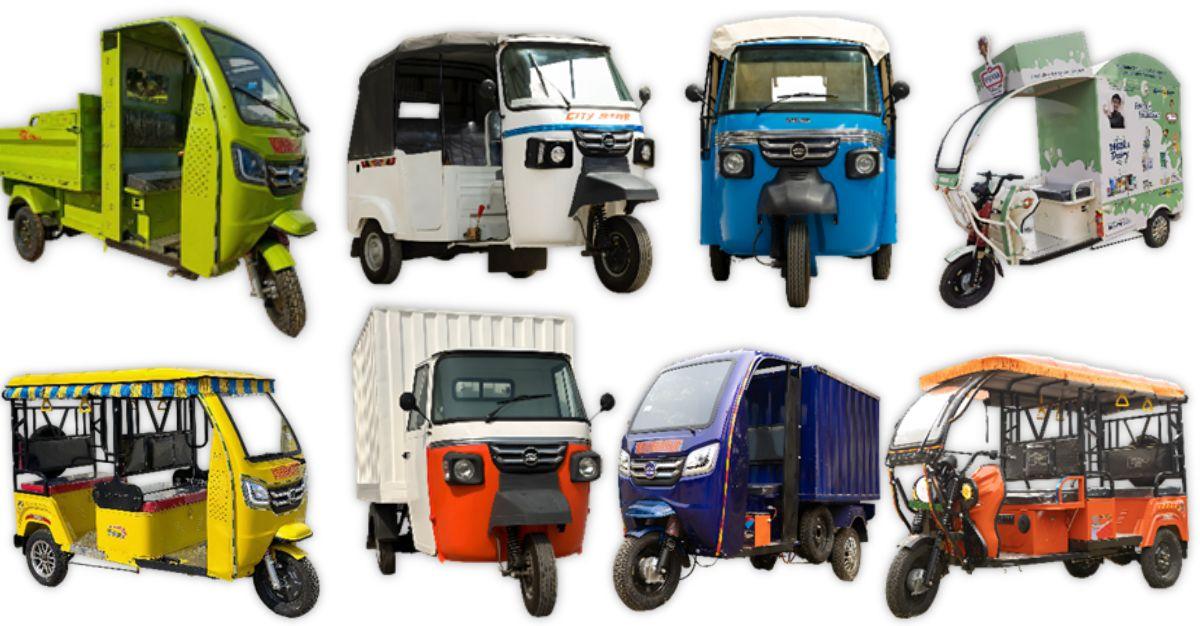
In 2025, electric three-wheelers (L3 + L5) accounted for ~0.8 million units, contributing ~35 per cent of total EV sales in the country, highlighting their central role in India’s electrification journey.
✨ Key Takeaways
India’s electric vehicle ecosystem is undergoing a structural transformation, with electric three-wheelers emerging as the backbone of last-mile mobility. In 2025, electric three-wheelers (L3 + L5) accounted for ~0.8 million units, contributing ~35 per cent of total EV sales in the country, highlighting their central role in India’s electrification journey.
Against this backdrop, Victory Electric Vehicles International Limited is steadily positioning itself as a credible and scalable player in both the L3 and L5 electric three-wheeler segments, leveraging regulatory approvals, a diversified product portfolio and growing geographic reach.
L5 Segment: Fastest Electrifying Auto Category in India
According to the India EV Market 2025 report (IESA), high-speed L5 electric three-wheelers recorded the highest EV penetration at ~32 per cent across all fuel types in 2025, significantly outpacing most other vehicle categories.
Total L5 electric three-wheeler sales reached 2.37 lakh units in 2025, driven by:
- Replacement of CNG and petrol autos
- Better driver economics and higher payload capacity
- Increased availability of financing and after-sales support
While established OEMs such as Mahindra Last Mile Mobility and Bajaj Auto together accounted for nearly 70 per cent of L5 volumes, the rapid expansion of the segment has created meaningful headroom for new, certified entrants, particularly those focused on cost efficiency and application-specific offerings.
Victory’s Foray into L5: Positioned for Fast-Paced Urban Transportation
In FY25, Victory manufactured 550 L5 electric e-rickshaws, marking its first full year of scaled participation in the high-speed three-wheeler segment. While this volume is modest when benchmarked against the Top 10 OEMs (which together control ~94 per cent of L5 sales as per the IESA report), it represents a base-year scale-up phase rather than peak capacity utilisation.
Unlike incumbent OEMs with legacy L5 volumes, Victory’s L5 journey began after securing the ICAT license, a key regulatory barrier to entry. This positions the company to scale responsibly as the market transitions from subsidy-led adoption to economics-driven demand.
The company operates a state-of-the-art manufacturing facility in Bahadurgarh, Haryana, with an installed capacity of 4,300 units in FY25 and overall capacity utilization of 65.7 per cent, indicating significant headroom for growth. The company’s in-house R&D and integrated production processes enable continuous product improvement, cost optimisation and faster customisation.
Victory’s product range is designed with a strong value-for-money proposition, focusing on durability, low operating costs and reliability, making its vehicles particularly suitable for rural and semi-urban markets, where affordability and uptime are critical for driver livelihoods.
Victory has established a dealer-led presence across more than 15 states, enabling participation in key electric three-wheeler markets such as Uttar Pradesh, Bihar, Delhi, Rajasthan and other high-adoption regions.
L3 Electric Vehicles – Key Differentiators
- Optimised for Mass Last-Mile & Rural Mobility: With a maximum speed of 25 kmph and ≤1,200W motor power, Victory’s L3 vehicles are well-suited for high-visibility, everyday passenger movement across urban, semi-urban and rural roads.
- High Utility Goods Customisation: L3 goods variants can be customised with load bodies, supporting up to 310 kg payload (excluding driver), making them effective for small cargo, cleaning and utility applications.
L5 Electric Vehicles – Key Differentiators
- ICE Auto Replacement Capability: L5 vehicles offer higher speed (up to 55 kmph) and motor power up to 3,000W, positioning them as direct electric substitutes for CNG and petrol autos used in passenger and goods transport.
- Higher Payload & Urban Focus: With GVW up to 1,500 kg (excluding battery), L5 models enable faster transport and higher payload capacity, making them ideal for urban and semi-urban commercial operations compared to L3 vehicles.
Conclusion: Positioned at the Entry-to-Growth Inflection Point
Victory Electric Vehicles is an emerging player at the entry-to-growth stage in India’s electric three-wheeler market, supported by early L5 presence, a stable L3 base, ICAT & ISO certifications, manufacturing headroom, value-for-money product offerings and pan-India operations across 15+ states, positioning it well for the next phase of L3–L5 market expansion.