Well Begun is Half Done
 Join Us
 Follow Us
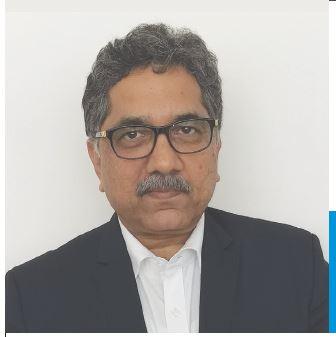
"Once asset allocation is decided, the key would be to select funds that have the potential to get you the best of that asset class. Tax efficiency of returns should also be considered"
✨ Key Takeaways
"Once asset allocation is decided, the key would be to select funds that have the potential to get you the best of that asset class. Tax efficiency of returns should also be considered"
Hemant Rustagi
Chief Executive Officer, Wiseinvest Pvt Ltd.
Investing is a process that begins when you make your first investment and ends when you achieve your goal in the defined time horizon. During this journey, you are likely to face many challenges like market volatility, changes in your personal financial situations, economic and geopolitical issues, movements in interest rates and changes in tax laws, etc. While staying disciplined and keeping focus on your goals helps in tackling all these challenges, the most important aspect is how you begin your investment process. Here’s how you can begin to avoid hiccups that can derail your investment portfolio.
Begin the Right Way
Don’t make the mistake of starting your investment process with fund selection. If fund selection gets priority over other important factors, short-term performance becomes the sole guiding factor. As a result, you may end up investing aggressively in equity funds when the markets do well and stay away from equities when the markets are not doing well. Ideally, your investment process should begin with establishing investment goals, assigning a time horizon and a target to each one of them. While setting a target for long-term goals like children’s education and retirement planning, you must consider inflation.
Failure to do so will lead to a huge gap between what you may accumulate and what may be required. Having a clearly defined time horizon allows you to decide asset allocation. For long-term goals, the focus should be on asset class like equity while for medium-term a hybrid portfolio can get the desired result. And for short-term goals, the focus should be on capital safety and hence Debt Funds should be the mainstay. Once asset allocation is decided, the key would be to select funds that have the potential to get you the best of that asset class. Tax efficiency of returns is another aspect that should be considered.
Create a Balanced Portfolio
Coming back to fund selection, invest in equity funds that allow you build a well-diversified portfolio with a slight bias towards Large-Cap stocks. Considering that equity is an aggressive asset class, you must refrain from investing in aggressive funds like sector, thematic and Small-Cap funds in the beginning. Ideally, you should begin with categories such as flexi-cap, large-cap, Mid-Cap and multi-cap funds. Another important factor is to measure longer term performance vis-a-vis the benchmark as well as the peer group. While selecting Hybrid Funds, the mainstay should be funds that provide flexibility to fund managers to rebalance the allocation to different asset classes.
Rebalancing is based on market conditions and valuations. Here, balanced advantage funds and aggressive hybrid funds can be considered. For debt funds, the key is to match your time horizon with the maturity duration of the fund. While investing for a time horizon of three years or more, you must keep an eye on emerging interest rate scenario since inverse relationship between interest rates and bond prices can make a huge difference to your returns. For example, during a rising interest rate scenario, you must avoid investing in funds that have longer maturity duration.
Avoid an Unwieldy Portfolio
Having too many funds in the portfolio can make it difficult for you to monitor its progress. Besides, if you have a number of similar funds, you may not still have the desired level of diversification. However, there is no such thing as an ideal number of funds. It depends on how many goals you are investing for. The focus should be on having about 3-4 funds for each of the goals, especially while investing for the long term. Similarly, even on the debt side, you may have to opt for different funds for parking in short-term funds and investing for the long term. It is important to have a separate portfolio for each of the goals as it becomes easy to monitor the progress as well as ensure that money is used for the purpose for which it is being accumulated.