Spinning Gains From China Plus One Story
Ninad RamdasiCategories: Cover Stories, Cover Story, DSIJ_Magazine_Web, DSIJMagazine_App, Stories
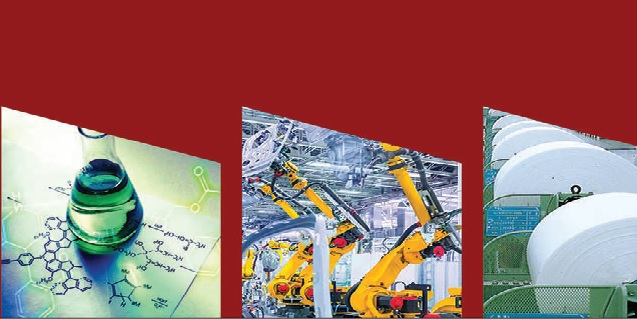
The world post the effects of the pandemic is a different business place and there is no doubt that India today is in a much better place than it was before the virus outbreak. Several sectors stand to benefit from the China Plus One story. Shreya Chaware explains in detail what exactly this new development is and highlights the sectors that stand to benefit from such changing global business relations
The world post the effects of the pandemic is a different business place and there is no doubt that India today is in a much better place than it was before the virus outbreak. Several sectors stand to benefit from the China Plus One story. Shreya Chaware explains in detail what exactly this new development is and highlights the sectors that stand to benefit from such changing global business relations
The Indian markets are standing tall amidst global volatility and weakness. While several analysts remain bullish on the Indian markets and continue to believe that these will outperform its global peers, there is widespread consensus amongst the market participants that the margin of outperformance can shrink a little bit. The Nifty EPS estimate for FY24 is around ₹ 1,000. With a PE of around 20, Nifty may touch 20,000 in 18-24 months and that is healthy return from the perspective of the current levels. However, the main question that is bothering investors is whether we will first see 16,000 or 18000!
Comments Chetan Nayani, a regular investor in the equity markets: “I am a perennial bull when it comes to the Indian equity markets. I have some surplus money I want to invest but I am not sure if this is the right time to invest. Given the headwinds for the markets I am little sceptical about the prospects of the market. Also, this time around I am exploring the most appropriate opportunities if the market dips further. I have read and heard a lot about the China Plus One story but am not able to identify stocks that can benefit owing to this development.”
Indeed, the China Plus One story is something that is widely discussed by stock market experts lately. It is also widely perceived that several key sectors in India stand to benefit from the new development in the global supply chain. Developed economies do not want to rely solely on China as the world’s supplier for various finished goods and key raw materials. The process has already been set in motion and on ground there are several sectors that are witnessing a shift in demand from China to India. In fact, India is one of the most preferred options after China when it comes to manufacturing activity. Further, the ‘Make in India’ campaign and the vision of the government to focus and promote the manufacturing sector in India is finally showing some signs of traction. The China Plus One story could not have come at a more opportune time as India stands ready to grab the opportunity with both hands. Manufacturing is the backbone for any reasonably sized country. India is no exception. The manufacturing sector can absorb skilled workers and accomplished professionals and hence remains one of the most important sectors for the India growth story to turn into reality. Beyond the manufacturing sector, we find the textile and chemical sectors as major beneficiaries.
India Manufacturing and China Plus One
China is also known as the ‘manufacturing capital’ as almost all countries across the globe are dependent on China for their manufacturing needs and this has been the case for the past 30 years or so. Primarily, this has been due to the low cost of manufacturing in China. As interruptions in the global supply chain cause production delays and longer lead times, there is now an urgent need to find a new manufacturing base. India has proved its excellence to become a leading manufacturer of mobile phones in recent years, but more as an assembler it is slowly integrated with the global value chains.
Foxconn, the world’s largest mobile phone assembly manufacturer, has decided to develop a production line in India. This may also attract other suppliers in the mobile manufacturing supply chain to invest in India in order to avoid high import duties. A survey by UBS suggests that 20-30 per cent of manufacturing will make an exit from China. Due to its competitive edge across a number of industries, favourable production characteristics, conducive business environment and encouraging government regulations, India is perhaps the next best contender to capitalise from this new position. The development of China’s modern infrastructure and low-cost manufacturing industries were crucial to its development. This would benefit countries like India that have low-cost manufacturing facilities.
The Production-Linked Incentive Scheme (PLI) put into place by the Indian government in April 2020 intends to attract foreign investors that want to move their manufacturing operations to India, thereby increasing the Indian domestic manufacturing capacity in the process. The government is also considering higher incentives of up to 3-6 per cent for the IT hardware companies. The idea is to encourage local manufactures of IT hardware. PLI is about getting India a place in the global manufacturing ecosystem. The new polices will bring more components under the domain of schemes. Talks are being held with the global manufacturers and additional investment of ₹ 2,500 crore is expected.
Meanwhile, companies like Varroc Engineering, a supplier to automakers, has set up an electronic parts unit with an investment of ₹ 100 crore. Gabriel India, a provider of shock absorbers to automobile manufacturers, has created an in-house aluminium die tooling facility in order to have a backup supply chain. To cut its dependency on China, airconditioner manufacturer Amber Enterprises has launched a motor business. These are some of the examples that show how India is gearing up to become self-reliant and get global companies to set up their facilities here.
The foundation of the global supply chain was built over a period of time. If India can quickly gear up capacities and capabilities like raw material and skilled labour, there will be big opportunities to gain from China Plus One. However, India is not the only country in the race. To reduce supply chain disruption risk, global companies are considering other Southeast Asian countries such as Vietnam, Bangladesh, Thailand and Malaysia. Indian businesses need to discover why multinational corporations choose China for manufacturing. Some of the factors included China’s low prices, quick turnaround times and high quality. If Indian companies can get this right, they can surely capitalise on these opportunities.
Indian Textile Industry and China Plus One
Many multinational companies are adding new operations in other developing Asian countries like India, Vietnam, Thailand, Bangladesh and Malaysia, and are welcoming new manufacturing opportunities. Textile, metals, specialty chemicals, pharmaceuticals and electronic manufacturing are the sectors likely to benefit from the China Plus One strategy. Some of the macro tailwinds that the textile sector is expected to experience include increase in exports from India, a ban on Xingjiang (China) cotton by the US (the origin of 80 per cent of China’s cotton), decentralisation and consolidation trends and the China Plus One strategy.
Growth in the textile sector is predicted to be 81 per cent, reaching USD 65 billion by 2026 from the pre-pandemic level of around USD 36 billion in 2019. The China Plus One sentiment is expected to support the growth curve decently as it is likely to result in 7.5–10 million new jobs. India bears a deep strategic platform compared to Vietnam or Bangladesh. It is predicted that a sizable portion of this targeted growth can come from the China Plus One sentiment. The pandemic has led to a redistribution of global trade shares and China Plus One sourcing, providing a crucial opportunity for Indian textiles to perform a turnaround and recover a leadership post as a top exporting economy.
Due to lower lead time, particularly in the fashion industry, India stands to have a lower competitiveness than Chinese manufacturers. Some of the textile industry players believe that following the China Plus One strategy may lead to at least a 20 per cent shift of exports from that country to India. The five key advantages that China Plus One offers fashion brands are:
1. Competitive Sourcing Costs — For the brands which worked with limited manufacturing partners, diversifying their factory network opens greater vendor leverage. The more leverage a brand has to keep its sourcing costs competitive, the better its success story.
2. Management of Crisis — The operating issues of a company can force factory closure, downturn in capacity or a cessation of the factory’s ability to meet the deadlines, quality standards and other contractual terms which were previously fulfilled by the factory. In such a situation, diverse supply chain could help the company manage the crisis without customers facing the brunt in terms of product quality or delivery time.
3. Access to Raw Material — Diversification in factory network allows fashion brands to collide product features to the best experts for high quality production keeping the costs reasonable across all inventories. Each manufacturer tends to have its own trusted network of fabric suppliers and trim suppliers.
4. Transparency in Supply Chain — Collaborating with new fashion producers allows brands to work with a high level of transparency. Transparent strategies and workflows can be comfortably implemented at the initiation of a new supplier-brand relationship, instead of imposing changes post years of a well-functioning partnership.
5. Epoch of Higher Options and Control —Fashion brands have stepped into an era of China Plus One from a conscious position and not with frustrations. The fashion brands now stand to gain a more adaptable, resilient and opportunity-focused supply chain.
With the adoption of the China Plus One strategy, textile companies now have the ability to create a supply chain structure which not only answers the current pragmatic needs but also establishes proactive measures to meet internal and external expectations for upcoming and in demand products.
Indian Chemical Sector and China Plus One
Chemicals and chemical products are of significant importance in the overall manufacturing sector due to their direct and indirect applications in most industrial segments, such as food and beverages, textiles, leather, metal extraction and processing, petroleum refining, polymer additives, pharmaceuticals and rubber. The global market for chemicals was predicted to reach USD 5,027 billion in 2020, with China accounting for the largest market share of 39 per cent and the European Union coming in second place at 15 per cent and the United States coming in third at 13 per cent. In the worldwide chemicals market, India holds a 4 per cent market share. By 2025, this market is projected to grow at 6.2 per cent CAGR to reach USD 6,780 billion, with APAC growing at a faster pace of 7-8 per cent throughout the forecast period (2020-25F).
The chemicals market in Western Europe, North America and Japan are relatively mature and are thus anticipated to record slower growth of ~3-4 per cent. India’s chemical industry was estimated to be worth USD 187 billion in FY20 and has a significant potential to reach USD 300 billion by FY25. In terms of demand, the industry has grown at approximately 1.3 times the country’s average GDP growth in the last five years and shows a strong linkage with its GDP. The market for speciality chemicals, which was estimated to be worth USD 847 billion in 2020, is anticipated to increase by 5.2 per cent CAGR to USD 1,090 billion by 2025. Between 2020 and 2025, the speciality chemicals market in India is anticipated to expand at a CAGR of 10–12 per cent.
The Indian chemical sector has the potential to double in size by taking a sizable chunk of the world market away from China and stimulating investment through incentives and ease of doing business. Due to the pandemic, multinational firms are shifting from China to India. As such, India is anticipated to profit tremendously from this trend. Additionally, the tightening of environmental regulations in China has increased operating costs and forced the closure and relocation of production facilities. The country’s dominance in the industry has been impacted by the nation’s rising labour expenditures.
These factors have come together to give India a chance. Global players are attempting to diversify their sourcing due to disruption and uncertainty in China’s supply chain and India provides strong alternatives with comparable scale, technology, raw materials and supporting government regulations. The Indian government has put in place a variety of policy changes to entice businesses who want to move their manufacturing base to India following the pandemic in an effort to take advantage of this opportunity.
Due to its advantageous geographic location, India has many advantages over China when it comes to becoming a manufacturing powerhouse for chemicals and specialty chemicals due to the following reasons:
• In addition to having low labour costs, India also benefits from a competitive infrastructure, special economic zones (SEZs) which among other things offer duty-free exports, incentives to boost local manufacturing and business-friendly legislation. • India’s rising ranking in the Ease of Doing Business index has helped draw worldwide attention and consideration as an alternative manufacturing location.
• Competitive advantage due to the reduction in corporate taxes, PLI Scheme for various downstream industries, 100 per cent FDI in the chemical sector through an automatic route, the PCPIR policy and other schemes promoting Make in India also indicate a bright future for the Indian chemical industry at least for the next decade.
• The Indian currency depreciated against USD and CNY, thus strengthening the cost position for Indian products in export markets.
• Newer opportunities are opening in the sunrise sectors such as battery chemicals, climate change initiatives, etc. These will also feed the requirement for chemicals in the future.
• India has a good number of well-trained chemists and research and development scientists to support the ever-evolving pharmaceuticals industry while the research and development spending by the companies is also strong.
With India aspiring to become a manufacturing hub for various industries and also for chemicals, the growth in these applications will boost the Indian chemical sector. Hence, there are enough and more opportunities for Indian companies to look out for and establish or strengthen their global presence. China presently accounts for ~15-17 per cent of the world’s exportable specialty chemicals, whereas India accounts for merely 1-2 per cent – a hint that the country has huge potential to capitalise on the increasing opportunity. By all means, specialty chemicals are expected to be the next export pillar for India.
Conclusion
India has suffered too long because of its inward-looking, control-era and narrow-focused mindset. Today, India is ready under its strong political leadership to service global business needs. The China Plus One strategy is not simply a theory doing rounds in various media circles but is reality in motion that is keeping Indian enterprises extremely busy. Boldness is seen in the way the Indian economy is attracting investments. Soon enough, we may expect India to be a hub for manufacturing semiconductors and even I-Phones. There is discussion going on whether the Indian markets can truly remain decoupled from the global markets and for how long.
It does look like the strength of the Indian economy will ensure that it beefs up its position in the global supply chain. As an equity investors all one needs to do is identify the sectors that clearly stand to gain from this changing sentiment and conduct thorough due diligence for identifying stock-specific opportunities. Huge gains lie in front of the chemical sector in India. Be it basic chemicals, knowledge chemicals or specialty chemicals, the opportunity pie is huge. There is no way investors can avoid taking exposure to the chemical sector in India. Textile and manufacturing sectors with tailwinds in place look extremely attractive at this point of time based on the China Plus One sentiment. We have come up with two ‘top picks’ that can benefit from the China Plus One story.
Stock Recommendation
Balaji Amines Ltd.
CMP (₹ ): 3,160.00
BSE CODE: 530999
Face Value(₹ ) : 2
52 Wk High/Low : 4,799.00/2,680.05
Mcap Full ( ₹ Cr.) : 10,186.71
Balaji Amines is specialised in manufacturing methylamines, ethylamines, derivatives of specialty chemicals and pharmaceutical excipients. These have been the main products and it also has facilities for the manufacture of derivatives, which are downstream products for various pharmaceutical and pesticide industries apart from user-specific requirements. Balaji Amines Limited (BAL), one of India’s top producers of aliphatic amines, was founded in 1988 to meet the expanding need for specialty chemicals with a higher perceived value. In 1989, BAL started producing methylamines. Subsequently, the company set up factories to produce ethylamines and additional methylamine and ethylamine derivatives.
BAL has been consistently adding capacities and fine-tuning processes to provide quality products at lowest cost to the customers. Only a small number of organisations have access to amine technology, which is a technique that is highly guarded throughout the world. BAL tested an indigenously created technology for the first time in India and continued to refine it over time. Today, BAL’s products are acknowledged in foreign markets and have achieved the position of being of the highest export quality, which makes it one of the few companies in India having the potential to match the stringent international quality standards for which it has been awarded ISO-9001:2015 certification apart from appreciation and continuous orders from global majors for its product range.
For the first quarter ended June 31, 2022, the company reported net sales of ₹ 514.85 crore. This is a rise of 31.46 per cent over the net sales reported during the same time last year. Likewise, the operating profit also saw a rise of 13.36 per cent in the recent quarter. The operating profit rose to ₹ 132.55 crore from ₹ 116.92 crore in the first quarter of FY21. The company also reported positive quarterly net profit of ₹ 92.67 crore as compared to net profit of ₹ 81.81 crore in the previous year same quarter, representing a rise of 13.27 per cent. Besides, the company’s annual financials reveal that its net sales surged to ₹ 1,918.05 crore in FY22 from ₹ 1,227.78 crore in FY21, giving an increase of 56.22 per cent.

The operating profit zoomed by 35.64 per cent to ₹ 459.35 crore in FY22 from ₹ 338.65 crore in FY21. Similarly, the net profit for the year FY22 stood at ₹ 307.94 crore, delivering an exceptional return of 32.9 per cent from ₹ 231.71 crore reported over the past year. The company has a competitive moat in areas like diverse product portfolio, value-added products, large customer base and intellectual capital. The presence of multiple sectors, regions and product categories reduces the risk of the company being overly dependent on any one sector, region or product. It has more than 1,200 clients in India, some of which are industry leaders with a rising demand. The company has a strong international presence across more than 50 countries.
Moreover, it is a leading player for its products in the geographies of its presence. The major clients on the company’s portfolio include Aurobindo Pharmaceuticals, Sun Pharmaceuticals, Indian Oil and Zydus Cadila. Due to strict environmental regulations, China reduced its manufacturing of amines and other specialty chemicals in 2018, which helped the Indian chemical industry’s sales and margins. Balaji Amines, a market leader for specialty chemicals in India, would also profit from this development. The business has already begun to invest in expanding its capabilities. In addition, it is focusing on backward and forward integration and also expanding its portfolio of downstream products to gain from value-addition and low manufacturing costs, making it a viable choice for international players. Over the last three years, Balaji Amines’ revenue has grown at a healthy CAGR of 35.3 per cent on the back of high volumes while its net profit has grown at a CAGR of 62.4 per cent during the same time.
The operating profit, net profit and PAT are seen surging year after year without any fall even during the pandemic. Also, the company has produced good profit growth of 35.5 per cent CAGR over the last five years. Its ROCE has also improved drastically from 19.8 per cent three years ago to 50 per cent in the financial year 2022. The company is planning to begin expansion for installation of various plants at a capex of ₹ 300–500 crore, which is likely to commence production between mid-FY24 and the end of FY25. The company’s long-term growth will be fuelled by its goals for expansion and entry into the electric car market by becoming the only supplier of chemicals for lithium batteries.
Gokaldas Exports Ltd.
CMP (₹ ): 348.00
BSE CODE: 532630
Face Value(₹ ) : 5
52 Wk High/Low : 519.55 / 186.00
Mcap Full ( ₹ Cr.) : 2,208.98
One of India’s top makers and exporters of clothing, Gokaldas Exports Limited was founded in 1979. The company offers a wide selection of clothing items such as outerwear, active wear and fashionable clothing for all seasons and weather conditions. Gokaldas Exports distributes goods to some of the most well-known fashion brands and retailers throughout the world. The company is present on all continents and has a distribution network spanning more than 50 nations. In addition to its top-notch production facilities, Gokaldas Exports also has integrated ancillary units that offer value-added services like laundry, embroidery, printing, quilting and poly wadding, among others.
All of Gokaldas Exports’ operations have received certificates for outstanding environmental and social and labour compliance, enhancing the company’s manufacturing expertise. Gokaldas Exports is without doubt one of the biggest organised clothing producers in the nation with a total manufacturing capacity of 36 million garments annually. In addition, Gokaldas Exports, a labour-intensive company, employs 32,000 human talents, a vast majority of whom are women. Both the Bombay Stock Exchange (BSE) Limited and the National Stock Exchange (NSE) Limited list the company. One of the most important aspects of the company’s growth has been the long-standing relationships it has with its key clients.
The company’s core competencies lie in its ability to consistently deliver high-quality products that satisfy demanding compliance standards of international clients based out of North America, South America, Europe, Africa, Oceania and Asian countries, as well as its understanding of readymade garment specifications and customer purchasing preferences. In FY22, the domestic textile and apparel industry in India had a significant recovery. The intensified vaccination campaign, the gradual return to normalcy following the pandemic and the release of repressed demand for clothing collectively contributed to this recovery.

The domestic economy as a whole is thought to have expanded by 30 per cent in FY22 to reach USD 99 billion from USD 80 billion in FY21, although it was unable to fully recover to the pre-pandemic levels of USD 106 billion in FY20. It is estimated that by FY26 the domestic textile industry may reach USD 190 billion, growing at a CAGR of 10 per cent from the FY20 base and with apparel holding a dominant share. For the first quarter that ended on June 31, 2022, Gokaldas Exports reported net sales of ₹ 610.63 crore. This is a rise of 153.41 per cent over the net sales reported at the same time last year. Likewise, the operating profit also saw a rise of 272.79 per cent in the recent quarter.
The operating profit climbed to ₹ 74.33 crore from ₹ 19.94 crore in the first quarter of FY21. The company also reported positive quarterly net profit of ₹ 39.39 crore as compared to net loss of ₹ 2.55 crore in the previous year’s same quarter. Besides, the company’s annual financials reveal that its net sales climbed to ₹ 1,790.32 crore in FY22 from ₹ 1,210.73 crore in FY21, giving an increase of 47.87 per cent. The operating profit zoomed by 90.15 per cent to ₹ 216.19 crore in FY22 from ₹ 113.69 crore in FY21. Similarly, the net profit for FY22 stood at ₹ 117.08 crore, delivering an exceptional return of 341.97 per cent from ₹ 26.49 crore reported in the past year.
Gokaldas Exports, one of the biggest producers and exporters of clothing in India, comes in at number four on the list. For men, women and children, it offers bottom wear, casual clothing, and outerwear. Through the reputable customer base of the business, its products are shipped to more than 50 nations. Its customers include retailers such as JC Penney, GAP, Adidas, Puma, and H and M. By increasing its capacity across existing and new sites, Gokaldas Exports is maximising the China Plus One potential. It is planning to invest around ₹ 120 crore for the financial years 2022 and 2023 for the same. In the last three years, the company’s revenue has grown at a CAGR of 8.8 per cent, driven by growth in exports. Net profit jumped 56.7 per cent (CAGR) during the same time.
The company reported ROCE of 19 per cent for the financial year 2022. Its expansion strategy is anticipated to fuel its growth going forward. Peak production efficiency is currently being achieved, and the order book for the upcoming quarter is stable. The company is planning capex of ₹ 350+ crore over the next four years (by FY25) which will have the potential to generate incremental revenues worth around ₹ 1,300 crore. With the recent fund raising i.e. QIP of ₹ 300 crore, the company has strengthened its balance-sheet with repayment of approximately ₹ 300 crore debt, post which GEL has become net debt-free with net cash surplus ₹ 105 crore. Enhanced government focus on apparel exports and China Plus One strategy of global brands provide long-term growth opportunity for players like GEL.
(Closing price as of Sept 30, 2022)