A Comprehensive Guide to Understanding and Calculating Your Net Worth
 हमसे जुड़ें
 हमें फ़ॉलो करें
The Ultimate Financial Health Check: How to Figure Out What You Are Truly Worth
✨ मुख्य निष्कर्ष
When we talk about personal finance, we often focus on income, meaning how much money we make every month. While your salary is a critical component of your financial health, it does not tell the whole story. To truly understand where you stand financially, you need to look at a different metric: your Net Worth.
Think of net worth as a financial snapshot. It is a single number that represents the total value of everything you own minus everything you owe. Whether you are aiming for early retirement, saving for a home, or simply trying to get out of debt, your net worth is the ultimate scoreboard that tracks your progress over time.
What Exactly is Net Worth?
In the simplest terms, net worth is what would be left in your pocket if you sold everything you owned today and paid off all your debts. It is the gold standard for measuring wealth because it accounts for both your achievements, like savings and investments, and your obligations, like loans and bills.
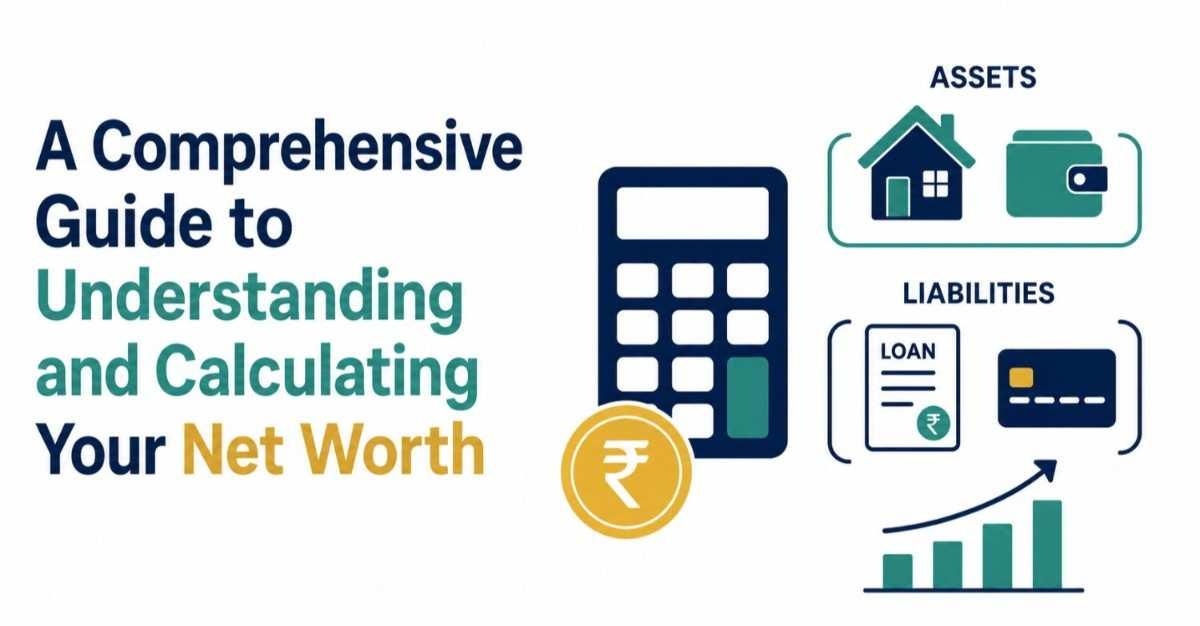
Net worth is divided into two primary categories:
- Assets: Things you own that have cash value, such as cash, houses, cars, and stocks.
- Liabilities: Money you owe to others, including mortgages, student loans, and credit card balances.
Net Worth = Total Assets – Total Liabilities
Why Does Your Net Worth Matter?
Many people fall into the trap of lifestyle inflation. They earn a high salary but spend it all on expensive cars and luxury vacations, resulting in a net worth of zero, or even a negative number. Tracking your net worth helps you avoid this trap by shifting your focus from spending to building wealth.
It provides a reality check. If your income is going up but your net worth is staying the same, it means your expenses are growing just as fast as your raises. Monitoring this number helps you make informed decisions about whether you can afford a new purchase or if you need to prioritise debt repayment.
Step-by-Step: How to Calculate Your Net Worth
Step 1: List Your Assets
Start by gathering information on everything you own. Be realistic about the current market value, which is what you could actually sell the item for today, not what you paid for it years ago.
- Cash and Equivalents: Checking accounts, savings accounts, and physical cash.
- Investments: Brokerage accounts, retirement funds, and bonds.
- Real Estate: The current market value of your primary home or any investment properties.
- Personal Property: Vehicles, jewelry, or high-value collectibles, though you should only include items worth significant amounts.
Step 2: List Your Liabilities
Next, list all your outstanding debts. These are the weights pulling your net worth down.
- Mortgages: The remaining balance on your home loan.
- Consumer Debt: Credit card balances and personal loans.
- Education Loans: Student debt.
- Auto Loans: The remaining balance on your car.
Step 3: Do the Math
Subtract the total liabilities from the total assets. The resulting number is your current net worth.
A Simple Example: Sarah’s Financial Snapshot
Let us look at Sarah, a 30-year-old professional who wants to know her net worth to plan for her future. To make this easy to follow, we will look at her finances.
First, Sarah lists all of her Assets. She has RS 10,000 in her savings account. Her retirement account has grown to RS 45,000. She owns a car with a current market value of RS 15,000, and her home is valued at RS 300,000. When she adds all of these up, Sarah’s Total Assets equal RS 370,000.
Next, Sarah lists all of her Liabilities. She has a remaining mortgage balance of RS 240,000. She also has a student loan balance of RS 20,000, credit card debt of RS 2,000, and an outstanding car loan of RS 8,000. When she adds all of these debts together, Sarah’s Total Liabilities equal RS 270,000.
To find her net worth, Sarah subtracts her total liabilities from her total assets:
RS 3,70,000 (Assets) – RS 2,70,000 (Liabilities) = RS 1,00,000
Sarah’s Net Worth is RS 100,000. This means if she settled all her accounts today, she would have RS 100,000 in equity.
Understanding Negative Net Worth
It is very common for young adults or recent graduates to have a negative net worth. If you have RS 30,000 in student loans but only RS 5,000 in savings, your net worth is minus RS 25,000. While this might feel discouraging, it is a starting point, not a permanent state. The goal is to move that number toward the positive side by either increasing assets or decreasing liabilities.
How to Grow Your Net Worth
Once you know your number, you can take active steps to increase it. There are only two ways to grow your net worth:
- Increase Your Assets: This involves saving a higher per cent of your income, investing in the financial markets, or seeing your home value appreciate.
- Decrease Your Liabilities: This involves aggressively paying off debt. Every single RS you pay toward a loan principal increases your net worth by exactly one RS.
Pro-Tip: Your net worth is not a static number; it is a moving target. It is recommended to calculate your net worth once every six months or once a year. Seeing the number grow by a noticeable percentage over time provides immense psychological motivation to stick to your budget and investment goals.
Conclusion
Calculating your net worth is the first step toward financial freedom. It moves you away from a month-to-month mindset and helps you look at the big picture. By understanding the relationship between what you own and what you owe, you gain total control over your financial destiny. Remember, it is not about how much you make, it is about how much you keep.
Disclaimer: The article is for informational purposes only and not investment advice.