E2E Networks Secures 12.8 MW Data Centre Capacity, Nearly Doubling Infrastructure Base
 आमच्यासोबत जोडा
 आम्हाला फॉलो करा

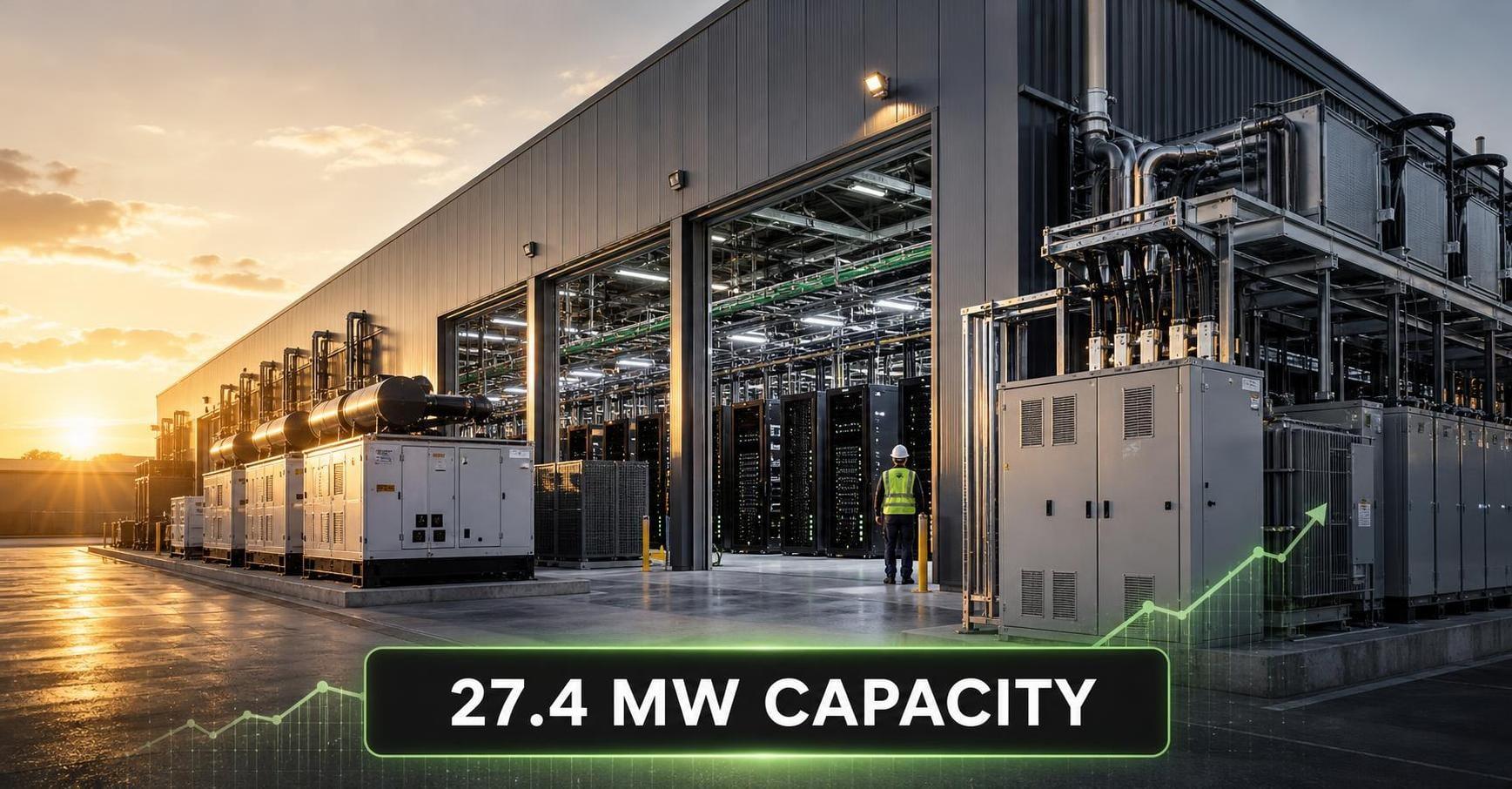
E2E Networks has secured 12.8 MW of additional data centre capacity, raising total capacity to around 27.4 MW and supporting its expanding GPU cloud and AI infrastructure business.
✨ महत्त्वाचे मुद्दे
E2E Networks has been scaling its accelerated computing infrastructure as demand rises for artificial intelligence workloads, training, inference and sovereign cloud deployments. The company has now secured about 12.8 megawatts of additional data centre capacity, taking its total available capacity to approximately 27.4 MW from around 14.6 MW.
The expansion represents an approximately 88 per cent increase in E2E Networks’ data centre capacity. The company said the additional infrastructure would support its growing business requirements and increasing demand for GPU cloud infrastructure and other artificial intelligence-related services.
The announcement is significant because data centre capacity, power availability and connectivity are critical constraints for cloud providers deploying high-performance graphics processing units, or GPUs. E2E Networks offers cloud GPU instances, storage, networking, managed artificial intelligence platforms and private cloud deployments to enterprises, developers, research institutions and artificial intelligence-native companies.
The company has been investing heavily in infrastructure to expand its AI computing footprint. Its live GPU fleet had increased to more than 5,100 units by June 30, 2026, including NVIDIA Blackwell B200 systems, H200 and H100 infrastructure. Management has also indicated that its flagship Blackwell capacity is fully utilised under a multi-year contract, while a further 1,024 B200 GPUs were planned for deployment during the current quarter.
The capacity addition follows a sharp improvement in operating momentum. Net sales rose 410.82 per cent YoY to Rs 223.76 crore in the September 2026 quarter, while profit after Tax stood at Rs 72.71 crore against a loss in the corresponding quarter a year earlier. In FY26, however, the company reported a net loss of Rs 15.57 crore as depreciation increased sharply following its infrastructure build-out.
The new data centre capacity creates room for further deployment of GPUs, networking and storage systems. Its commercial impact will depend on the pace at which E2E Networks commissions equipment, converts customer demand into contracted workloads and sustains utilisation across the enlarged infrastructure base.
As of 2:15 pm on November 12, 2026, E2E Networks shares were trading at Rs 539.45, up 4.99 per cent from the previous close of Rs 513.80. The stock remained about 27.9 per cent below its 52-week high of Rs 747.90, while its market capitalisation stood at around Rs 10,002.80 crore. Foreign institutional ownership increased by 1.25 percentage points to 2.53 per cent, while domestic institutional holding declined by 0.43 percentage points to 5.64 per cent.
What This Means for Investors
The added data centre footprint gives E2E Networks room to place more GPU, networking and storage equipment and supports its push into sovereign and private artificial intelligence cloud deployments. The size is material because it nearly doubles the infrastructure envelope available for growth. It could extend revenue capacity beyond the current fleet and help convert demand for training and inference services. However, secured power capacity does not itself generate billings. Returns will depend on equipment deployment, customer contracts, utilisation and pricing.
The development is supportive of the company’s growth strategy, particularly after the strong September-quarter revenue and profit recovery. It also raises the importance of execution discipline because E2E Networks has already committed substantial capital to GPU infrastructure and its borrowings had risen to Rs 450.40 crore by September 2026. Higher capacity can improve operating leverage if demand remains firm, but it may also increase depreciation, financing needs and margin volatility if deployment runs ahead of revenue conversion. The key monitorable will be the speed at which the new capacity translates into paying workloads and longer-duration contracts.
Disclaimer: The article is for informational purposes only and not investment advice.