IPO Slowdown is Temporary: Why India's Rs 4.6 Lakh Crore Pipeline Could Spark the Next Primary Market Boom
 आमच्यासोबत जोडा
 आम्हाला फॉलो करा
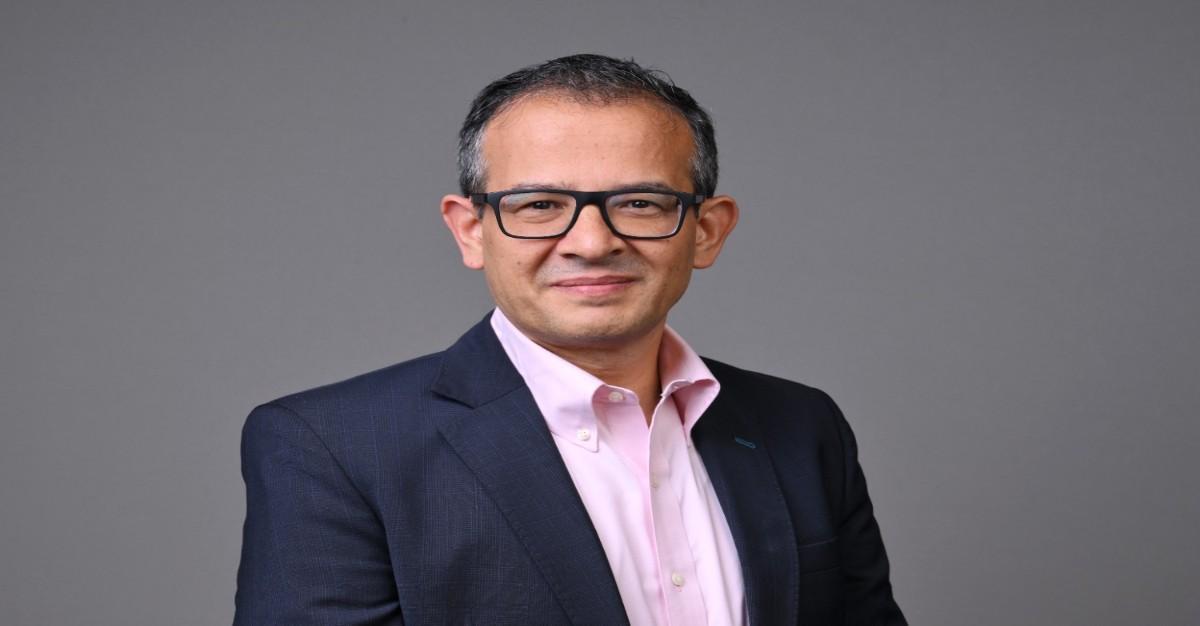
The article was written by Kamraj Singh Negi, MD & CEO, Investment Banking, Pantomath Capital
✨ महत्त्वाचे मुद्दे
Every market cycle has its pause. India's IPO market is currently in one of those phases where activity has moderated, prompting questions on whether the momentum has faded. I believe the answer is unequivocally NO.
What we are witnessing is not the end of the IPO cycle. It is a recalibration. Markets are taking a breather after a period of exceptional fundraising, while issuers wait for more favourable windows amid global uncertainty. The fundamentals that fuel India's primary market remain stronger than ever. The evidence lies in the numbers.
India’s IPO Pipeline Stands at Rs 4.6 Lakh Crore
India currently has an IPO pipeline of nearly Rs 4.6 lakh crore, one of the largest in the country's capital market history. This is not simply a collection of companies waiting to list. It represents the confidence of corporate India in the public markets as the preferred avenue for growth capital.
The pipeline spans financial services, manufacturing, defence, healthcare, technology, consumer businesses, infrastructure and new economy enterprises. Such diversity reflects the evolution of India's economy itself. Companies are preparing for public markets because they see long-term opportunities, not because they are chasing short-term valuations.
If promoters were uncertain about India's growth trajectory, this pipeline simply would not exist.
The Slowdown is About Timing, not Demand
The moderation in IPO activity has been influenced more by external developments than domestic fundamentals. Global geopolitical tensions, fluctuating oil prices, evolving interest rate expectations and intermittent market volatility have encouraged companies to postpone launches rather than compromise on pricing or investor participation. Capital raising is ultimately about choosing the right market window. History has consistently shown that strong businesses do not disappear during uncertain markets. They simply wait for the right opportunity to unlock value.
Selective IPOs: Should Investors Wait or Invest?
One of the biggest misconceptions during periods like these is that fewer IPOs imply weaker investor appetite. The reality is quite the opposite. Today's investors have become far more discerning. Businesses with strong governance, scalable business models, healthy balance sheets and reasonable valuations continue to receive overwhelming demand, while weaker propositions struggle to attract capital.
The recently concluded SBI Funds Management IPO is a compelling example. The issue reportedly attracted bids worth nearly Rs 3 lakh crore, making it one of India's most sought-after public offerings. Institutional and retail participation reaffirmed that liquidity remains abundant for quality issuers.
Similarly, the recent success of the Knack Packaging IPO further reinforces that investor appetite remains robust for quality issuers. The Rs 439.5 crore issue witnessed an overwhelming subscription of over 83x to 87x, led by strong participation across Qualified Institutional Buyers, Non-Institutional Investors and retail investors, before delivering a healthy double-digit listing premium.
Such outcomes underscore that capital is not scarce, it is selective, with investors continuing to back fundamentally sound businesses despite a relatively slower issuance environment. The lesson for investors is simple. Do not evaluate the IPO market by the number of issues. Evaluate it by the quality of businesses coming to market.
Domestic Liquidity Has Changed the IPO Landscape
Perhaps the biggest structural transformation in India's capital markets has been the emergence of a powerful domestic investor base. According to AMFI, Systematic Investment Plan (SIP) inflows reached Rs 31,781 crore in June 2026, a three-month high despite ongoing global uncertainties. Equity Mutual Funds witnessed net inflows of Rs 28,973 crore, reflecting renewed investor confidence and extending India's remarkable streak of uninterrupted equity inflows.
These are not speculative flows. They represent disciplined monthly savings from millions of Indian households that continue to participate in the country's long-term growth story irrespective of near-term volatility. This steady flow of domestic capital has fundamentally strengthened the resilience of India's primary markets.
Domestic Institutions Are Replacing Foreign Volatility
There was a time when India's IPO market was heavily dependent on Foreign Institutional Investors. That equation has changed. During June, Foreign Institutional Investors remained cautious amid global uncertainty and were net sellers in the cash market. However, Domestic Institutional Investors comfortably offset these outflows through sustained buying. This demonstrates an important structural shift.
India's equity markets today are supported by mutual funds, insurance companies, pension funds, family offices and retail investors whose investment decisions are driven by long-term fundamentals rather than global risk sentiment. As domestic participation continues to deepen, India's primary markets are becoming progressively less vulnerable to external shocks.
The Quality of IPOs Has Never Been Better
Another defining feature of the current cycle is the evolution of companies approaching public markets. Today's IPO pipeline is populated by businesses operating in sunrise sectors such as advanced manufacturing, defence, digital infrastructure, healthcare, financial services, renewable energy and premium consumer brands. These companies are aligned with India's structural economic priorities.
At the same time, regulatory oversight has become more robust, governance standards have improved significantly and valuation discipline has become sharper. Investors today have access to businesses that are fundamentally stronger, more transparent and better prepared for life as listed entities. That is a positive evolution for the entire ecosystem.
IPO Investing Requires a Long-Term Mindset
Retail participation in IPOs has grown exponentially over the past few years. However, investors must remember that IPOs should never be evaluated solely through the lens of listing gains. The real objective is to identify businesses capable of creating shareholder value over many years. India's greatest listed companies generated wealth because they consistently executed their business strategies long after their listing day. The same principle applies today. Investors should focus on management quality, governance standards, industry opportunity, earnings visibility and valuation rather than attempting to predict first-day price movements. Long-term wealth is created by owning quality businesses, not by chasing short-term momentum.
The Next IPO Boom Will Be Different
As macroeconomic uncertainties begin to moderate, the substantial pipeline waiting on the sidelines is expected to return to the market. This next phase of growth will be fundamentally different from previous cycles. It will be supported by deeper domestic liquidity, stronger regulatory oversight, better-governed companies, informed investors and one of the world's fastest-growing major economies.
A Rs 4.6 lakh crore IPO pipeline is more than a fundraising statistic. It is a reflection of India's entrepreneurial ambition and the confidence businesses have in the country's capital markets. Market cycles will continue to ebb and flow, but India's long-term growth story remains firmly intact. For investors, the real opportunity is not simply participating in the next IPO. It is participating in India's next decade of economic expansion through businesses that are choosing the public markets as their platform for growth.
The next primary market boom will not be driven by exuberance alone. It will be driven by conviction. And conviction has always been the strongest foundation for sustainable wealth creation.
Disclaimer: The opinions expressed above are of the author and may not reflect the views of DSIJ.