Ceat Limited
 Join Us
 Follow Us
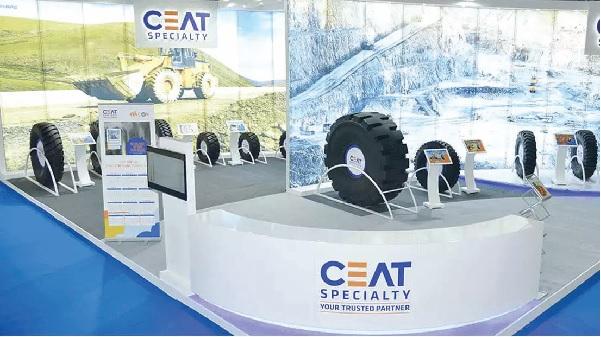
With the tyre industry expected to perform well in FY23 mainly due to easing input costs, increasing demand from original equipment manufacturers and the replacement segment, CEAT Limited is all set to capitalise on this upward spiral
✨ Key Takeaways
Established in 1958, CEAT Limited is the flagship tyre company of the RPG Group and is one of India’s leading tyre manufacturers. RPG Group is a global diversified conglomerate with businesses in the areas of tyre, infrastructure, information technology, pharmaceuticals, energy, plantations and venture capital. CEAT has been providing world-class products for more than 60 years and has a geographical footprint in more than 110 countries globally. It produces best-in-class, high-performance tyres for a wide range of vehicles, including two and three-wheelers, passenger and utility vehicles, commercial vehicles and off-highway vehicles.
CEAT has seven technologically advanced manufacturing plants in Mumbai, Nasik, Halol, Nagpur, Ambernath, Chennai and Sri Lanka. In FY 2021-22, despite challenges such as semiconductor shortage, crude and raw material price inflation and fluctuating demand from the market, the company utilised its production capacities up to 80 per cent across all the units. It has dedicated research and development centres at Halol in Gujarat and Frankfurt in Germany. It also has an extensive distribution network of more than 4,600 dealers, 475 distributors and over 51,000 sub-dealers. The company has taken an omnichannel approach to ensure tyre availability on all e-commerce platforms as well as through its own website, online, home delivery options, etc. It has more than 100 patent filings till date.
Sector Overview
The Indian tyre industry’s growth stagnated due to various external events in FY21 as compared to FY20. After two years of contraction, the Indian tyre industry witnessed recovery in FY22. Growth in FY22 was driven by increase in volumes. While the demand was favourable, higher input prices of key raw materials such as natural rubber and crude derivatives, supply chain disruptions and geopolitical conflicts kept industry margins and earnings under pressure. On an overall basis, the tyre industry is expected to perform well in FY23 mainly due to easing input costs, increasing demand from original equipment manufacturers (OEMs) and the replacement segment.
India continues to remain on the trajectory to be one of the top three tyre manufacturing destinations in the Asia Pacific by 2026. According to the Government of India’s Ministry of Commerce and Industry’s trade database, tyre export has significantly expanded across all the segments of tyres. As per the Automotive Tyre Manufacturers’ Association (ATMA), passenger car tyre exports increased by 200 per cent in the first three quarters of FY22 while truck and bus radial tyre exports has grown by 91 per cent. Netherlands, Brazil and the US are the three largest importing countries for passenger car tyres from India.
The Indian tyre industry is embracing new trends in the manufacturing process to meet the changing market dynamics and cater to the latest demands of the OEMs. Tyre companies are increasingly moving towards sustainable initiatives to meet the growing demands of various stakeholders towards achieving carbon emissions targets and long-term sustainable goals. The industry has entered the age of ‘smart tyres’, developing seamless connectivity between the digital and physical aspects of the product, which has brought a great positive impact on the overall quality, durability and reliability of the tyres. The emerging trend in the tyre industry is moving into the business model of product-as-a-service where technology plays a pivotal role.
Financial Overview
CEAT reported outstanding financial result for the quarter ended September 30, 2022. In Q2FY23, on a standalone basis, its net sales came in at ₹2,886 crore, up 3 per cent on a sequential basis, largely driven by a mix of both price growth as well as volume growth. EBITDA margins also surged 127 basis points on a sequential basis at 7.1 per cent. Profit after tax stood at ₹29.90 crore in Q2FY23 as against ₹2.5 crore in Q1FY23 and ₹36 crore in Q2FY22. On a consolidated basis, the company’s revenue closed at ₹2,894 crore, EBITDA margin stood at 7 per cent, an expansion of 96 basis points versus Q1FY22, while net profit stood at ₹6.4 crore.
During the quarter, the company made price adjustments in the two-wheeler segment, which positively impacted its margins. CEAT’s consolidated net debt increased by ₹197 crore during the quarter largely due to capex and movement in working capital. Interest cost also went up by about 11 per cent during the quarter due to higher debt and increase in interest rates. The management expects debt to increase further in the next two quarters of FY23. However, as margins and cash flows improve, a reasonable portion of its capex will come from internal accruals and hence incremental debt requirement will progressively come down.


Going forward, the management team expects the second half of this year to be better in terms of revenue and margins because of improving domestic demand and stabilising commodity prices. The company achieved its highest ever revenue in FY22 largely driven by stable demand coupled with increased sales realisation. Its consolidated revenue increased from ₹7,573 crore to ₹9,313 crore, indicating growth of 23 per cent. Revenue contribution from the two-wheeler and passenger vehicles’ tyre segments has increased over the years from 38 per cent in FY16 to 46per cent in FY22.
However, margins were impacted due to a sharp increase in raw material prices and high volatility in crude, resulting in lower profits for the year at a consolidated level. Operating profit for FY22 was recorded at ₹721.19 crore, down by 27.65 per cent on a YoY basis from ₹996.78 crore in FY21. Profit after tax shrunk by 89.44 per cent on a YoY basis to ₹41.83 crore. On a standalone basis, the company’s revenue for FY22 closed at ₹9,313 crore while operating profit and net profit stood at ₹701 crore and ₹54 crore, respectively. The company’s adoption of new technologies to produce best-in-class tyres across all categories has led to an improvement in its financials.

Capital and Capacity
Expansion For FY22, CEAT incurred approximately ₹959 crore in capital expenditure mainly for capacity maintenance, growth-related capacity expansion, and routine maintenance and wind projects. This capex was incurred from internal accruals as well as debt financing. Going forward, in FY23 the company has set aside approximately ₹900 crore for capex of which approximately ₹100-150 crore will be for routine capex and the balance will be for the development of growth-related new markets and new product developments as well as ESG-related projects. During FY22, CEAT ramped up the capacity of its greenfield project in Chennai with a capacity to produce approximately 96 lakh tyres per annum of passenger vehicle radial tyres when the project is fully completed.
The company’s brownfield project in Nagpur completed the first phase of expansion in FY22 and the plant is now in the second phase of expansion. CEAT’s two-wheeler tyre capacity would be approximately 2.7 crore tyres per annum when the project is fully completed. Further, in FY22, the company commenced the construction of its new truck bus radial tyre capacity at its greenfield project in Chennai. Approximately ₹5,200 crore has been earmarked for capacity expansion projects and this includes investments made in Halol, Nagpur and Chennai and Ambernath capacity expansion. These projects are being funded through internal accruals and external borrowings. Once commissioned, these capacity enhancement projects will enable the company to meet its growth requirements.
Outlook
Global tyre markets such as Europe and USA have shown strong demand post-pandemic as these markets are looking for a China Plus One strategy to de-risk supply chains. This is a great opportunity for the Indian tyre industry. CEAT gets almost 20 per cent of its revenue from overseas, with major contributions coming from Europe. The company has witnessed stellar growth in the European Union (EU) passenger segment. In FY22, the company entered several new markets such as Germany, France, Portugal, Slovania, Israel, Malavi, Bahrain and El Salvador. It has continued to strengthen its position in the two and three-wheeler markets in Nepal and Africa and has made an entry in Indonesia which is the largest market of its kind.
The company has also recently entered the Thailand and Oman markets with its truck and bus radials (TBR), globally benchmarked to the top performing products in the industry. Future outlook for CEAT’s international business looks promising and the management believes that the growth in the export market will be driven with focus on best-in-class products, excellent channel relationship and brand development initiatives, both offline and digitally. Through the launch of innovative products, tapping the premium category, long-standing relationships with value chain partners, enhanced manufacturing capacity, healthy brand recall and a strong retail and virtual presence, CEAT has been successful in implementing its strategy to gain market share in recent years.
Further economic benefits and the Production Linked Incentives (PLI) scheme for automotive and automobile industry with an optimistic outlook on the electric vehicle (EV) segment along with the market’s readiness has catalysed growth opportunities for the company. Though the tyre industry has seen unprecedented margin compression over the last two years, green shoots are coming to light. The pricing environment for the industry seems to be stable with all the players raising prices to pass on substantial cost inflation. Easing commodity prices and healthy demand momentum could result in swift and sustainable margin recovery. However, the shares of CEAT are currently trading at rich valuations and close to its 52-week high. Hence, we recommend HOLD.