Defence Sector In A Stronger Trajectory
 Join Us
 Follow Us
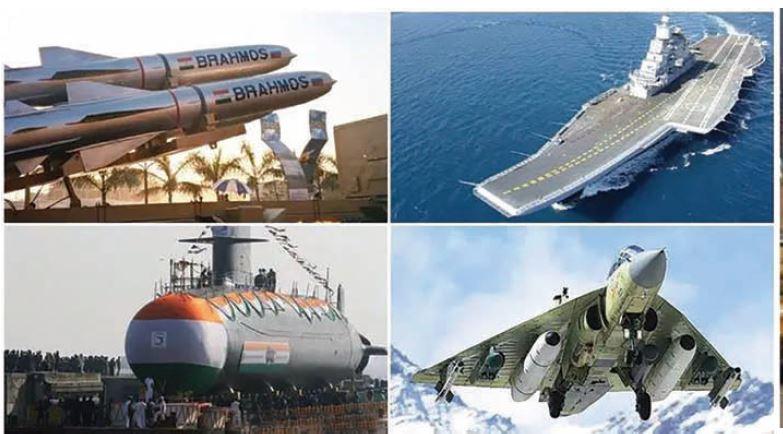
While geopolitical tensions between Russia and Ukraine continue, tensions between China and Taiwan are rising. These geopolitical events have heightened the necessity for increased defence spending. This article includes insights into the defence sector as well as recommendations of two excellent companies that have made a mark in this industry
✨ Key Takeaways
While geopolitical tensions between Russia and Ukraine continue, tensions between China and Taiwan are rising. These geopolitical events have heightened the necessity for increased defence spending. This article includes insights into the defence sector as well as recommendations of two excellent companies that have made a mark in this industry
“It is an unfortunate fact that we can secure peace only by preparing for war,” said John F. Kennedy who served as the 35th president of the United States of America. If you recall, the Nifty 50 opened with a gap down of 815.3 points on February 24, 2022. On this day, the Russians invaded Ukraine’s land. Although the markets have been sliding since October 2021 due to peak valuations, the Russia-Ukraine conflict has added fuel to this downward trend. The ongoing war has caused supply chain disruptions all around the world and has been one of the driving forces behind soaring inflation.
Even when things appear to be going well, the fight between the two is far from over. However, such a geopolitical occurrence has prompted governments throughout the world, including India, to enhance their national defence budget. In this article, we will examine the defence industry, its prospects and pick fundamentally solid companies from this sector. For the Indian economy, the defence industry is a key sector. With increased national security concerns, the sector is set to accelerate.
The continuing territorial disputes with Pakistan and China over control of the northern state of Kashmir and the north eastern state of Arunachal Pradesh, respectively, have increased demand for defence equipment in India. Over the previous five years, India has been among the top importers of defence equipment in order to obtain technical advantages over competitors such as China and Pakistan. Meanwhile, the government has taken many steps to stimulate ‘Make in India’ operations through policy support programmes in order to modernise its armed forces and minimise reliance on overseas’ defence acquisition.
The Global Firepower (GFP) yearly defence assessment evaluates nations based on 50 characteristics such as personnel, airpower, ground forces, naval forces, natural resources, logistics, financials and location. With a score of 0.0979 at the start of 2022, India emerged as the fourth best country in terms of its power index. On the other side, India has emerged as one of the world’s top importers of weapons, accounting for 11 per cent of the total worldwide arms’ sales. Alternatively, India has recognised the need to lessen its reliance on defence imports and prioritise exports.
As a result, the government has developed a number of projects for the defence sector. Under the initiative of self-reliance, the government has developed the ‘Defence Production and Export Promotion Policy 2020’ to encourage self-reliance in the defence industry. The Indian government lowered the foreign direct investment (FDI) restrictions in September 2020 to expand defence production in India and make the country a trustworthy weapon supplier to friendly countries. The automated method allows up to 74 per cent FDI for new licensees. Any FDI beyond 74 per cent would have to be approved through the government channel. Existing licensees can increase their foreign investment by up to 49 per cent by making declarations of modification or transfer. The Ministry of Defence has been allocated ₹ 5.25 lakh crore in the Union Budget 2022-23. Of all the core government departments, the Ministry of Defence has the greatest allocation of 13 per cent. This has proven to be one of the catalysts for the increase in defence stocks.

As shown in the table above, about 80 per cent of the defence stocks are trading near their 52-week high. This demonstrates the interest of market participants in defence stocks.
The table above depicts the trailing returns of defence stocks. Throughout the study period, the majority of stocks produced double-digit returns. In fact, a handful of the stocks even produced triple-digit returns in the last one year.

The graph below clearly demonstrates that over the past one year, defence stocks have beaten S&P BSE 500. Data Patterns (India) Ltd. and Paras Defence and Space Technologies Ltd., on the other hand, are missing in the above graph since they have not yet finished one year.

Conclusion
The Indian defence manufacturing business is changing drastically and more demand is predicted owing to national security concerns. Given the numerous government programmes, the domestic share is anticipated to expand to fulfil this need. For example, the import prohibition on helicopters and warplanes is expected to benefit Indian defence vehicle producers, particularly Indian defence aircraft manufacturers. Furthermore, the demand for greater indigenous content is projected to benefit Indian defence product producers while also encouraging international corporations to establish operations in India.
France and Russia have already committed to produce their products in India. According to Defence Minister Rajnath Singh, the Indian defence manufacturing industry is slated to rise from USD 850 billion to USD 1 trillion by 2022. Furthermore, it is expected to reach USD 5 trillion by 2047. This is a significant potential and undoubtedly portrays a positive picture for defence manufacturing. Singh has also approved the most recent list to reduce imports by defence public sector organisations and attain self-reliance in the defence sector. The Ministry of Defence recently issued a fresh list of 780 components and sub-systems that will be subject to a gradual import ban between December 2023 and December 2028.
The fresh push includes items used in fighter planes, trainer aircrafts, helicopters, submarines and tanks. According to the Ministry of Defence, the lists comprises 2,500 goods that have already been indigenised and 458 items that will be indigenised within the stipulated timelines. So far, 167 items out of 458 have been indigenous. Defence expenditures and earnings for defence contractors are predicted to stay essentially unchanged or expand in 2022-23 as military programmes continue to be vital to national defence, particularly in light of geopolitical challenges.
Global defence spending is predicted to rise roughly by 2.5 per cent in 2022 as major world powers continue to beef up their military in response to geopolitical concerns. In India, both the military and commercial aircraft sectors have significant development potential. The overall allocation, including pensions, of the three forces in 2022-23 is ₹ 4.93 lakh crore, or 94 per cent of the total military expenditure. The Indian Army receives 58 per cent of the defence budget with the Indian Air Force receiving 19 per cent and the Indian Navy receiving 16 per cent. This year, 25 per cent of the defence research and development budget is set aside for private business, start-ups and academia. This would assist the already thriving defence sector to grow even more.
Stock Recommendation
Bharat Dynamics Ltd
CMP (₹ ): 834.20
BSE CODE: 541143
Face Value(₹ ) : 10
52 Wk High/Low : 904.95 / 368.10
Mcap Full ( ₹ Cr.) : 15,289.32
Bharat Dynamics Limited (BDL), a Government of India enterprise under the Ministry of Defence, was founded in 1970 and produces torpedoes, anti-tank guided missiles (ATGM), surface-to-air missiles (SAM) and other allied defence equipment. BDL has three manufacturing facilities which are located at Kanchanbagh, Hyderabad in Telangana, Bhanur, Sangareddy District in Telangana and Visakhapatnam in Andhra Pradesh. The company’s head office is in Hyderabad. BDL is currently establishing a new facility in Amaravati, Maharashtra. BDL has also built a solar power plant and a static test facility at Telangana’s Ibrahimpatnam unit.
Recently, the company began a new initiative of exporting certain defence equipment and has formed strategic partnerships with the government as well as private companies. The company employed 2,812 people as of March 31, 2021. For the first quarter ending June 31, 2022, Bharat Dynamics reported net sales of ₹ 686.51 crore. This is a rise of 473.08 per cent over the net sales reported same time last year. Likewise, the company witnessed an exponential increase in the operating income as it climbed to ₹ 78.78 crore from an operating loss of 6.09 crore in Q1FY22.
Bharat Dynamics also reported positive quarterly net profit of ₹ 39.86 crore as compared to net loss of ₹ 20.95 crore in the previous year same quarter. Furthermore, the company’s full year financials reveal that its net sales climbed to ₹ 2,712.26 crore in FY22 from ₹ 1,807.47 crore in FY21, leading to an increase of 50.06 per cent. The operating profit rocketed by 90.58 per cent to ₹ 837.28 crore in FY22 from ₹ 439.33 crore in FY21. Similarly, the net profit for FY22 stood at ₹ 499.92 crore, delivering an exceptional return of 93.95 per cent from ₹ 257.77 crore reported the past year.
The company has various agreements with major foreign original equipment manufacturers (OEMS). Moreover, new avenues are being explored with leading foreign OEMs for production of missile weapon systems in India by the company. It has also set up an exclusive missile development group for the development of futuristic weapons. Bharat Dynamics has also designed and developed unguided bombs for dropping from drones as per the requirement of Military College of Electronics and Mechanical Engineering (MCEME), Secunderabad.
Meanwhile, new orders are in the pipeline worth about ₹ 8,000 crore. For BDL, exports are anticipated to be a major development driver. In order to do this, BDL has signed MoUs with international OEMs during the course of the year. BDL is also investigating other business options with overseas’ OEMs. Recently, BDL and Thales, UK, inked a ‘Teaming Agreement’ to establish a manufacturing facility in India for the production of the STAR Streak Missile System through the transfer of technology. The Indian government has compiled a list of prohibited imports in an effort to support self-reliance in the field of defence and the development of the import restricted list will provide the Indian industry with numerous prospects.
A sizeable rise in order inflows can be anticipated as a result. The Indian defence industry is undergoing change. India’s armed forces are the second-largest in the world because of the increase in defence-related spending by the Ministry of Defence. India intends to invest ₹ 10,33,490 crore on military modernisation over the next 7-8 years in order to achieve self-reliance in the manufacturing of defence goods. With growing national security concerns, demand growth is set to pick up speed. In the previous two years, the country’s exports of defence products have grown significantly.
India’s defence spending for 2020–21 increased by 9.37 per cent over the budget estimates for the previous year to ₹ 24,71,378 crore (USD 67.4 billion). With its cutting-edge facilities and many years of experience producing different types of defence equipment, the company is able to grow its market both inside and outside of India. BDL’s senior management and staff are highly skilled in the production of defence-related equipment. BDL now has additional opportunities as a result of the ‘Make in India’ policy’s increased emphasis on domestic defence production.
To guarantee the timely delivery of supplies, BDL has a robust supply chain made up of suppliers and partners with the necessary technical expertise. Ministry of Defence, Government of India, is BDL’s main client. The government has been allocating more money for the purchase of defence equipment. The company has recently successfully completed export orders and received more inquiries from other nations as a result of the opening up of the export market and the ease of doing business. Taking into consideration the performance of the company, the prospects that lie ahead and the government’s push towards self-reliance, we recommend BUY.
MTAR Technologies Limited
CMP (₹ ): 1,664.70
BSE CODE: 543270
Face Value(₹ ) : 10
52 Wk High/Low : 2,555.65 / 1,211.85
Mcap Full ( ₹ Cr.) : 5,120.55
MTAR Technologies Limited was founded in 1969 by three founders – P Ravinder Reddy, K Satyanarayana Reddy and P Jayaprakash Reddy – with the objective to address the growing post-embargo engineering requirements of India. The company now enjoys a rich experience of five decades and a prominent position in India’s civil nuclear power, space and defence and clean energy sectors. The company is led by Parvat Srinivas Reddy who possesses nearly three decades of vast experience in engineering and construction sectors. He was instrumental in establishing the clean energy and export defence verticals at MTAR Technologies.
The company specialises in the design and fabrication of complex assemblies like fuelling machine head, bridge and column, coolant channel assemblies and drive mechanisms for the core of nuclear reactors as well as liquid propulsion engines, electro-pneumatic modules for space launch vehicles and base shroud assemblies and airframes, etc. for missiles in the space and defence sectors. It also has domain expertise in SOFC and hydrogen units for fuel cells in the clean energy sector.
The company’s headquarters are located in Hyderabad and its seven manufacturing units, including the new unit at Adibatla, are located in the same city. These facilities have been invested with high-tech CNC milling, turning, floor boring, jig boring machines, etc. along with assembly and testing facilities as well as specialised fabrication, quality control, heat treatment, surface treatment and other specialised processes. The company is a leading national player in precision engineering catering to strategic sectors on account of its deep technology commitment.
MTAR Technologies addresses the growing needs of marquee Indian customers like Nuclear Power Corporation of India Limited, Indian Space Research Organisation, Defence Research and Development Organisation and Hindustan Aeronautics. Its global customers comprise respected organisations like Bloom Energy, Rafael Advanced Defense Systems Ltd. and Elbit Systems. The company was listed on National Stock Exchange and Bombay Stock Exchange in March 2021. The promoter’s equity shareholding in the company is 47.50 per cent. The market capitalisation of MTAR Technologies as on September 1, 2022 was ₹ 5,010 crore.
The company’s quarterly standalone financials indicate that net sales for Q1FY23 were at ₹ 91.01 crore as compared to net sales of ₹ 54.03 crore for Q1FY22, recording a 68.43 per cent growth. Operating profit for Q3FY22 was at ₹ 28.76 crore as compared to the operating profit in last year’s same quarter which was ₹ 17.06 crore, up by 68.54 per cent. The net profit has also been on the higher side and stands at ₹ 16.22 crore since the same period last year which was at ₹ 8.71 crore, a jump of 86.22 per cent.
The annual performance of net sales was at ₹ 322.01 crore for FY22, which has increased by 30.67 per cent from last year’s figure of ₹ 246.43 crore. The operating profit in FY22 stood at ₹ 103.18 crore as compared to ₹ 84.39 crore for FY21. The company has a substantial net profit of ₹ 60.87 crore for FY22 as compared to profit after tax of ₹ 46.07 crore for FY21, reflecting growth of 32.15 per cent. MTAR Technologies anticipates receiving new orders of ₹ 203 crore in 1QFY23, bringing its total order book to ₹ 766 crore.
Bloom Energy has granted a new order for ₹ 175 crore out of a total of ₹ 203 crore, thus accounting for 86 per cent of the total new order. The ASP for refuelling systems and electrolysers is expected to generate ₹ 600 crore worth of order inflows in Q2FY23 alone, according to the management. Operating cash flow (OCF) significantly increased to approximately ₹ 16.2 crore in 1QFY23 as net working capital days decreased to 249 days from 275 in FY22. By raising the credit period to 60 days for vendors that were paid in advance against orders, closely monitoring receivables on a weekly basis and lowering inventory levels, the management intends to cut working capital days to below 200 by the end of the year.
The company has recorded exceptional performance across all segments to ensure profitable and long-term growth. As the order book fills up quickly, the management is concentrating on strong execution. The business is making investments to increase its SOFC capacity and anticipates operating at a much greater volume in H2FY23. Despite supply chain challenges, the company is optimistic in its ability to deliver and flourish. MTAR Technologies also plans to start shipping items like cooling channel assemblies and fuelling machine heads in its nuclear business starting in Q2FY23. The company is still optimistic that the nuclear business would generate between ₹ 80-90 crore in top-line revenue in FY23.Hence, we recommend BUY.
(Closing price as of Sept 02, 2022)