Does It Make Sense To Invest In Business Cycle Funds?
 Join Us
 Follow Us
Business cycle funds monitor the economic cycle and invest accordingly. Many of you may find this concept fascinating, but is it worthwhile? This article discusses what business cycle funds are, how they work, and if investing in them is really a good idea.
✨ Key Takeaways
Mutual funds are one such investment vehicle that provides a large variety of investment themes suited for both retail and high net worth individuals (HNI). Of course, having so many alternatives might be confusing for investors. As a result, we always work towards making things as simple as possible for our readers and investors, particularly those having limited investment experience. As previously said, mutual funds provide a wide range of investing themes. Business cycle funds is one such theme. Despite the fact that there are just five schemes in total excluding the recently launched Kotak Business Cycle Fund, they have amassed assets under management (AUM) of ₹9,938.8 crore as of August 2022.

However, most investors are uninformed of how it works and if it is prudent to invest in them. In this post, we will explain what business cycle funds are, how they function, and whether or not it is a good idea to invest in them.
Defining Business Cycle Funds
Business cycle funds are defined as those that recognise economic patterns and invest in sectors and companies at various phases of the business cycle. During economic expansion, business cycle funds would most likely invest in stocks from cyclical sectors such as Mid-Cap and Small-Cap businesses, as well as in growth-oriented sectors. In the phase of slowdown, however, they migrate to defensive businesses such as larger and more reliable companies. Unlike most other funds, which use a bottom-up investment technique, these funds use a top-down method. This means they pick sectors and companies within them first, based on macroeconomic situations and thematic patterns.
These funds are typically actively managed since the fund manager makes decisions about which industries and companies to invest in based on his or her evaluation of the macroeconomic environment. These funds look for sectors that are showing signs of growth in their business cycles and are anticipated to beat the benchmark indices. The primary goal of these funds is to provide investors with a solid opportunity to ride the economic wave by investing in firms that are projected to capitalise on the current environment. Do they, however, add value to an investor’s portfolio? In this story, we will assess it further.
Understanding the Business Cycle
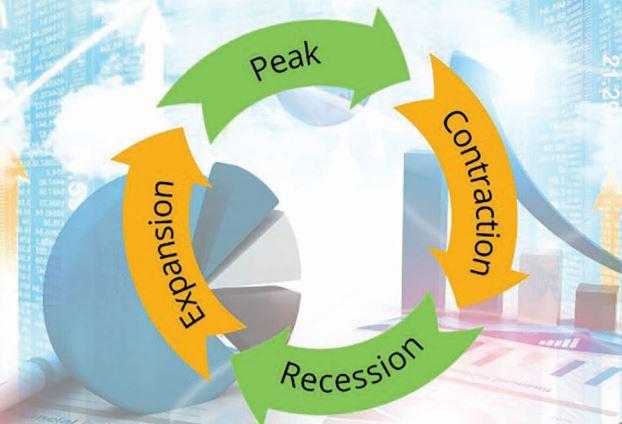
In actuality, there are nearly always continual variations, with periods of expansion followed by contraction, followed by expansion again. This cycle continues indefinitely, prompting economists to refer to the process as a business cycle.

To understand the movement and performance of the equity market, it is imperative to comprehend these four phases.
Expansion — The Gross Domestic Product (GDP) of an economy rises throughout the expansionary phase of a business cycle. The pace of GDP growth might be slow, moderate or quick, depending on the conditions. People often have greater disposable income during this stage. This money is then utilised to buy more products and services. This growth in goods and services consumption pushes up consumer demand
Peak — A business cycle’s peak occurs when the GDP of an economy reaches its highest level. Everything is at its maximum point, including consumer demand, employment and production as well as economic activity. Despite being a favourable phase, peak can lead to inflation if it lasts for a long enough period of time.
Recession — When an economy’s GDP falls for two consecutive quarters, the economy is officially declared to be in recession. The effects of a recession on the economy are multifaceted. The absence of economic activity during a recession causes consumers to conserve rather than spend, lowering consumer demand.
Depression — If left uncontrolled, recession can progress into depression. The economy reaches its lowest point during this time. In this situation, consumer spending and income are at their lowest points, unemployment is at its highest point, and there is an abundance of products and services.
Performance of Business Cycle Funds
To better understand the performance of business cycle funds, we examined the net asset value (NAV) of each fund and compared it to its benchmark, Nifty 500.

Only the L&T Business Cycle Fund has a longer history, as seen in the graph above, whereas the others were launched in 2021. Therefore, it would be challenging to evaluate their performance over such a short period of time. As a result, in the following paragraphs, we will compare the performance of the L&T Business Cycle Fund to that of the Nifty 500 index.
"At some point in a business cycle, one has to get greedy. And the time to get greedy is when everybody's running for the hills with fear." — BRUCE BERKOWITZ

We examined the three-year rolling returns of the L&T Business Cycle Fund and the Nifty 500 index in the graph above. According to our findings, the said fund underperformed its benchmark index. The average three-year rolling returns of the fund were 7.44 per cent while the Nifty 500 was 10.35 per cent. The fund fared poorly even in terms of minimum returns when compared to Nifty 500. This demonstrates that despite taking more risk than the benchmark, the fund was unable to outperform it.

We then examined the three-year rolling returns distribution of the L&T Business Cycle Fund and the Nifty 500, as shown in the table above. We discovered that, when compared to Nifty 500, the fund earned the most negative returns.

As of August 2022, the accompanying table covers the sectoral exposure of all available business cycle funds. Only L&T Business Cycle Fund and Aditya Birla Sun Life Business Cycle Fund have a higher exposure to cyclical sectors in the portfolio. However, among others, the L&T Business Cycle Fund is well-positioned in terms of portfolio.
Conclusion
Business cycle funds attempt to predict the economic cycle’s expansion, peak, recession and depression. Although this concept appears to be intriguing on paper, it is actually quite difficult to time the economic cycle. Additionally, investing in cyclical industries is a move that might backfire and any wrong decision would prove to be devastating. According to our study, practically all business cycle funds have a cyclical sector allocation of more than 50 per cent.
There are currently far less funds available. Aside from the L&T Business Cycle Fund, no other fund has a longer NAV history. As a result, assessing the performance of this theme is unreasonable. Nonetheless, we attempted to analyse and comprehend the performance of the L&T Business Cycle Fund and the Nifty 500 index. In comparison to the benchmark, this demonstrates how poorly the fund has fared. However, measuring the theme’s success or failure just on the basis of one fund makes little sense.
As a result, we would advise our readers not to invest in this uncharted terrain. Let more fund houses launch funds in this theme, and wait at least three to five years for these funds to remain active before making any conclusions about the theme’s performance. However, if you are an aggressive risk-taker looking for diversification, you can devote no more than 5 per cent of your overall portfolio to business cycle funds. Others are advised to avoid investing in these funds.