Don’t Stop Your SIP Now!
 Join Us
 Follow Us
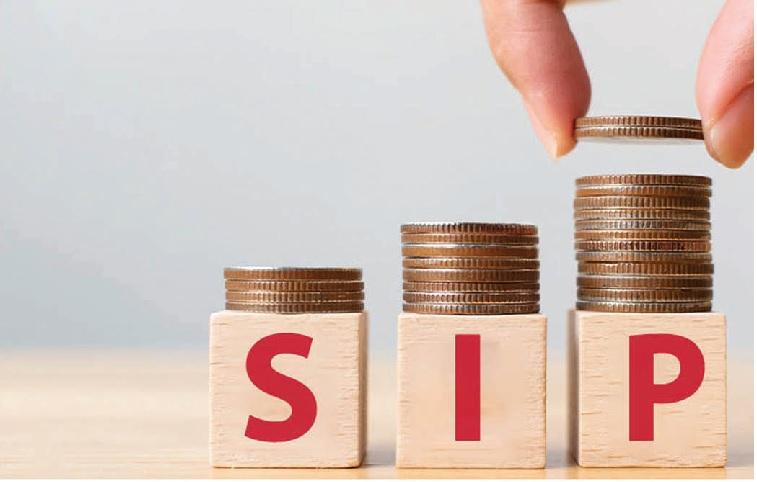
As soon the market begins to take a downward turn or shows signs of volatility, there are many investors who engage in a knee-jerk reaction and stop their systematic investment plans (SIPs) to cut back the assumed losses. But that’s exactly what should not be done. SIPs must be allowed to go forward on their journey of creating wealth over the long term. The article takes a closer at how you should strategise your SIP plan
✨ Key Takeaways
As soon the market begins to take a downward turn or shows signs of volatility, there are many investors who engage in a knee-jerk reaction and stop their systematic investment plans (SIPs) to cut back the assumed losses. But that’s exactly what should not be done. SIPs must be allowed to go forward on their journey of creating wealth over the long term. The article takes a closer at how you should strategise your SIP plan
The Indian stock market has been scaling new heights in recent times while also becoming volatile at times, leaving a majority of the retail investors in a conundrum. A question often asked is whether they should stop their systematic investment plans (SIPs) to avoid potential losses at the peak. While the temptation to time the market and protect your hard-earned savings is understandable, stopping your SIP at a market high can be a costly mistake for several reasons. Just ask yourself a question: Have you invested or started investing when the market was at its lowest point?
If the answer is yes, then ask yourself another question: Did it fall again from your entry level? If yes, then your calculations regarding the market were wrong. So, why think about trying to time the market and press the pause button on the SIP, assuming it will fall? The market gains when it has strength and falls when it has weakness. Therefore, selling or taking a pause on the SIP when the market has good strength is probably not a good choice. SIP involves investors making regular, automated contributions to mutual funds at set intervals.
The primary goal of SIP is to benefit from the rupee-cost averaging, which means purchasing more units when the prices are low and fewer units when the prices are high. Another significant facet of SIPs, as implied by the name, is their systematic nature. SIPs are designed to offer a consistent and disciplined method for making investments. The current market level is higher relative to the historical levels. Looking ahead, there is potential for further significant growth. To benefit out of this movement, it’s crucial to maintain a long-term perspective, exercising both patience and persistence in your investment approach.
Consistently investing over a very long-term horizon is the key to building substantial wealth. When people put on pause their regular investments at times when the market might go down, they do it to safeguard their money. But by doing this, even if they protect their money from falling, they might also lose the chance to make more money when the market goes up again, depending on whether they can time the entry point once again. Investing isn’t solely about investing. It also encompasses saving and growing your money over time. So, don’t overlook the importance of saving in this process.
Case Studies
Let’s begin from the beginning. When you initiated your SIP for the first time, you likely had a specific goal in mind for saving and investing. Now, ask yourself another question: Why are you considering stopping the SIP? If there’s a significant reason, it might be justifiable. However, if it’s merely because the market is at an all-time high or low, then don’t let that be the sole reason to halt your investments or stop the SIP. To comprehend the cost associated with putting on pause your SIP investment, let’s analyse three scenarios.
Case 1: An investor hits the pause mode of the SIP on February 26, 2021, primarily because the market has experienced a noteworthy rally and corrected by approximately 4 per cent in a single day, causing concern that the market might significantly correct from its current peak. Here is the approximate return if you had ended your SIP on February 26, 2021, which was started on March 2020 due to the market’s significant rally and a subsequent correction of around 3.8 per cent in a single day, especially when the market was at its peak. So, the annualised return works out to 72.5 per cent but the total profit stands at 32.9 per cent of your entire investment.

Case 2: Let’s say that if you had not stopped your SIP on February 26, 2021. From the day of putting on pause the SIP, the Nifty index further rallied by approximately 28 per cent in the next eight months, reaching highs of around the level of 18,600 by October. If you had continued your SIP, it could have potentially generated returns until that day. You would have got 48 per cent on your investment though the annualised return would have declined to 57.91 per cent.

Case 3: If you had not put on pause your SIP and consistently kept investing till now, the return would have been 42.94 per cent on your portfolio with an annualised return of around 20 per cent.

From the above analysis, it is clear that though the annualised return may have declined if you had invested for a longer duration, the absolute value would have witnessed a rise in the long term, which is important for your investment and goals.
Restarting SIP
If you have stopped the SIP for any such reason as fear of a market correction, particularly at its peak, what could be the re-entry point? It is essential to note that any significant market rally often experiences a retracement, which differs from a major correction. Historical analysis indicates that after a robust market surge, a retracement occurs, offering an opportunity for investors to re-enter and benefit from the upward trend. Here, we would like to introduce a tool called the Fibonacci level. Many investors or traders have full faith in the relevance of the Fibonacci numbers.
Fibonacci analysis is applicable when there’s a distinct upward or downward movement in prices. Typically, when a stock moves sharply either upwards or downwards, it tends to retrace before its subsequent move. For instance, if a stock has surged from Rs50 to Rs 100, it is probable that it might retract to around Rs 70 before advancing to Rs 120. Following the post-pandemic downturn, the NSE index Nifty 50 has exhibited an impressive rally, surging approximately 148 per cent from its low of 7,511 to 18,600. Subsequently, the market has retraced to essential Fibonacci levels, notably the 23.60 per cent mark of this rally.
Many investors employ the Fibonacci levels to predict potential bounce-back points in the market trend, with the second most significant Fibonacci level being 38.20 per cent of the initial rally. To calculate this, consider the rally from 7,511 to 18,600 (a surge of 11,089 points) and compute 23.60 per cent of 11,089 points. This results in 2,617 points. When subtracted from the high point of 18,600, it brings the potential retracement level to 15,983.
This figure indicates that the index may retrace to this level,possibly serving as a robust demand zone for investors and supporting the continuation of the rally. Consequently, this calculated area might be a suitable region to consider restarting a paused SIP, should such a situation arise. To make it easier to recall, it is suggested to use 25 per cent instead of 23.6 per cent when considering restarting a paused SIP
Benefits of SIP
1) Rupee-Cost Averaging - One of the biggest advantages of SIPs is rupee-cost averaging. This powerful mechanism works by buying you more units when the market is low and fewer units when it’s high. Over time, this evens out your purchase price, reducing the impact of market volatility and potentially boosting your returns in the long run. Imagine you started a SIP of Rs 1,000 per month in a mutual fund five years ago. When the market was low, you might have bought 100 units per month. But now, when the market is high, you might only be able to buy 50 units. This means you have automatically accumulated more units at lower prices, which can significantly benefit you when the market eventually corrects.
2) Timing the Market is a Myth - Predicting the market’s ups and downs consistently is nearly impossible, even for seasoned experts. Stopping your SIP based on the assumption that the market has reached its peak could mean missing out on potential future gains. Remember, the market has historically trended upwards over the long term, and missing even a few good months can significantly impact your returns.
3) Compounding - The Magic of Long-Term Investing Albert Einstein famously called compound interest the “eighth wonder of the world”. When you invest regularly through SIPs you earn returns not only on your initial investment but also on the reinvested earnings. This compounding effect works like magic over time, exponentially increasing your wealth. Stopping your SIPs disrupts this compounding process, potentially sacrificing significant long-term gains.
4) Discipline is the Key to Investment Success - Investing is a marathon, not a sprint. Sticking to your SIP, regardless of market fluctuations, instils discipline and helps you stay on track towards your financial goals. Stopping your SIP at market highs is like giving in to emotional impulses and can derail your long-term investment strategy.
5) Focus on Your Goals, Not the Noise - Market movements are temporary, while your financial goals are long-term. Don’t let short-term volatility distract you from your long-term investment objectives. Keep your SIP aligned with your goals, and trust the power of consistent investing to help you achieve them.
To conclude, remember that SIPs are designed for wealthcreation over the long term. By staying invested through market ups and downs, you leverage rupee-cost averaging, avoid the timing trap, and benefit from the magic of compounding. So, stay calm, stay disciplined, and keep your SIP going – the market will reward you for your patience.
Cautionary Insights from Historical Declines
When can an investor determine if the market has potentially reached its peak and might correct from that point? Well, there isn’t a thumb rule as the market is supreme, but we can refer to historical data for insights. In our analysis, focusing on Nifty 50, we examined two major market falls that are widely known as those of 2008 and 2020. To exercise caution, one might note instances when the market experienced a sharp decline of around 5 per cent in a single day. How do we arrive at this figure? Before the significant markets crashed, notable occurrences took place.
On January 18, 2008, the Nifty fell by 5 per cent in a single day, followed by a subsequent drop of over 8 per cent on the next trading day during the 2008 crash. Similarly, during the 2020 crash, the Nifty witnessed a decline of around 5 per cent on March 9, 2020, followed by an over 8 per cent fall the next day. In both the instances, the market was at its peak or trading near its peak. However, it’s important to note that there are exceptional days within these calculations. There were instances when the market corrected around 5 per cent, but instead of leading to a significant downturn, it eventually recovered after some days without registering a substantial decline.
Conclusion
Late veteran investor Rakesh Jhunjhunwala built wealth from a stock named Titan Limited. The key was holding the stock patiently. If he had sold all his units after, let’s say, a 100 per cent gain, then he might not have amassed his wealth. In times of market volatility, it’s crucial for investors to maintain their SIPs. Persisting with systematic investment plans during market downturns allows investors to accumulate more units, potentially leading to substantial gains over the long run when the market rebounds.
Over a span of more than 10 years, equity SIPs have demonstrated their effectiveness even when timing the entry and exit points is not actively managed. Short-term fluctuations often misrepresent the true potential of SIPs. Discontinuing SIPs prematurely can significantly disrupt returns and hinder progress towards long-term financial objectives.
SIPs are ideally suited for navigating volatile markets rather than during periods when the markets remain stagnant or follow a particular direction. In times of volatility, SIPs offer the advantage of acquiring assets at lower costs. Therefore, when it comes to SIPs, the key is to maintain consistency and perseverance despite market fluctuations. Persisting through SIPs can prove to be advantageous for long-term investment objectives.