Global Markets Retreat On Hawkish Federal Policy Statement
 Join Us
 Follow Us
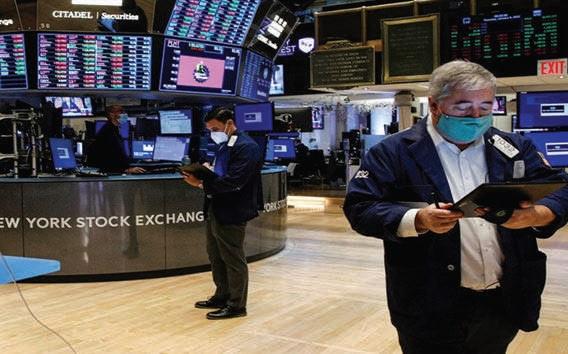
Various economic activity reports published in the past fortnight have offered new information on the condition of global markets. High inflation, supply constraints and Federal Reserve rate hikes have all contributed to recession fears, but consumer spending has been encouraging
✨ Key Takeaways
After a senior Federal Reserve policymaker appeared to dash hopes that inflationary pressures had peaked, most of the Wall Street stocks gave back the significant gains they had made during the fortnight. The S and P 500 index’s growth-oriented technology and communication services sectors underperformed, with the latter being adversely affected by a significant drop in FB’s parent company Meta Platforms. Even as they gave rise to optimism that the economy would avoid a recession, certain upward surprises in the week’s economic statistics may have increased rate anxieties.
In July, retail sales performed better than anticipated, increasing 0.7 per cent after adjusting for the volatile gas and automotive sectors. Notably, given the minimal increase of 0.3 per cent in core inflation excluding food and energy, sales increased strongly on an inflation-adjusted basis. Additionally impressive was industrial production, which increased by 0.6 per cent in the month, much above consensus projections. Contrary to forecasts for an increase, weekly jobless claims ticked lower. However, as consumers continued to cut down on discretionary spending, most reported a significant decrease in earnings, while the housing statistics remained dismal.

In response to fresh concerns that central banks would need to tighten their policies significantly in order to combat stubbornly high inflation, shares in Europe declined. The STOXX Europe 600 index for all of Europe finished the week 0.80 per cent lower in local currency terms. Most of the important stock indices decreased. The DAX index in Germany fell 1.82 per cent, the CAC 40 index in France fell 0.89 per cent and the FTSE MIB index fell 1.90 per cent. However, due to the UK pound’s decline in value against the US dollar, the FTSE 100 index in the UK increased by 0.66 per cent. As investors responded to encouraging US economic data reported late last week, Japanese shares were steadily up during the first half of the week.
"In July, retail sales performed better than anticipated in the US, increasing 0.7 per cent. Notably, given the minimal increase of 0.3 per cent in core inflation sales increased strongly on an inflation-adjusted basis."
The optimistic mood, however, was short-lived as the minutes from the US Federal Reserve’s July meeting suggested that rates would remain higher for longer. However, both Nikkei 225 and TOPIX ended the week moderately higher, up 1.3 per cent and 1.1 per cent, respectively. Due to poor economic statistics, an increase in virus cases and drought in several regions, China’s stock markets recorded a loss last week. The CSI 300 index, which monitors the biggest listed companies in Shanghai and Shenzhen, fell 1 per cent, while the broad, capitalisationweighted Shanghai Composite index fell 0.6 per cent.