Global Markets Tumble As Economies Stumble
 Join Us
 Follow Us
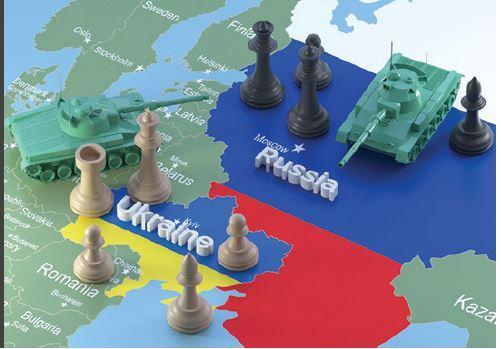
In particular, the European markets saw a fall due to the possibility of a ban on importing crude oil and natural gas from Russia
✨ Key Takeaways
In particular, the European markets saw a fall due to the possibility of a ban on importing crude oil and natural gas from Russia
US benchmark indices Dow Jones, Nasdaq and S & P 500 have fallen by almost 5 per cent each in the past two weeks. Oil prices gave up their gains, diving into negative territory after surging above USD 130 earlier in the second half of the fortnight. The prices jumped as markets reacted to supply disruptions emerging from Russia’s ongoing invasion of Ukraine and the possibility of a ban on Russian oil and natural gas by the US and its allies. Executives at some of the world’s biggest oil and gas producers said that they are ramping up their crude production as US gasoline prices surged to USD 4 a gallon. Federal Reserve Chairman Jerome Powell has given a definite nod to interest rate hike despite the global environment.
However, he has stated that the rate hike will be in the range of 25 basis points instead of 50 basis points. According to CNBC, many technology and technology-adjacent companies currently valued at USD 1 billion or more have lost at least 75 per cent of their value from their 52-week highs. Over the fortnight, Hong Kong benchmark index Hang Seng dropped 9.37 per cent and the French benchmark index CAC 40 also was down by 10.70 per cent. The Russian ruble also dropped sharply over the last two weeks as inflation surged, creating new anxiety for Russian consumers. Russia’s economy is less than one-tenth the size of the US and economists believe it will shrink even more.
"The Chinese government has recently set a GDP growth target of around 5.5 per cent for 2022, which is its lowest GDP target in decades. "
In addition, rating agencies Fitch and Moody’s have downgraded Russia by six notches to ‘junk’ status, stating that the sanctions imposed by the western nations have weakened Russia’s ability to service debt and will eventually weaken the economy.

The US, the European Union and the United Kingdom have limited the ability of Russia’s central bank to draw on more than USD 600 billion in foreign currency reserves. Germany’s DAX index has fallen to 11.11 per cent during the fortnight. European markets also saw a fall due to the possibility of a ban on importing crude oil and natural gas from Russia, which is being discussed along with the US government.
Such a move could pose a risk of stagflation, which is a period of slow growth and high unemployment coupled with high inflation for the global economy. In other news, the Chinese government has set the lowest GDP target in over 30 years. Chinese Premier Li Keqiang announced an unusual and extremely low GDP target of around 5.5 per cent, the lowest since 1991, in his speech at the opening of the annual session of China’s ‘rubber stamp’ parliament. This move comes as the country needs to maintain stable employment, basic living needs and guard itself against risks in the near future. Over the fortnight, Shanghai Composite was down by 1.23 per cent and Japanese Nikkei was down by 3.44 per cent.