Induction Stocks in Focus: TTK Prestige, Stove Kraft Surge Up to 15% Amid LPG Supply Concerns
 Join Us
 Follow Us
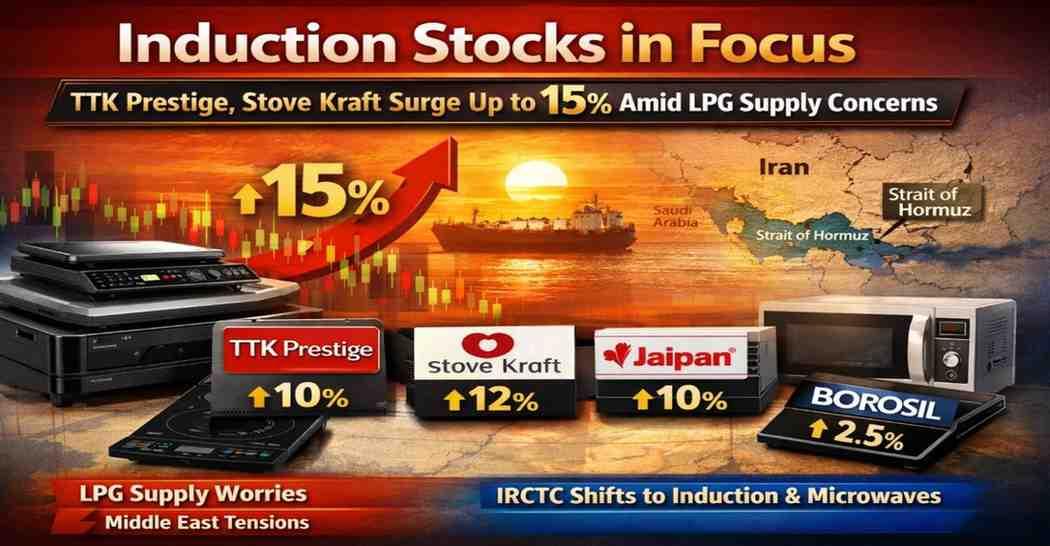
Butterfly Gandhimathi Appliances gained about 15 per cent and Stove Kraft climbed around 12 per cent. Shares of Borosil also advanced nearly 2.5 per cent.
✨ Key Takeaways
Shares of electric kitchen appliance makers came into focus on March 11 as concerns over a potential LPG supply disruption raised expectations of higher demand for alternative cooking solutions such as induction cooktops.
Stocks such as TTK Prestige and Jaipan Industries rose as much as 10 per cent during the session. Meanwhile, Butterfly Gandhimathi Appliances gained about 15 per cent and Stove Kraft climbed around 12 per cent. Shares of Borosil also advanced nearly 2.5 per cent, reflecting investor optimism that consumers and institutions could shift toward electric cooking appliances if LPG availability becomes uncertain.
Amid LPG supply concerns, Indian Railway Catering and Tourism Corporation (IRCTC) has instructed static catering units at railway stations to switch to alternative cooking methods such as induction stoves and microwave ovens.
The directive applies only to catering units operating at railway stations and not to kitchens onboard trains.
In addition, the railway catering authority has asked vendors to maintain adequate stocks of Ready-to-Eat (RTE) items along with regular packaged food. Catering units where LPG-based cooking operations are halted have also been instructed to immediately inform authorities to ensure food services continue without disruption.
Add DSIJ as your preferred news source on G o o g l e
Add NowThe LPG supply concerns are linked to the ongoing geopolitical conflict involving the U.S., Israel, and Iran. The escalation has reportedly led to the closure of the Strait of Hormuz, a key shipping route through which India receives a large portion of its LPG imports from Middle Eastern countries such as Saudi Arabia.
India consumes around 31.3 million tonnes of LPG annually. Around 87 per cent of this demand comes from the domestic household sector, while the remaining portion is used by commercial establishments including hotels and restaurants.
Of the country’s total LPG requirement, about 62 per cent is met through imports. Nearly 85–90 per cent of these imports typically pass through the Strait of Hormuz, making the supply chain vulnerable to geopolitical disruptions.
Concerns over rising LPG prices and possible shortages have triggered a sharp increase in demand for electric cooking appliances in several markets. Retailers have reported a rise in enquiries and purchases of induction cooktops as consumers prepare for potential supply disruptions.
Despite the surge in demand and market concerns, government sources have stated that the situation remains under control.
On March 10, officials said LPG production has been increased by 10 per cent and that no LPG distributor in the country is currently facing supply shortages.
However, reports suggest that the supply of commercial LPG cylinders to hotels and restaurants has been affected in some cities including Mumbai, Bengaluru, and Chennai, raising concerns among businesses that rely heavily on gas-based cooking.
The rally in electric appliance stocks reflects investor expectations that consumers, restaurants, and institutional kitchens may temporarily shift to induction-based cooking and other electric appliances if LPG supply disruptions continue.
India’s kitchen appliance industry is dominated by companies such as TTK Prestige, Butterfly Gandhimathi Appliances, and Stove Kraft, which manufacture products including pressure cookers, cookware, LPG stoves, mixer grinders, and induction cooktops.
However, the sharp rally in appliance stocks may be largely tactical and sentiment-driven. If geopolitical tensions ease and LPG supply normalises, the stocks could witness corrections unless supported by strong underlying fundamentals.
Disclaimer: The article is for informational purposes only and not investment advice.